


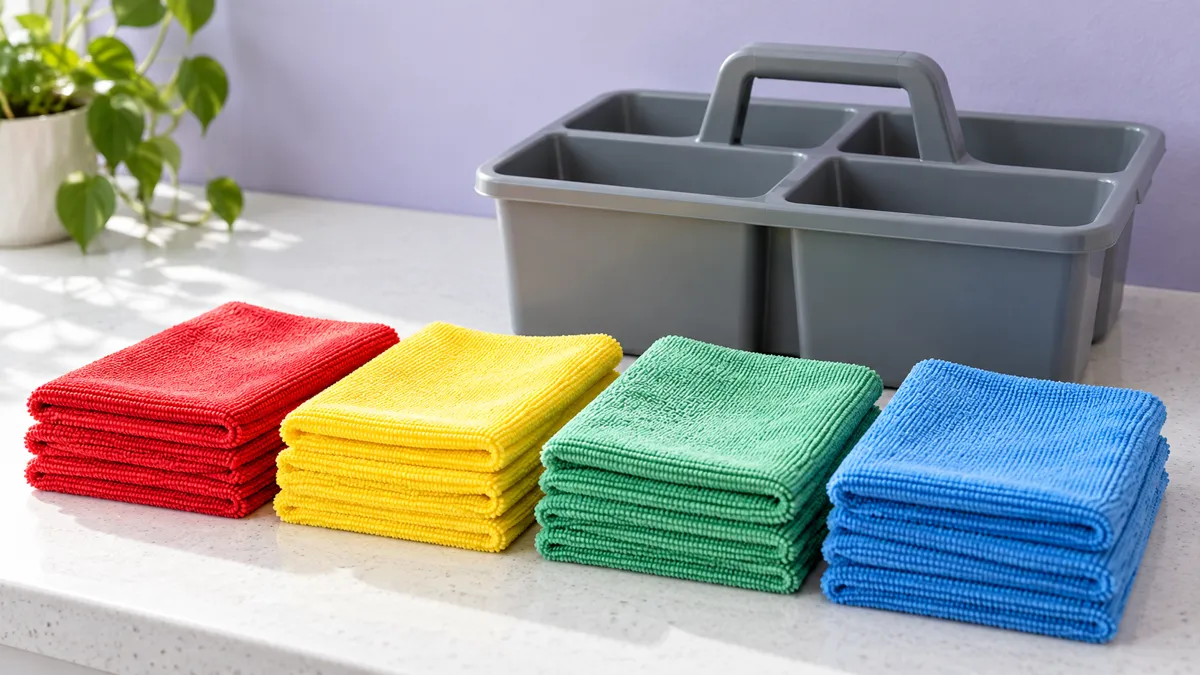
Colour coded cleaning cloths are reusable cloths assigned to one cleaning area by colour, so a cloth used on a toilet never ends up on a kitchen bench. A common general example is red for toilets, yellow for other washroom surfaces, green for kitchens and blue for general areas.
There is no single chart that every Australian site follows, so always use the chart approved for your site, display it where cloths are collected and keep clean stock separate from used cloths.
Quick answer: which colour goes where? (general example)
- Red: toilets and the surfaces immediately around them
- Yellow: other washroom surfaces such as basins, taps and benches
- Green: kitchens and food-area surfaces
- Blue: general areas such as desks, counters and meeting tables
Healthcare charts can differ. NSW Health’s environmental cleaning procedure, for example, uses red for toilets and bathrooms and yellow for infectious and isolation areas. See how colour-coding systems differ.
Download the Chemical Safety and PPE Checklist (PDF) to support your cleaning induction.
What are colour coded cleaning cloths and how do they work?
Colour coded cleaning cloths are cloths matched to a cleaning zone by their colour. Each colour has one job, which makes the correct tool easy to recognise before anyone starts wiping.
The aim is to prevent cross-contamination. Cross-contamination means moving dirt or microbes from one place to another. For example, wiping a washroom fixture and then a kitchen bench with the same cloth creates an avoidable transfer route. Keeping each cloth in its own zone removes that route.
In its colour-coding guidance, Vileda describes using colours to separate tasks and areas. The principle can also extend to other tools, such as mops, buckets and gloves.
Colour coded cleaning cloths still need a proper cleaning method. A red cloth does not become clean because it matches the chart. You must change dirty cloths, manage used stock and follow the cleaning instructions.
Start with the site’s existing procedure. Ask the supervisor which colour belongs to each zone. If no system exists, agree on one before ordering supplies. Consistency across the team matters more than copying a chart without checking it.
Cleaning cloth colour chart: which colour goes where?
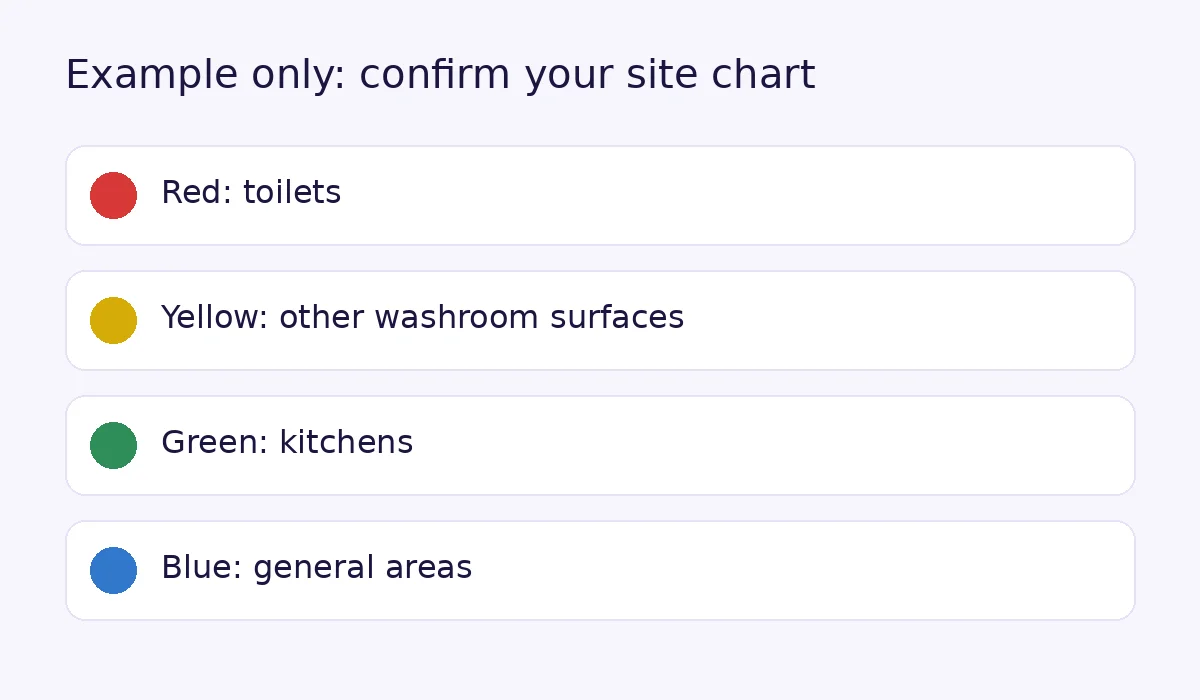
In the general cleaning cloth colour chart below, red is for toilets, yellow for other washroom surfaces, green for kitchens and blue for general areas. It is one possible system for a general workplace or home. Confirm the assignments with the site manager before using it.
| Example colour | Assigned area | Example surfaces |
|---|---|---|
| Red | Toilets | Toilet exterior, seat and nearby toilet-zone surfaces |
| Yellow | Other washroom surfaces | Basins, taps and washroom benches |
| Green | Kitchen areas | Kitchen benches, sinks and agreed food-area surfaces |
| Blue | General areas | Desks, reception counters and meeting tables |
Example only: Clinical facilities, food businesses and other sites may have different assignments or additional procedures.
Put the approved chart where operators collect their equipment. Include written zone names alongside the colour. That helps people read the system even when colours are difficult to distinguish.
Keep the wording on the chart and storage containers identical. Colour coded cleaning cloths become confusing when a cupboard says “bathroom” but the chart splits toilets from basins. Define those boundaries before the first clean.
Do all colour coded cleaning systems use the same colours?
No. Green for kitchens and blue for general areas are widely shared, but red and yellow are where charts most often differ. Some general charts split toilets (red) from other washroom surfaces (yellow), while healthcare charts can reserve yellow for infectious or isolation areas.
For example, the NSW Clinical Excellence Commission’s Environmental Cleaning SOP (Module 4) for NSW Health facilities recommends colour coding reusable cleaning equipment and lists these assignments:
| Colour | General example in this guide | NSW Health environmental cleaning chart |
|---|---|---|
| Red | Toilets | Toilets, bathrooms and dirty utility rooms |
| Yellow | Other washroom surfaces | Infectious and isolation areas |
| Green | Kitchen areas | Food services and food preparation areas |
| Blue | General areas | General cleaning |
| White | Not used | Operating theatres |
What this means in practice:
- Never assume what yellow means. On one site it may be for basins; on another it may be for isolation rooms.
- Follow the strictest procedure that applies. A healthcare, aged care, childcare or food business client may have its own chart and infection control requirements.
- Check the chart at every new site. Cleaners who work across several locations should confirm the colours each time.
- Keep written labels. Words on the chart and containers reduce mistakes when colours vary or are hard to tell apart.
How are colour coded cleaning cloths used in homes, offices and commercial sites?
The principle is the same everywhere: one colour, one zone. What changes is how many zones you need and how strictly the procedure is documented.
Homes
A simple set of colour coded cleaning cloths in four colours works well for most households: one colour for the toilet, one for the rest of the bathroom, one for the kitchen and one for living areas.
Keep a small labelled tub of each colour and make sure everyone in the house uses the same chart. If you use a residential cleaning service, ask the cleaner to follow the same chart so cloths do not cross zones between visits.
Offices
Typical office zones are toilets, other washroom surfaces, kitchenettes or breakout areas, and desks, counters and meeting rooms. Put the chart in the cleaners’ store room and include the colour system in the office’s cleaning scope of work so everyone knows what is expected.
Commercial and specialist sites
Larger commercial cleaning sites often extend colour coding to mops, buckets and gloves. Healthcare, aged care, childcare and food premises may have additional procedures or their own charts. Ask for the site’s written procedure, follow the client’s food safety or infection control requirements, and do not substitute a general chart without approval. Teams working in these environments can build on this guide with Star Cleaner Academy’s Infection Control for Cleaning and Food Handling Area courses.
How do you set up a colour-coding system?
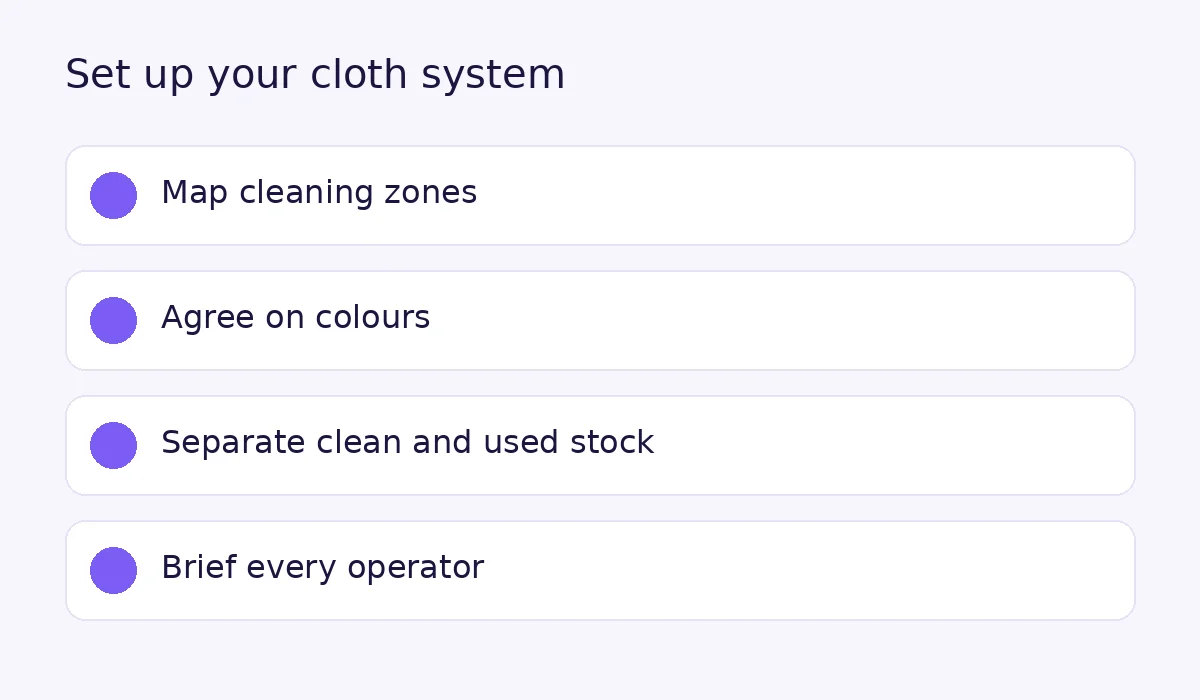
Map your cleaning zones first, then assign colours and organise equipment around those zones. Keep the procedure short enough to use during a shift.
1. Map the zones for your colour coded cleaning cloths
Walk through the site and list toilets, other washroom surfaces, kitchens and general rooms. Note restricted areas that need separate instructions.
2. Agree on the colour chart
Use the site’s existing chart where one applies. Get the supervisor’s approval before introducing a new system or changing a colour assignment.
3. Separate clean and used stock
Give each zone its own clean supply space. Add a clearly marked collection point for used cloths, away from the clean stock.
4. Brief every operator
Ask each person to choose the cloth for a kitchen bench and a toilet seat. Check understanding through a practical demonstration.
Review the setup after the first week. Colour coded cleaning cloths should be easy to find without rummaging through mixed equipment.
How should you use and change cleaning cloths?
Choose colour coded cleaning cloths using the approved chart. Replace dirty cloths before moving contamination onto another surface. Work from cleaner surfaces towards dirtier ones within the zone.
Fold a cloth to create several usable faces. Turn to a fresh face while wiping, and replace the cloth once those faces are dirty. Do not keep wiping with a visibly soiled surface.
Zone separation remains the starting rule. A cloth used on a toilet seat stays within the toilet task. Keep a fresh cloth for cleaner contact surfaces.
Prepare cloths using the cleaning product’s directions. Avoid spraying directly onto electronics or surfaces that could be damaged. Check the surface manufacturer’s care instructions first.
Carry enough replacements for the work you have planned. Rinsing a dirty cloth under a tap does not complete a laundering process. Put used cloths into the collection container and take a clean replacement before continuing.
How do you wash and store colour coded cleaning cloths?
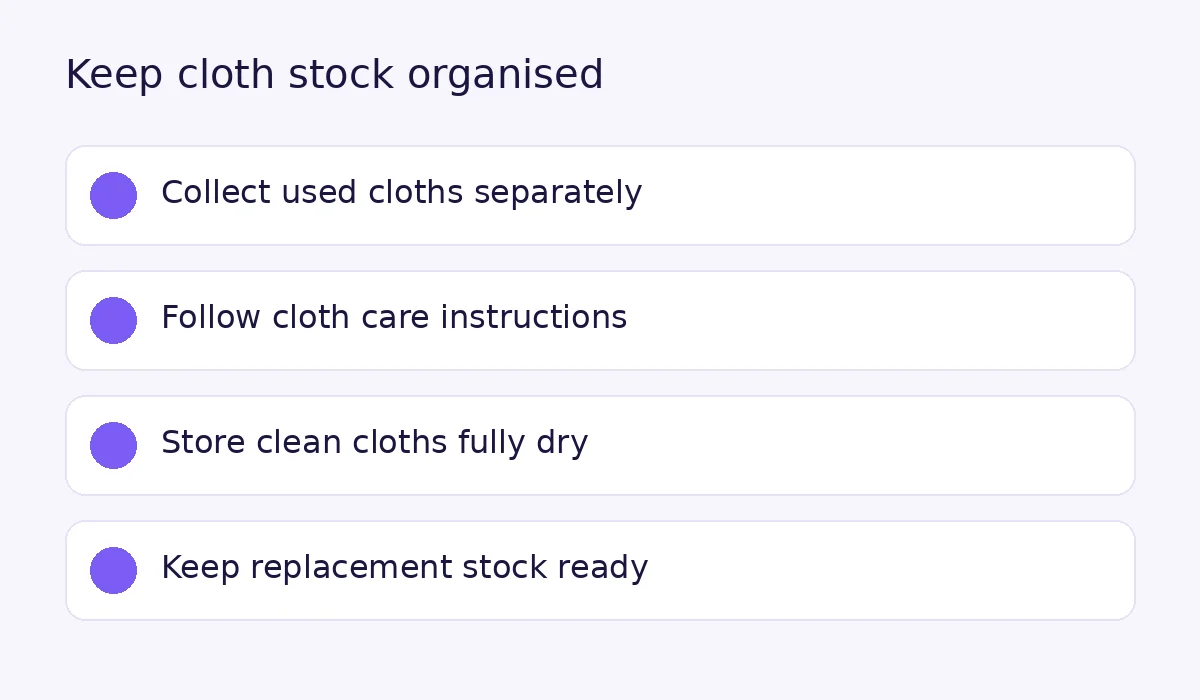
Follow the cloth manufacturer’s washing instructions and the site’s laundry procedure. Keep used cloths away from clean stock throughout collection, washing and storage.
Check the care information for temperature, detergent and drying limits. There is no single laundry setting that suits every cloth. Avoid fabric softener where the manufacturer advises against it.
Inspect colour coded cleaning cloths after washing. Replace cloths with damaged fabric, persistent residue or colours that are difficult to identify. Put only clean, fully dried stock into the supply cupboard.
Use a labelled collection container for used cloths. Keep it away from food surfaces and clean equipment. Empty and maintain it according to the site procedure.
Store freshly washed colour coded cleaning cloths in protected, labelled sections. Do not leave damp stock piled in a closed caddy between shifts. Keep a small reserve of each colour so laundry delays do not force operators to borrow from another zone.
What mistakes undermine colour coded cleaning cloths?
The system breaks down when people cross zones or cannot tell clean cloths from used ones. Check the equipment setup before blaming a missed instruction.
- Borrowing the wrong colour: When green stock runs out, replenish it rather than taking a used cloth from another area.
- Keeping one cloth for the whole shift: Supply enough fresh cloths for the tasks and replace dirty ones promptly.
- Mixing clean and used stock: Provide separate containers with clear wording.
- Washing used cloths with clean stock: Keep used cloths in their own collection container until they are laundered.
- Assuming every site uses the same chart: Yellow, in particular, can mean different things on different sites.
- Changing the chart without briefing staff: Update storage labels and explain the new assignments together.
- Assuming colour proves cleanliness: Check condition, laundering and handling as well as the zone assignment.
Include colour coded cleaning cloths in your routine equipment check. Look for missing colours, unlabelled containers and damp stock. These are practical problems a supervisor can fix before the next job starts. For more everyday pitfalls, see 10 common cleaning mistakes Australians make.
What should you buy for a workable cloth system?
Choose colour coded cleaning cloths in clearly identifiable colours, with enough replacements and separate storage. Match the cloth type to the surface as well as the cleaning zone.
Build your stock list from the areas you clean. Consider how many operators work at once and how quickly laundry returns. Test the cloth’s feel and performance on an inconspicuous surface before regular use.
- Microfibre cloths, 40-pack mixed colours: check the supplied colour mix against your approved chart.
- Microfibre cloths, blue 5-pack: consider these where blue matches the site’s assignment.
- Glass microfibre cloths, blue 5-pack: identify their glass-cleaning role within your chosen zone.
- WYPALL colour coded wiper roll: available in red, blue, yellow and green for sites that prefer wipers on a roll.
- Pullman 16L heavy-duty cleaning bucket: offered in blue, green, red and yellow for sites that extend colour coding to buckets.
Check current product details before buying colour coded cleaning cloths. A pack name does not confirm every colour or laundry specification. Add written labels to your storage so a specialist cloth is easy to recognise.
How do you teach the system to a new cleaner?
Show the approved chart, demonstrate a task and check the operator’s choices. A practical induction makes the rules easier to follow during real work.
Ask the operator to select fresh cloths for two different zones. Then show where used cloths go and how replacements are collected. Explain the reporting process when stock runs low.
Include the cleaning cloth colour chart in the site induction record. If an operator works across several locations, show the chart at each location. Different sites may use different assignments.
Safety note: Follow the product label and Safety Data Sheet (SDS), use the specified PPE, ventilate and never mix chemicals. Keep workplace SDS information accessible. See Safe Work Australia’s safety data sheet guidance.
Star Cleaner Academy offers self-paced online courses across Australia, including a free Professional Cleaner Starter Course. Students must be 18 or over.
Start the free Professional Cleaner Starter Course to build your cleaning knowledge.
Colour coded cleaning cloths: FAQs
What colour cloth is used for toilets?
On most cleaning cloth colour charts, red is used for toilets. In the general example in this guide, red covers the toilet and nearby toilet-zone surfaces, while yellow covers other washroom surfaces. Some charts, including NSW Health’s, use red for the whole bathroom, so check the site’s approved chart.
What is a yellow cleaning cloth used for?
It depends on the chart. In many general charts, yellow is for washroom surfaces such as basins and taps. In some healthcare charts, such as NSW Health’s environmental cleaning procedure, yellow is reserved for infectious and isolation areas. Never use yellow until you know which system the site follows.
Are cleaning cloth colours the same everywhere in Australia?
Do not assume every site follows the same colour chart. A workplace can have its own assignments, especially where specific procedures apply. Ask for the approved chart before starting. Use written area labels alongside colours, and brief visiting or replacement operators on the system used at that location.
Can I use colour coded cleaning cloths at home?
Yes. Separate cloths for toilets, other bathroom surfaces, kitchens and general rooms can make your routine clearer. Choose an easy chart and keep fresh replacements available. Everyone who cleans should understand the assignments. Wash and dry cloths according to their care instructions, then store clean stock separately.
Does colour coding replace cleaning or disinfecting?
No. Colour coding assigns equipment to an area. You still need to remove soil and follow the method required for the task. If disinfection is required, use the product’s stated directions and contact time. A cloth’s colour cannot show whether the surface has been cleaned or disinfected correctly.
How many colour coded cleaning cloths should I carry?
Carry enough fresh cloths for each zone and several replacements for dirty or dropped cloths. The total depends on the site’s size and tasks. Record how many you use over several jobs, then adjust your stock. Keep reserve supplies so an empty compartment does not interrupt the agreed procedure.
Should a glass cloth follow the same colour chart?
It should fit the site’s zone rules, with its specialist purpose clearly identified. A blue glass cloth does not automatically belong in every room. Check the approved chart and label its storage section. Where its colour conflicts with the zone assignment, agree on an alternative before using it there.