

A lot of people looking up how to start a cleaning business in Australia are in the same spot. They're good at the work, they're tired of making money for someone else, and they can already see the first few clients in their head. A family friend needs a regular clean. A local office is unhappy with its current contractor. A property manager wants faster turnovers.
That part is easy to imagine. The harder part is building something that still works when the phone rings twice at once, a cleaner calls in sick, a client disputes the scope, and the numbers on paper stop matching the money in the bank.
Cleaning can be a solid business, but only when it's treated like a proper operation. In Australia, this isn't a small niche. IBISWorld estimates there were 63,665 businesses in Australia's Cleaning Services industry in 2025 according to this Australian cleaning industry market overview. That tells a new operator two things straight away. There's demand, and there's competition. Generic “good service at fair prices” won't carry a business very far.
The operators who last build around reliability, documented systems, sensible quoting, and safe work practices. That's also the logic behind platforms built by working operators, including the thinking reflected in Star Cleaner Australia's view of a growing commercial cleaning market. Clients don't stay because a cleaner sounded enthusiastic. They stay because the work gets done properly, safely, and consistently.
Table of Contents
- From Side-Hustle Dream to Professional Business
- Laying Your Legal and Financial Foundations
- Sourcing Professional Equipment and Supplies
- Building Your Operational Systems for Quality Control
- Developing Your Pricing and Quoting Strategy
- Building Your Team and Specialised Expertise
- Marketing Your Business and Winning Your First Clients
From Side-Hustle Dream to Professional Business
Most failed cleaning businesses don't fail because the owner couldn't clean. They fail because the owner built a job for themselves instead of a business.
A side-hustle mindset sounds harmless at the start. Take any work. Quote quickly. Sort the paperwork later. Buy supplies as needed. That approach usually creates the same pattern. The calendar fills, the margins disappear, and every problem lands back on the owner because nothing has been standardised.
Professionalism starts with choosing a lane
The Australian market is big enough to support specialisation. A new operator doesn't need to be everything to everyone. In fact, trying to do that usually weakens service quality.
A cleaner who focuses on recurring residential work will organise very differently from one chasing end-of-lease cleans. Commercial work needs scope control and consistency. Airbnb turnovers need speed and schedule discipline. NDIS-related work needs stronger documentation, screening, and client sensitivity.
A sensible starting point is to choose one of these:
- Recurring residential cleaning for predictable schedules and repeat relationships
- Commercial office or strata cleaning for structured scopes and ongoing service cycles
- End-of-lease cleaning for higher-intensity one-off jobs
- Short-stay and Airbnb turnovers for time-sensitive, tightly scheduled work
- NDIS-related cleaning for operators prepared to build compliant service systems
The cheapest quote often wins once. The most reliable operator keeps the account.
Casual operators compete on price. Professional operators compete on trust
Clients don't usually judge cleaning businesses the way owners judge themselves. Owners focus on effort. Clients focus on outcomes. Did the cleaner arrive when promised? Was the scope clear? Was the same standard delivered again the next visit? Was the operator insured, safety-checked, and easy to deal with?
That's why professionalism has to show up in visible ways:
| What casual operators do | What professional operators do |
|---|---|
| Quote vaguely | Define the scope clearly |
| Rely on memory | Use checklists |
| Buy random products | Standardise equipment and chemicals |
| Chase any job | Target one service niche first |
| Promise low prices | Protect quality and margin |
Businesses built on these basics are easier to grow because they don't depend on heroics. They depend on repeatable routines. That's the key shift when learning how to start a cleaning business. The work matters, but the system around the work matters more.
Laying Your Legal and Financial Foundations
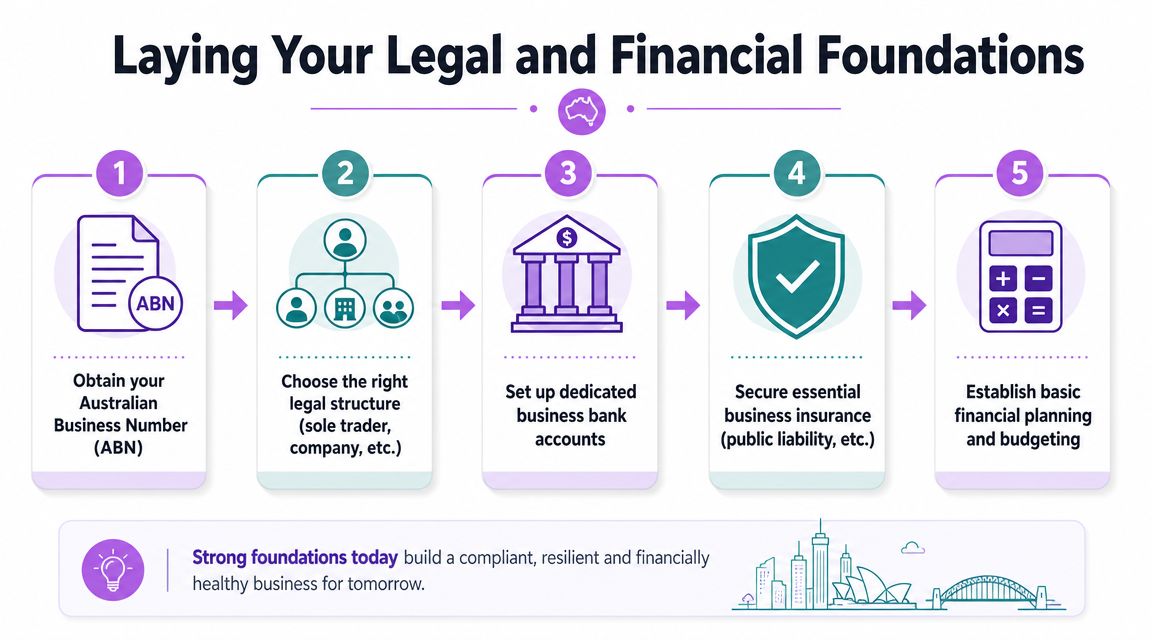
Before ordering uniforms or printing flyers, the business needs a legal and financial frame that can carry real work. Too many operators reverse the order. They start quoting, collect a few jobs, then realise the structure, bank account, insurance, and labour costing were never properly set up.
That's how busy operators end up with weak protection and poor margins.
Set up the business before selling the service
The correct sequence matters. The Australian Taxation Office guidance discussed in this business structure and cleaning labour costing reference makes clear that business structure affects tax, liability, and setup, and that labour pricing has to account for the Cleaners and Laundry Employees Award rather than guesswork.
That means the practical order is:
Choose the legal structure
Sole trader, partnership, company, or trust all come with different implications. The right choice depends on liability, tax treatment, and how the operator plans to grow.Register the structure properly
Don't trade casually and hope to tidy it up later. Registration is the point where the business stops being an idea and starts becoming accountable.Open a dedicated business bank account
Mixing personal and business spending causes confusion fast. Separate accounts make bookkeeping cleaner and make it easier to see whether jobs are paying.Arrange essential insurance
Public liability cover matters because cleaning work happens on other people's property. If staff are involved, the operator also needs to think through the broader insurance position, including what applies to workers and equipment.
Practical rule: if a client asks whether the business is insured, safety-conscious, and properly set up, the answer should be immediate and documented.
For any operator wanting to work with better clients, these aren't optional extras. They're the starting line. It's also why platforms that place professional cleaners typically prefer fully insured operators with proper systems already in place.
Build pricing from real labour costs
The biggest financial mistake in cleaning is underpricing labour. New operators often look at what competitors appear to charge, then shave a bit off to win the job. That can create a full schedule with very little profit.
Award rates, penalty rates, allowances, superannuation, workers compensation, travel time, chemicals, equipment wear, administration, and callbacks all affect the actual cost of delivering a clean. If those costs aren't mapped before pricing starts, the quote is only a guess.
A basic financial setup should include:
- Job costing sheets that show labour inputs clearly
- Minimum charge rules so very small jobs don't waste travel time
- Separate tracking for consumables so products don't erode margin unmonitored
- A quoting floor below which the business will decline the job
A proper foundation doesn't slow growth. It protects it. An operator who wins low-priced work that can't be delivered profitably hasn't built momentum. They've built a problem.
Sourcing Professional Equipment and Supplies
Turn up to a vacate clean with a domestic vacuum, a thin supermarket mop, and three random spray bottles, and the job starts going wrong before the first room is finished. The vacuum clogs, the mop pushes dirty water around, and the chemicals either underperform or mark the surface. That is how small operators lose time, margin, and repeat work in the Australian market.
A new cleaning business does not need a storeroom full of machines. It needs a lean kit that holds up under daily use, is easy to restock, and gives consistent results across homes, offices, and common-area work.
Buy the core kit first
Start with the gear that goes to almost every job. Specialist equipment can wait until a service line is producing enough revenue to justify it.
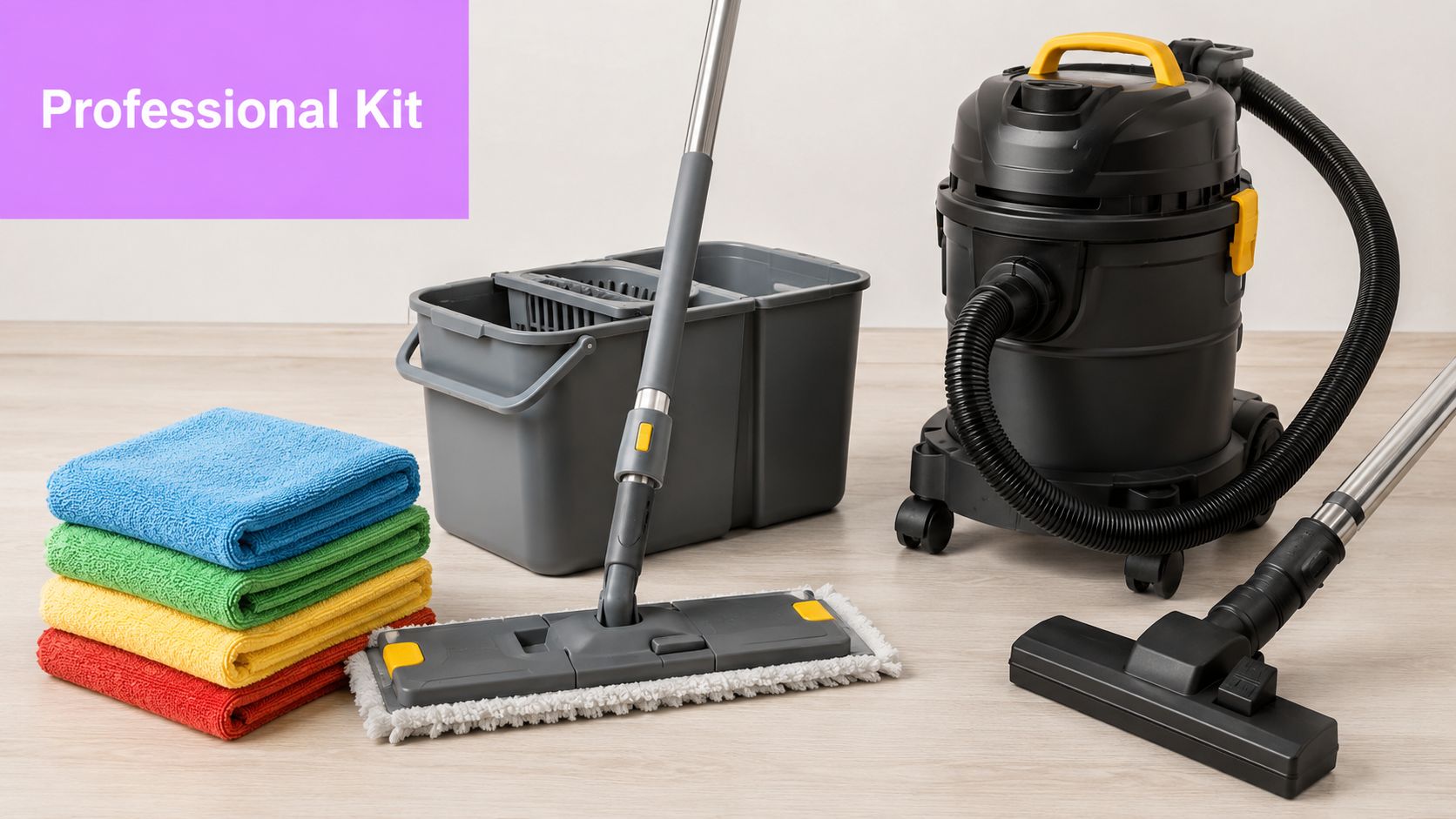
A practical starter kit usually includes:
- A commercial-grade vacuum with reliable suction and replaceable parts
- A flat mop system and bucket suited to residential work and light commercial sites
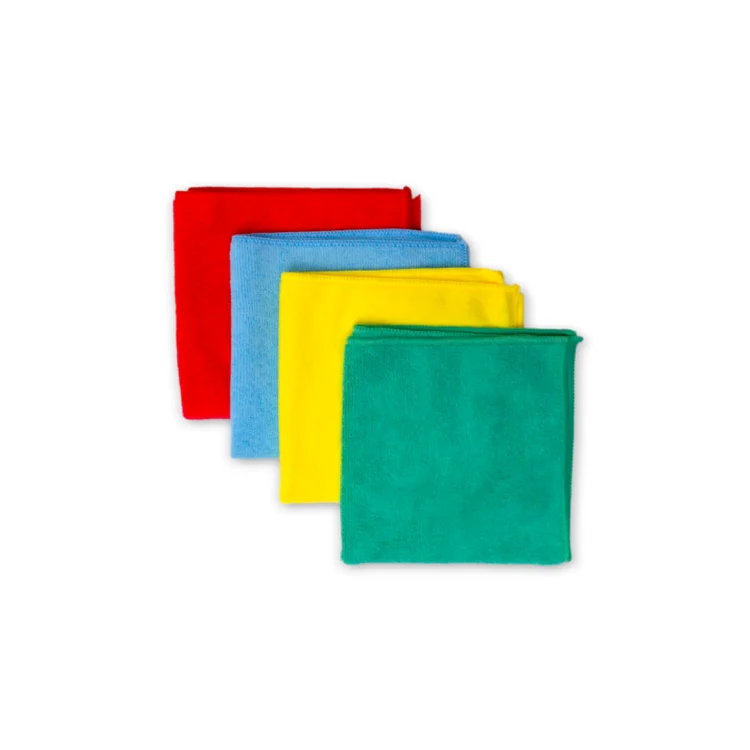
- Microfibre cloths in colour-coded sets to separate bathrooms, kitchens, glass, and general surfaces
- Spray bottles with clear labels for dilution control and safer handling
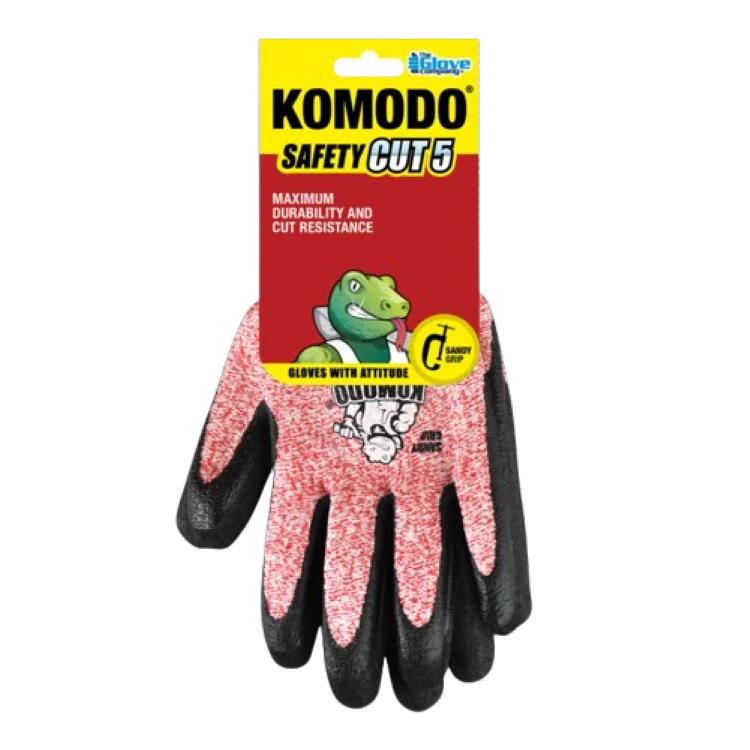
- Gloves and basic PPE matched to the tasks and products in use
- A sturdy caddy or tote so gear moves efficiently from car to site
The trade-off is straightforward. Better equipment costs more upfront, but cheap gear costs more in labour, callbacks, and replacement. In cleaning, labour is the expensive part. If a poor vacuum adds ten minutes to every job, the machine was never cheap.
Extraction machines, rotary scrubbers, and specialist floor-care tools should be bought for confirmed demand, not optimism. I have seen plenty of operators spend hard-earned cash on gear that sat in the garage while the business still relied on basic domestic cleans to pay the bills.
For operators looking for a reliable supply pathway, trade access to professional cleaning supplies and equipment can make reordering easier and help standardise what goes into each job kit.
Choose chemicals that suit the surface and the job
The strongest product is rarely the smartest choice. Good chemical selection is about soil type, surface type, dwell time, and safe use on site.
A simple way to think about chemicals is by task:
| Cleaning challenge | Product approach |
|---|---|
| General surface cleaning | pH-neutral multi-purpose cleaner |
| Kitchen grease | heavy-duty degreaser used correctly on suitable surfaces |
| Bathroom soap scum and mineral build-up | bathroom-specific cleaner matched to the surface |
| Mould in wet areas | mould treatment used with ventilation and safe handling |
| Glass and mirrors | streak-free glass cleaner and dedicated cloth |
For kitchen grease, bathroom mould, or stubborn surface build-up, a professional product usually saves time and produces a better finish than overworking a weak one. The key is matching the product to the material and following the label directions. Stone, timber, sealed floors, stainless steel, and painted surfaces all react differently.
Standardisation matters here. Use the same core chemical set across the team, keep dilution ratios consistent, label every bottle clearly, and store SDS documents where staff can access them quickly. That reduces mistakes, protects surfaces, and makes training much easier as the business grows.
Too many products create their own problem. Five multipurpose cleaners that do roughly the same job lead to confusion, wasted stock, and inconsistent results. A tight, well-tested range is easier to manage and easier to cost.
Building Your Operational Systems for Quality Control
Cleaning businesses become unstable when every cleaner has their own method, their own product choices, and their own idea of what “finished” means. Clients experience that as inconsistency. Owners experience it as complaints, rework, and churn.
In a fragmented market, reliability beats price. The operational lesson is simple. Systemise the service before scaling it.
Checklists beat memory
The strongest early system is a written scope of works backed by job-specific checklists. That isn't bureaucracy. It's quality control.
The guidance summarised in this Australian cleaning systems and safety reference points to a practical launch sequence: define a niche, create service checklists, maintain a chemical register with SDS access, and train staff on safety. That combination reduces rework, incidents, and churn because the business stops depending on memory.
A workable checklist system should do four things:
- Define the room-by-room scope so staff know what is included
- Record add-ons clearly such as ovens, fridges, internal windows, or balcony areas
- Capture completion evidence where the client or contract requires it
- Create a basis for callbacks so disputes can be resolved against the agreed scope
A client rarely complains that a checklist exists. They complain when the standard changes without warning.
This matters even more for operators who want to offer a satisfaction guarantee. A guarantee without a documented checklist is just marketing language. A guarantee backed by a scope, completion process, and follow-up procedure is operationally credible.
Safety systems belong in daily operations
Safety isn't separate from quality. A cleaner rushing with poor body mechanics, unlabelled chemicals, or no access to SDS documents is more likely to make mistakes, damage property, or injure themselves.
The minimum standard should include:
- A chemical register with current SDS access
- Task instruction for manual handling such as mopping, vacuuming, lifting, and repetitive work
- Slip and trip controls including signage where required and sensible workflow planning
- Induction for each cleaner on the products, tools, and scope used by the business
Many casual operators find themselves exposed. They hire first and figure out the method later. Professional operators write the process first, train against it, and only then expand the roster.
For businesses handling recurring home and commercial cleaning, the same logic applies to scheduling and communication. Clients should know who is attending, what's included, and how issues will be handled. Safety-checked operators, clear systems, and a genuine satisfaction process don't just reduce complaints. They create a business that clients trust enough to keep using.
Developing Your Pricing and Quoting Strategy
Pricing is where good intentions often get punished. A new operator wants to look competitive, so the quote goes out quickly and low. Then the job runs over time, parking is worse than expected, the property was dirtier than described, and the “good client” turns into a bad account.
That doesn't happen because pricing is mysterious. It happens because the quote wasn't built from the actual work.
Match the pricing model to the work
Different cleaning categories suit different quoting methods. No single pricing model works well for every service line.
| Job type | Pricing approach that usually fits | Why it works |
|---|---|---|
| Recurring residential | flat rate based on scope and expected labour time | easier for the client to understand and easier to repeat |
| End-of-lease | fixed quote after inspection or detailed intake | scope varies heavily with condition and add-ons |
| Commercial contracts | scope-based pricing tied to frequency and site needs | clients buy consistency, not casual hours |
| Short-stay turnovers | fast quote linked to turnaround requirements and extras | speed and reliability matter as much as cleaning itself |
The strongest current shift is toward faster, more accurate quoting for time-sensitive work. This Australian guide on digital and on-site quoting for cleaning businesses highlights the value of a quote-on-site, service-on-schedule model for short-stay properties and similar workflows where downtime matters. In that kind of work, the operator who can inspect quickly, quote clearly, and commit to a schedule has an advantage over the one sending rough hourly estimates by text.
What to assess during a quote
A proper quote is part site assessment, part risk review, part scope definition. It should answer what has to be done, how long it should take, what equipment is needed, and what could blow the budget out if left unclear.
During a walkthrough or detailed intake, assess:
Access and timing
Keys, alarms, lifts, parking, after-hours access, and turnaround deadlines all affect labour efficiency.Condition of the property
Light maintenance cleaning is different from recovery work. Heavy grease, mould, built-up soap scum, and neglected floors change the labour required.Surface types
Stone, timber, stainless steel, glass, painted walls, and delicate finishes all need different handling.Scope boundaries
Clarify what isn't included as carefully as what is. Blinds, inside cupboards, high dusting, balcony glass, and wall washing are common friction points.Add-on services
Ovens, fridges, internal windows, linen resets, consumable restocks, and staging touches should never be assumed.
Fast quoting is useful. Accurate quoting is what protects the business.
Digital forms, photos, and standard scope templates can speed up this process without turning it into guesswork. That's especially important in Airbnb and property management work, where clients want a quick answer but still expect no surprises on the day.
Building Your Team and Specialised Expertise
A lot of cleaning businesses hit the same wall. The owner is still on the tools, still answering calls at night, still fixing missed details, and then decides it is time to hire. That first recruit usually shows whether there is a real business underneath the effort, or just a hard-working operator carrying everything by memory.
Finding cleaners is rarely the main problem in Australia. Building a team that can protect your standard, your schedule, and your margin is the harder job. Plenty of new operators hire too quickly, undertrain, then blame staff when jobs run over time or complaints start coming in. In practice, that failure usually starts with weak systems and unclear expectations.
Hire for repeatability
The best early hire is not always the quickest cleaner in a trial shift. It is the person who arrives on time, listens, follows sequence, uses products properly, and can be trusted in a client's home or site without creating risk.
That matters more than many owners expect. One unreliable team member can blow out an entire day's run, trigger refunds, and force the owner back into reactive work. Speed only helps if the work is done properly and the client would book the same cleaner again.
A practical hiring filter should test for:
- Punctuality and communication, because no-show staff destroy route planning
- Checklist discipline, because quality falls apart when each cleaner has their own method
- Basic customer sense, because presentation and manners affect retention
- Coachability, because even experienced cleaners need to learn your standard
- Physical suitability for the work, because repeated lifting, bending, and equipment handling are part of the job
Trial shifts should be structured, not casual. Give a clear scope. Observe chemical handling, cloth separation, attention to detail, and close-out habits. If a candidate skips steps under light supervision, that problem gets worse once they are working alone.
Training also needs to be practical from day one. Show the standard for kitchens, bathrooms, touchpoints, floor care, equipment cleaning, and lock-up procedure. Then document it. Operators who want a clearer training path can use the practical cleaning business training through Star Cleaner Academy Australia to shorten the usual trial-and-error period.
General cleaners and specialist operators are not the same hire
A common mistake is assuming every cleaner can handle every job type with a short briefing. They cannot. Domestic recurring cleans, end of lease work, commercial sites, Airbnb resets, builders cleans, and NDIS-related services all place different demands on staff.
End of lease work needs pace, detail, and the ability to recover neglected areas without losing time. Commercial work often depends on access control, security procedures, and consistent after-hours execution. Airbnb turnovers require tight timing, linen handling, photo reporting, and the discipline to reset a property exactly the same way each time.
Specialisation usually improves margin because the team gets faster within a defined service type. It also reduces quoting errors, rework, and training drift. A business that tries to do every type of cleaning from the start often ends up average at all of them.
NDIS work requires screening, boundaries, and documentation
NDIS-related cleaning is where many side-hustle operators get exposed. The work may look similar to domestic cleaning on the surface, but the service environment is more sensitive and the consequences of poor communication are higher. The NDIS Quality and Safeguards Commission guidance for providers and workers sets the baseline for conduct, worker obligations, and safer service delivery in this space.
Before taking on this type of work, set up for:
- Worker screening and ID processes where the service arrangement requires them
- Clear service notes and attendance records so there is a reliable paper trail
- Respectful communication standards for participants, families, and coordinators
- Boundaries around tasks and incidents, so staff know what to report and what falls outside scope
- Reliable backup capacity, because missed services can create real pressure for the participant
This is one area where professionalism shows quickly. Coordinators and participants are not looking for vague promises. They want stable service, respectful staff, and a business that can follow process without creating extra work for everyone around the client.
Build the team slowly if you need to. One dependable cleaner who can follow your system is worth more than three rushed hires who create call-backs, damage claims, and constant roster problems. That is how a cleaning business starts to look like a professional operation in the Australian market, not a casual side job that happened to get busy.
Marketing Your Business and Winning Your First Clients
A lot of new cleaning businesses make the same mistake. They spend money on logos, flyers, boosted posts, and discounts before they have a clear reason for a client to trust them. Then the enquiries that do come in are price shoppers, one-off jobs, and poor-fit work that clogs the schedule without building a stable business.
Good marketing starts with a clear operational promise. State what the client is buying. Insured service. Defined scope. Arrival windows. Written checklists. Consistent communication. A process for fixing problems if the job misses the mark. That is what separates a professional operator from a side-hustle that happens to be available this week.
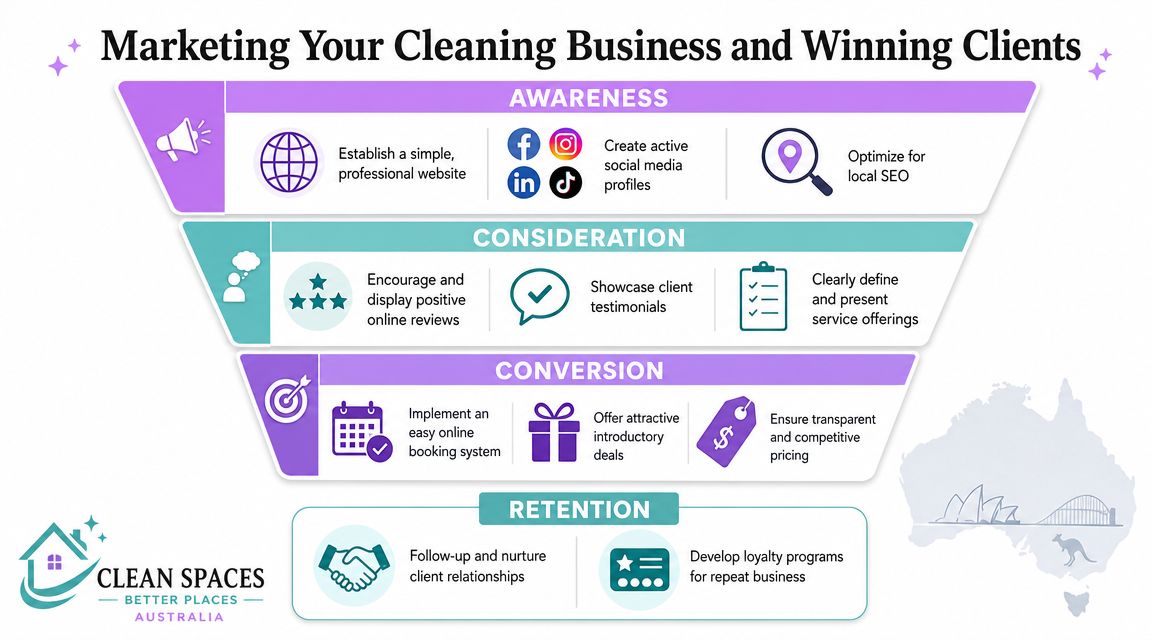
Lead with proof, not slogans
Early on, clients are judging risk. They want to know whether you will show up, follow instructions, respect their property, and resolve issues without an argument. Generic claims like “quality service” or “we care” do not answer any of that.
Use a small set of trust signals everywhere you appear:
- A simple website that clearly lists your services, service area, and how quoting works
- A Google Business Profile with the right categories, current hours, real job photos, and accurate contact details
- A review process after completed jobs, so proof builds job by job
- A defined service menu so clients know exactly what is included and what sits outside scope
- Written quotes and follow-up that confirm the scope, exclusions, price, and booking terms
If you offer house cleaning, office cleaning, Airbnb turnovers, or NDIS-related services, explain each one in plain language. Clients should not have to guess what they are booking, how long it takes, or what standard to expect.
Good marketing in this trade is organised proof.
Use channels that fit the work you want
Different service lines win work in different ways. Residential cleaning usually comes from local search, referrals, and repeat visibility in a tight service area. Commercial cleaning often comes from direct outreach, site inspections, and fast, well-written responses. Real estate and short-stay work depends heavily on speed, flexibility, and communication under deadline pressure.
A practical first-client plan usually looks like this:
- Build local search visibility for homes, small offices, and recurring local work
- Contact real estate agencies and property managers directly for end-of-lease cleans and changeovers
- Meet strata contacts and small business owners who need reliable recurring service
- Ask for referrals after a strong run of completed jobs, not after the first clean
Timing matters here. Ask for a review or referral once the client has seen consistency, not while you are still proving your process.
There is another trade-off that new operators often miss. More leads only help if you can quote quickly, roster correctly, and deliver the work at the promised standard. If you cannot do that yet, aggressive marketing will expose weaknesses faster than it grows the business. In Australia, the operators who last are usually the ones who match sales activity with labour capacity, travel limits, and clear service rules.
For some new businesses, a platform model can shorten the slow early period of chasing every lead from scratch. Star Cleaner Australia Pty Ltd is one example of a national system that connects clients with vetted, insured cleaning professionals and supports operators with supply access and practical training. Used properly, that kind of structure can help a new business get operating discipline faster, especially in areas like service standards, client expectations, and day-to-day consistency.
The first clients should not be random wins. They should be the start of a repeatable pipeline built around the type of work you want to keep.