


Looking for cleaning jobs canberra usually starts the same way. Someone needs work that's steady, practical, and flexible enough to fit around family, study, or a second job, then gets hit with a flood of vague listings that all sound the same.
That's where people get stuck. The difference isn't just where to apply. It's knowing which roles are worth chasing, what employers notice, and how to build a reputation for reliability in a market that often feels fragmented.
A cleaner in Canberra can work across offices, homes, healthcare settings, schools, short-stay properties, and specialist environments. Some roles suit people who want early starts and predictable routines. Others suit people who prefer daytime residential work or evening commercial shifts. The strongest candidates treat cleaning as skilled work, not fallback work.
Professional operators also know that clients care about trust, safety checks, consistency, and whether the job gets done properly the first time. That same standard shapes how good cleaners get hired and kept on. Star Cleaner Australia is often part of that conversation because the business is built around vetted operators, reliable scheduling, and a 100% satisfaction guarantee, but the bigger lesson is broader. Canberra rewards cleaners who show up prepared, checked, trained, and consistent.
Table of Contents
- Your Guide to Canberra Cleaning Opportunities
- Where to Find Quality Cleaning Roles in Canberra
- Preparing a CV That Gets You Noticed
- Essential Checks and Training You Will Need
- Expected Pay Rates and Shifts in the ACT
- Nailing Your Interview and Succeeding on the Job
Your Guide to Canberra Cleaning Opportunities
Canberra has real range for anyone entering the industry. The work isn't limited to one type of site or one kind of roster. A cleaner might handle a CBD office before business hours, support an NDIS participant in a suburban home during the day, or work in a school, clinic, or apartment complex depending on checks and training.
That variety matters because job seekers often make the mistake of searching too narrowly. Typing one keyword into one job board can hide good opportunities. Better results usually come from combining online listings with direct applications, local referrals, and platforms that focus on organised, professionally managed work rather than random one-off jobs.
A useful starting point is to understand how broad the commercial side has become. The article on the growing commercial cleaning industry is a good reminder that employers aren't just looking for someone who can mop a floor. They want people who can follow systems, work safely, and keep standards consistent.
Practical rule: Search by setting, not just by job title. “Office cleaner”, “hospital cleaner”, “school cleaner”, “NDIS cleaner”, and “facility cleaner” often lead to very different work conditions.
Good candidates also think beyond getting hired this week. They look for roles that can lead somewhere. In Canberra, that usually means choosing employers or service platforms that value scheduling discipline, proper checks, and repeat client relationships over quick-fill labour.
Where to Find Quality Cleaning Roles in Canberra
The Canberra market has breadth. As of May 2026, Glassdoor listings for casual cleaning roles in Canberra showed 44 open casual cleaning positions and 16 office cleaning jobs in the ACT, alongside work in specialist areas such as hospital and public transport cleaning.

Start with search terms that match the work
Many applicants hurt their chances by using broad searches only. “Cleaner Canberra” is fine as a starting point, but the better search terms usually reflect site type and shift pattern.
Useful examples include:
- Office cleaning: Good for early morning or evening routine work.
- Residential cleaning: Often suits daytime availability and stronger client communication.
- Hospital or healthcare cleaning: Better for applicants with compliance interest and comfort around strict procedures.
- School and childcare cleaning: Often requires extra checks and stronger trust signals.
- End of lease cleaning: Demands detail, pace, and the ability to work through a checklist without cutting corners.
Applicants coming from hospitality, retail, warehousing, or support work shouldn't undersell that background. Fast-paced work, customer-facing communication, manual stamina, keyholding trust, and shift punctuality all transfer well.
Use more than job boards
Job boards help, but they aren't enough on their own. Canberra also has facilities management employers, subcontracting groups, and residential service platforms that don't always look like traditional employers at first glance. Some recruit continuously because rosters change often, while others keep a shortlist and call when demand rises.
Direct approaches can work particularly well with:
- Childcare centres
- Gyms and fitness studios
- Medical practices
- Small office suites
- Strata-managed buildings
A short, clear message beats a generic cover letter. State availability, transport, whether a police check is current, and what kind of sites suit best.
Cleaners who present themselves as dependable workers, not just available workers, usually get callbacks faster.
Choose safer pathways over messy gig work
One of the biggest trade-offs in cleaning jobs canberra is freedom versus structure. Gig-style work can look attractive because it seems immediate, but it often comes with unclear expectations, inconsistent client standards, and patchy support when something goes wrong.
That's why many cleaners prefer organised systems that screen clients, verify jobs, and match workers to suitable work. Platforms such as becoming a cleaner through Star Cleaner Australia appeal to job seekers who want a more professional setup, especially where insurance, vetting, and repeat scheduling matter.
For anyone comparing options, the question isn't just “Who's hiring?” It's “Who manages work properly?”
Preparing a CV That Gets You Noticed
A cleaning CV doesn't need fancy design. It needs proof that the applicant can be trusted in someone else's property, follow instructions, and work to a standard without supervision.

Put the most relevant information first
In Canberra, employers commonly look for practical capability. According to CareerOne cleaner roles in Canberra ACT, vacuuming and general maintenance expertise are among the top skills in demand. Those shouldn't sit buried at the bottom of the page.
A strong first section usually includes:
- Current checks: police check, Working with Vulnerable People registration if held, licence, own transport
- Core skills: vacuuming, mopping, bathroom sanitation, kitchen detailing, waste handling, general maintenance support
- Site experience: office, residential, healthcare, school, end of lease, Airbnb, common areas
- Availability: weekdays, early mornings, evenings, weekends
Candidates often over-focus on duties and under-focus on standards. “Cleaned offices” is weak. “Completed scheduled office cleaning, restrooms, kitchens, bins, and touchpoint cleaning across rostered sites” is much stronger.
Translate older jobs into cleaning value
Someone coming from another field can still produce a sharp CV. Hospitality shows speed, physical stamina, and hygiene awareness. Retail shows presentation standards, customer interaction, and reliability with opening or closing tasks. A support worker background suggests respect for privacy, routine, and client sensitivity.
That translation matters because many hiring managers scan for signals, not just titles.
Here's a simple way to frame past experience:
| Previous work | What it shows in cleaning |
|---|---|
| Hospitality | Time pressure, hygiene, teamwork |
| Retail | Presentation, trust, customer service |
| Warehouse | Manual handling, routine, pace |
| Aged care or support work | Respect, discretion, consistency |
For applicants unsure whether to call the document a CV or resume, this quick guide on resume vs CV differences helps sort out the terminology without overcomplicating it.
Treat checks and training as selling points
Too many applicants list formal checks as an afterthought. That's backwards. In cleaning, verified trust can open better work than personality alone. If an applicant has infection control training, chemical safety knowledge, or site-specific experience, that belongs near the top.
Hiring signal: A cleaner who understands compliance looks lower risk to employers and more credible to clients.
This is also where quality training stands out. The market has plenty of people willing to clean. Fewer can explain dwell time, colour-coded cloth use, cross-contamination risks, or safe product handling. Those details tell an employer the applicant is already thinking like a professional.
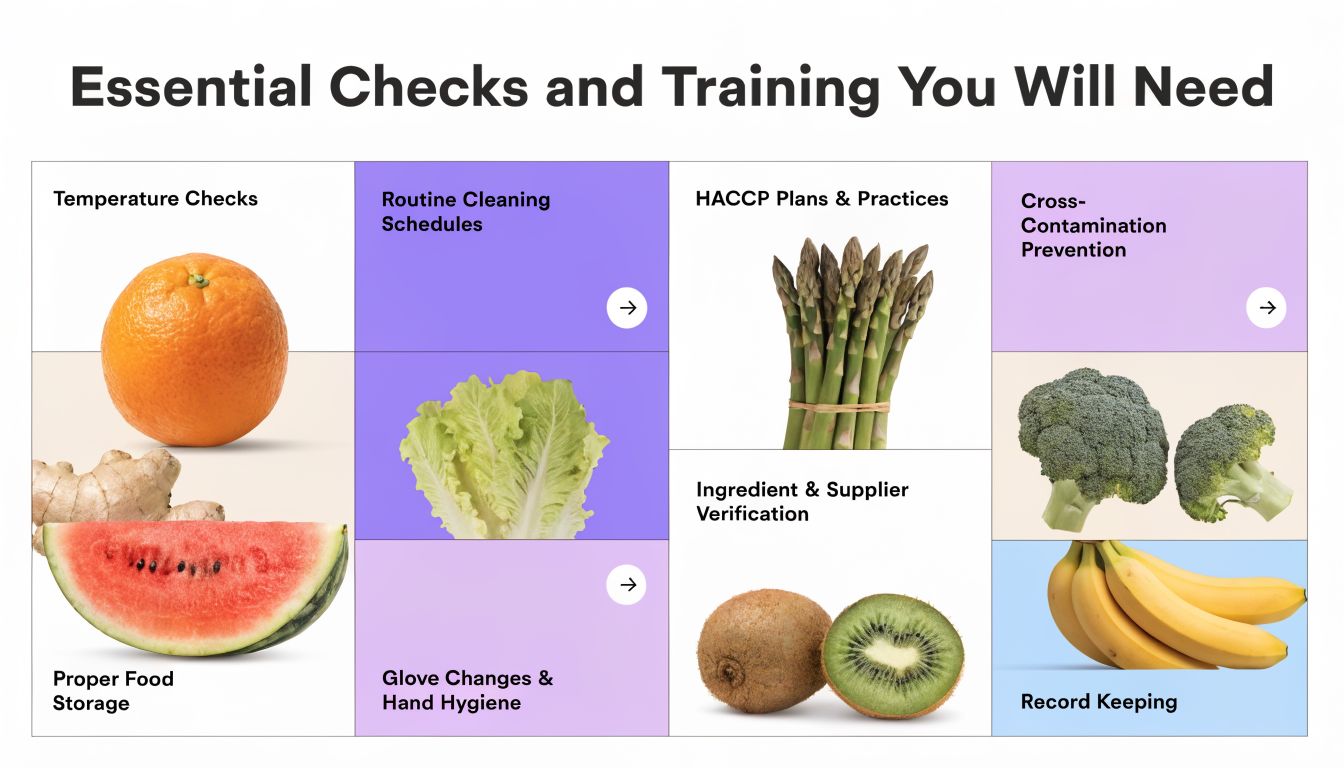
Essential Checks and Training You Will Need
A common Canberra hiring scenario goes like this. Two applicants both say they are reliable, both can start next week, and both are willing to learn. The one who gets the callback usually has clearer proof. A current police check, the right ACT registration, or training that shows they understand hygiene and site rules can put them ahead fast.
That matters because Canberra cleaning work is fragmented. One employer wants office cleaners with key access. Another needs someone suitable for a school, an NDIS participant, or a community site. Job ads may look similar, but the compliance standard behind them often is not.
As noted in Indeed cleaning job listings in Canberra, many roles are advertised as open to people without experience. That does not mean the work is low-skill. It usually means the employer is willing to teach basic routines if the applicant already looks trustworthy, trainable, and safe to place on site.
The checks that change what work you can access
In practice, a few checks determine which jobs you can even be considered for.
- National Police Check: Common for residential cleaning, office access, and any role where clients are handing over keys, alarm codes, or unsupervised access.
- Working with Vulnerable People registration: Required for roles in schools, disability support, and some community-facing settings in the ACT.
- Driver licence and reliable transport: Often the deciding factor for mobile runs, split shifts, and work spread across multiple suburbs.
These checks affect more than hiring. They influence what sites you can enter, how much trust you are given, and whether a supervisor sees you as someone they can place without risk.
What employers actually mean by “training provided”
This phrase covers a wide range. At the weak end, it means someone points at a cupboard, names three products, and leaves the new cleaner to work it out. At the strong end, it means a proper induction, site-specific instructions, supervised runs, and feedback on pace and quality.
That gap shows up quickly on the job.
New cleaners often lose time or damage trust in predictable ways:
- Chemical misuse: using the wrong product on stone, stainless steel, glass, or sealed flooring
- Cross-contamination: carrying bathroom cloths or tools into kitchen areas
- Poor sequencing: cleaning in the wrong order and running out of time before the visible tasks are finished
- Equipment errors: using vacuums, scrubbers, or extraction gear without correct setup or maintenance checks
These are not minor mistakes. They create rework, complaints, damaged surfaces, and awkward conversations with clients.
Training that helps you stand out
The cleaners who build a solid reputation in Canberra usually learn the basics properly early on. That includes infection control, colour-coded cloth systems, dwell time, dilution ratios, manual handling, and site security habits such as locking up and reporting issues clearly.
Formal training also gives applicants a better way to talk in interviews. Instead of saying “I'm a hard worker,” they can explain how they prevent cross-contamination, why product contact time matters, or how they handle a keyed site at the end of a shift. That sounds more professional because it is more professional.
For job seekers who want structured, practical learning rather than vague promises of being shown the ropes, cleaning skills training through Star Cleaner Academy Australia is relevant to the kind of standards employers and repeat clients recognise.
A cleaner does not need every certificate on day one. A cleaner does need proof of reliability and a clear sign they take standards seriously.
How checks and training affect your options
The return is straightforward. Better checks and better training usually lead to access to better sites.
| Role type or stage | What often matters most |
|---|---|
| Entry-level general cleaning | Availability, attitude, basic reliability |
| Residential and repeat client work | Trust, communication, consistency |
| NDIS and sensitive settings | Checks, hygiene awareness, continuity |
| Specialist or higher-responsibility work | Training depth, compliance, site readiness |
This is one of the clearest differences between treating cleaning as a stopgap and treating it as a career path. In Canberra, reliable cleaners with verified training are easier to place, easier to retain, and more likely to be trusted with the work that lasts.
Expected Pay Rates and Shifts in the ACT
Pay in cleaning jobs canberra usually improves with experience, site complexity, and the level of trust attached to the work. Someone doing straightforward entry-level work won't usually be judged the same way as someone handling specialist environments, key access, or repeat support-based cleaning where continuity matters.
As of May 2026, the average cleaner salary in Canberra sits at $53,000 per year, with entry-level roles starting at $38,000 and experienced workers earning up to $66,000, based on the earlier CareerOne market data already noted above.
Typical cleaner pay rates in Canberra 2026
| Experience Level | Typical Annual Salary |
|---|---|
| Entry-level | $38,000 |
| Average | $53,000 |
| Experienced | $66,000 |
The salary spread tells job seekers something important. The industry does have progression. It just doesn't always look like a formal ladder. Progress often comes from getting trusted with better sites, tougher jobs, or more reliable recurring clients.
What shifts usually look like
Shift patterns depend heavily on the kind of cleaning.
A typical office cleaner may start before standard business hours or work after teams leave for the day. Residential cleaners often work during daylight hours when households want service windows that fit school runs or work-from-home routines. End of lease and Airbnb jobs can be more compressed and deadline-driven, especially when property managers need a fast turnaround.
A stronger candidate thinks about roster fit before the interview. Someone who says they're available “any time” but can't reliably commit to early starts, key pickup, or fixed weekly bookings won't look as solid as someone who gives a clear, workable schedule.
Reliability is often what moves a cleaner from entry-level work into better-paid, more stable work.
That's also why specialised roles can become more attractive over time. Not just because the tasks are different, but because employers place higher value on people who can follow process, communicate clearly, and keep showing up to the same standard.
Nailing Your Interview and Succeeding on the Job
It is 6:15 am. A supervisor is covering two absences, a client has asked for an extra clean before staff arrive, and your interview starts in ten minutes by phone. That is closer to real hiring in cleaning than a formal boardroom chat. Employers in Canberra often make decisions fast because the work is practical, time-sensitive, and built on trust.
A hiring manager is usually testing four things straight away. Will you show up on time, follow site instructions, work safely, and speak to clients professionally if needed? If your answers make those points easy to verify, you give yourself a better chance than someone with vague enthusiasm but no proof of reliability.
Cleaning interviews also favour applicants who treat the role like skilled work, not casual labour. Canberra has plenty of operators, but the market is fragmented. The people who stand out are the ones with current checks, verified training, and a track record of doing the basics properly every shift.
Questions worth asking in the interview
Good questions signal that you understand how cleaning work runs.
Ask about the site, the standard, and the system:
- What equipment and chemicals are supplied, and what am I expected to bring?
- How is quality checked on each site?
- Who do I contact if I am delayed, locked out, or see a safety issue?
- Are these regular sites with a checklist, or one-off jobs with different expectations each time?
- Will I get site-specific training before working alone?
For a broader sense of preparing for non-traditional job interviews, that guide is useful. Cleaning interviews are often brief, practical, and focused on judgement rather than polished interview language.
One warning from the hiring side. Do not ask only about pay and how quickly you can work alone. Ask how they train, how they check standards, and how they handle complaints. Serious employers notice the difference.
What builds a strong reputation after hiring
A good start in cleaning comes from consistency. Clients remember who arrives ready, follows the job sheet, and leaves no surprises for the next visit.
In Canberra, that matters even more on repeat work. Offices, medical settings, supported accommodation, and regular domestic clients all value continuity. If a cleaner changes methods every visit, skips reporting, or turns up late without warning, that site becomes hard to keep.
The habits below are simple, but they are what supervisors notice first:
- Confirm the details before the shift. Know the address, access method, alarm procedure, and any special instructions.
- Arrive ready to work. Bring the right uniform and PPE. If tools are self-supplied, check batteries, cords, and stock before leaving home.
- Report problems early. Raise damage, broken equipment, missing supplies, or unsafe conditions as soon as you find them.
- Follow the site sequence. Good cleaners do not improvise their way through a checklist unless the situation clearly calls for it.
- Leave clear notes. If something could not be completed, say why and what happened next.
Reliability is what gets people requested by name.
Handle common cleaning problems like a professional
A reputation can be either built or lost. A stained carpet, greasy kitchen, or mouldy bathroom is not just a dirty surface. It is a test of judgement.
New cleaners often make the same mistakes. They use the wrong product, rush dwell time, scrub a delicate finish too hard, or mix chemicals because someone told them it works faster. It does not. It slows the job, creates safety problems, and can damage the site.
A professional response is more methodical:
- Identify the surface first.
- Choose the product that matches the soil and the material.
- Test in a small area if there is any risk of damage.
- Escalate the issue if the result needs restoration work rather than routine cleaning.
That approach is one reason verified training matters. In a crowded market, employers remember the cleaner who protects surfaces, follows safety directions, and knows when to ask for help.
Clients rebook cleaners who are steady, careful, and easy to trust.
Long-term success in Canberra cleaning comes from ordinary habits done well. Turn up when you said you would. Stick to the standard. Keep communication clear. Treat training and checks as part of your professional toolkit, not a box-ticking exercise. That is how cleaners move from entry-level shifts into better sites, steadier hours, and stronger referrals.
Build Your Cleaning Career with Star Cleaner Australia
A cleaner in Canberra can fill a week with scattered bookings and still end the month with unstable income, too much admin, and no clear path forward. Long-term career growth usually comes from better systems, clearer standards, and steady support when a job goes sideways.

What a better support system looks like
In Canberra, that structure matters more than many new cleaners expect. The local market has a mix of family homes, apartments with access limits, commercial sites with security procedures, and support work that can involve tighter compliance requirements. Cleaners who work without a system often spend too much time chasing the next job, fixing avoidable client misunderstandings, or carrying all the risk themselves.
Star Cleaner Australia is built around those day-to-day realities. The platform focuses on reliability, safety-checked operators, and a satisfaction guarantee for clients. That gives cleaners a better working base because the service standard is already defined, and expectations are less likely to shift halfway through the job.
It suits different stages of the trade:
- New cleaners who want a clearer entry point and better work habits from the start
- Experienced operators who want steadier workflow without taking on all the sales and admin alone
- Specialist cleaners looking for recurring domestic, commercial, turnover, or support-related work
Why standards matter for long-term work
A sustainable cleaning career is built on repeatable performance. Turning up on time, following scope, handling keys or access properly, documenting issues, and communicating clearly all matter just as much as the clean itself. In Canberra, where trust, compliance, and consistency often decide who gets repeat work, those habits make a real difference.
Good systems also protect cleaners. Clear job standards reduce disputes. Better screening cuts down on poor-fit work. Practical support helps when a site condition, access problem, or client request changes on the day.
That is the difference between finding jobs and building a career.
Cleaners who want a more structured path can review the requirements for joining Star Cleaner Australia as a cleaner. For people who want stable work, clearer expectations, and room to build a solid reputation in Canberra, that model is a stronger option than relying on random one-off bookings.