




By the time dinner is done, school bags are dumped by the door, and the kitchen bench has somehow collected crumbs, paperwork, and water glasses again, most households aren't asking whether cleaning matters. They're asking who has the time to keep doing it properly. For many Australian families, the actual problem isn't motivation. It's that the house never stays “done” for long.
That's why a regular house cleaner has become less of a luxury and more of a practical household system. International survey data shows routine house cleaning commonly takes 2 to 4 hours per week, and floors alone take about 56.6 minutes per week to clean, according to Ecovacs' cleaning habits summary. A recurring service gives that time back and reduces the constant mental load of deciding what needs attention next.
It also helps to recognise that home cleaning is a real service industry, not an informal afterthought. Occupational data for maids and housekeeping cleaners shows 957,204 workers in 2024, with the occupation concentrated in building and dwelling services, according to Data USA occupational data. That scale matters because it explains why professional cleaning is built around systems, schedules, and repeat visits.
This guide focuses on setting up an ongoing, recurring cleaning arrangement: how often to book a visit, what a standard regular clean should include, and what to expect from the service over time.
Table of Contents
- Reclaiming Your Time from Household Chores
- What a Regular House Cleaner Actually Does
- Choosing the Right Cleaning Schedule for Your Home
- Understanding the Benefits and Real Costs
- How to Hire the Right Cleaner with Confidence
- Specialised Cleaning for Airbnb and NDIS Participants
Reclaiming Your Time from Household Chores
It usually starts the same way. Monday's dishes are handled, but the bathroom mirror is marked, crumbs collect under the table, and by Friday the house feels heavier than it should. The stress rarely comes from one major blowout. It comes from small unfinished jobs stacking up until the whole place feels behind.
Regular cleaning works best as a control system. Instead of waiting for the home to slide into catch-up mode, the household stays at a usable standard week after week. That matters more than spotless styling. It means fewer last-minute resets before school runs, visitors, support workers, or a weekend that was supposed to be free.
The value often shows up in ordinary moments within a busy household. Mornings are easier when the bathrooms and kitchen already feel under control. Evenings are less frustrating when floors have been done and bins are not overflowing. Parents, carers, and people working long hours usually are not chasing perfection. They want a reliable baseline that stops cleaning from taking over their spare time.
That baseline also helps with planning.
A recurring cleaner gives the household a set rhythm. Everyone knows what will be handled, how often it will be done, and what still needs to stay with the household between visits. That clarity is especially useful when routines are tight, children are involved, or a home includes an older resident or an NDIS participant who needs consistency, privacy, and safe access.
In practice, the right arrangement is not always the most frequent one. Weekly visits can reduce pressure in homes with children, pets, or heavy bathroom use. Fortnightly cleaning often suits smaller households that can manage light upkeep in between. The point is to choose a schedule that matches how the home is lived in, not how anyone wishes it looked on its best day. A properly scoped regular residential cleaning service should make that easier to judge.
The right cleaner does more than improve appearance on the day. They help stop the home slipping backwards between visits, which is what saves time, lowers friction at home, and makes the service worth keeping.
What a Regular House Cleaner Actually Does
A standard recurring clean is a maintenance clean. It keeps the home presentable, hygienic, and manageable from week to week or fortnight to fortnight. It isn't the same as a deep clean, and it shouldn't be sold as one.
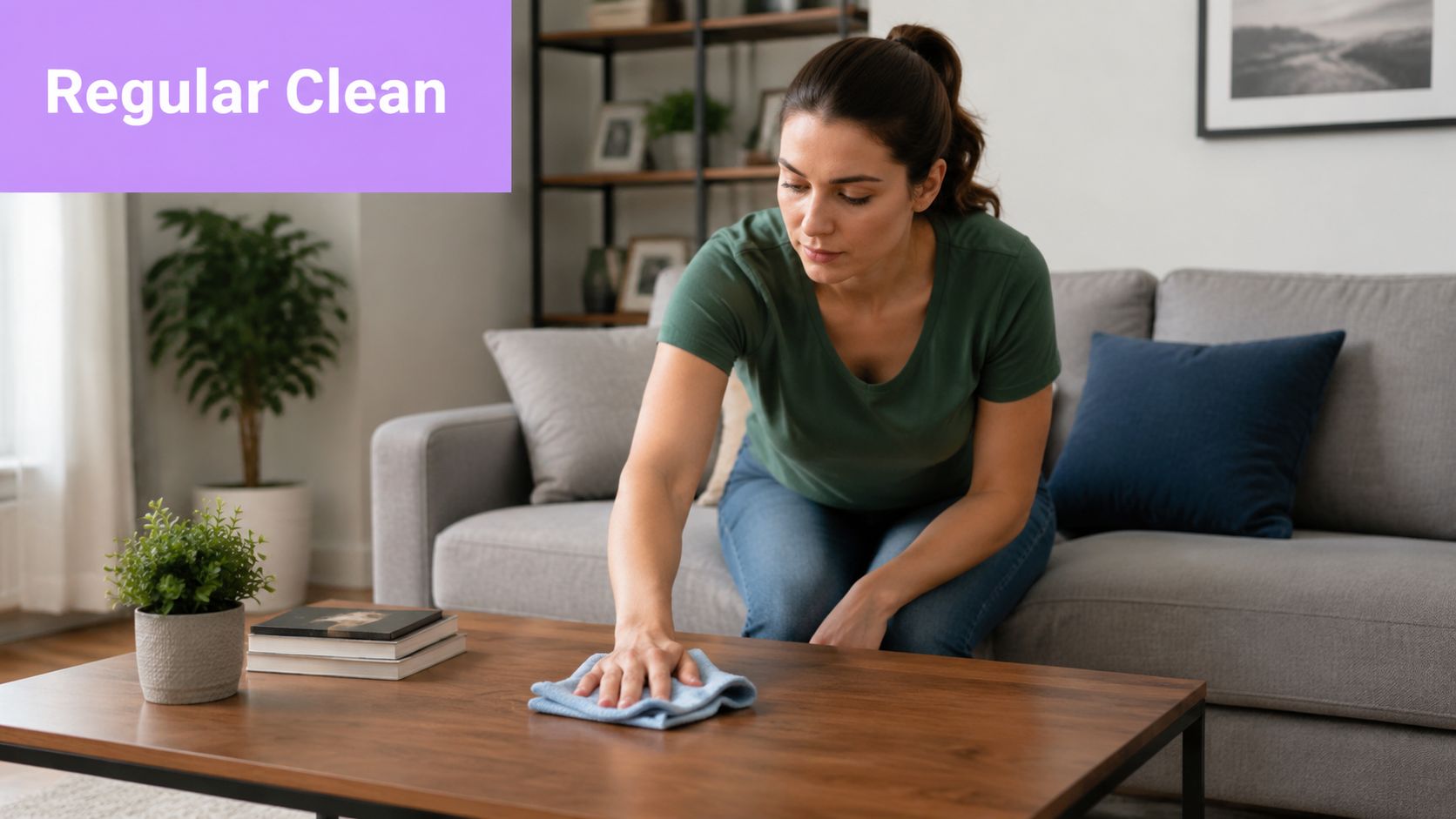
Households comparing providers should look closely at the task list, not just the headline promise. A proper residential cleaning service should define what happens in each room so there's no confusion on the day.
The standard maintenance clean
In most homes, a regular house cleaner will cover the following core tasks:
- Living areas and bedrooms: Dust reachable surfaces, tidy visible areas, vacuum floors and rugs, and mop hard floors where included.
- Kitchen surfaces: Wipe benches, clean the sink, polish taps, spot clean cupboard exteriors, and clean the outside of major appliances.
- Bathrooms: Clean toilets, sinks, mirrors, showers, and bath surfaces. Mop the floor and wipe high-touch points.
- General finishing tasks: Empty rubbish bins, straighten cushions, and leave the home reset for normal use.
This sort of service works best when the home is already reasonably accessible. If toys, laundry, paperwork, or dishes are covering most surfaces, the cleaner's time gets pulled into tidying rather than cleaning.
What usually sits outside the regular visit
Some tasks are commonly treated as add-ons because they take longer and don't need attention every visit.
- Inside ovens: These usually need stronger degreasing, longer dwell time, and more labour.
- Inside fridges: Best handled as a scheduled extra, especially if shelves need to be emptied.
- Internal windows and tracks: Time-intensive and often skipped on routine visits unless quoted in.
- Heavy mould treatment: Regular bathroom wiping helps, but established mould usually needs focused treatment and better moisture control.
- Detailed wall marks and spot removal: These are small jobs that can become large jobs quickly.
For greasy splashbacks, soap scum, or bathroom residue, households are often better off using purpose-specific products rather than pushing an all-purpose spray beyond its limits. Where a specific cleaning issue needs a stronger home-care option, the Star Cleaner Shop eco-friendly cleaning range is a practical place to look for commercial-grade products suited to recurring maintenance.
Cleaning and disinfecting are not the same job
One of the biggest misunderstandings in residential cleaning is the idea that “stronger” always means “cleaner”. It doesn't. Cleaning removes soil. Disinfection only works properly when the soil is already gone and when the product is used exactly as directed.
Australian guidance reflected in Green Seal's household cleaning standard notes that soil residue can reduce disinfectant performance, and disinfectants must be approved and applied at the correct concentration and contact time, as outlined in the GS-8 cleaning products benchmark.
Clean first. Disinfect when the situation calls for it. Using disinfectant on a dirty surface is a common mistake, not a higher standard.
That's why professional operators don't flood every surface with disinfectant on every visit. In ordinary domestic cleaning, the better approach is detergent cleaning first, then targeted disinfection for contamination-prone or high-touch areas where it's needed.
Choosing the Right Cleaning Schedule for Your Home
The right schedule depends less on preference and more on what the household puts the home through each week. A family with school-aged children, frequent cooking, and pets creates a different cleaning pattern from a retired couple who spend part of the week out of the house. The mistake is booking too little service and expecting it to behave like frequent maintenance.
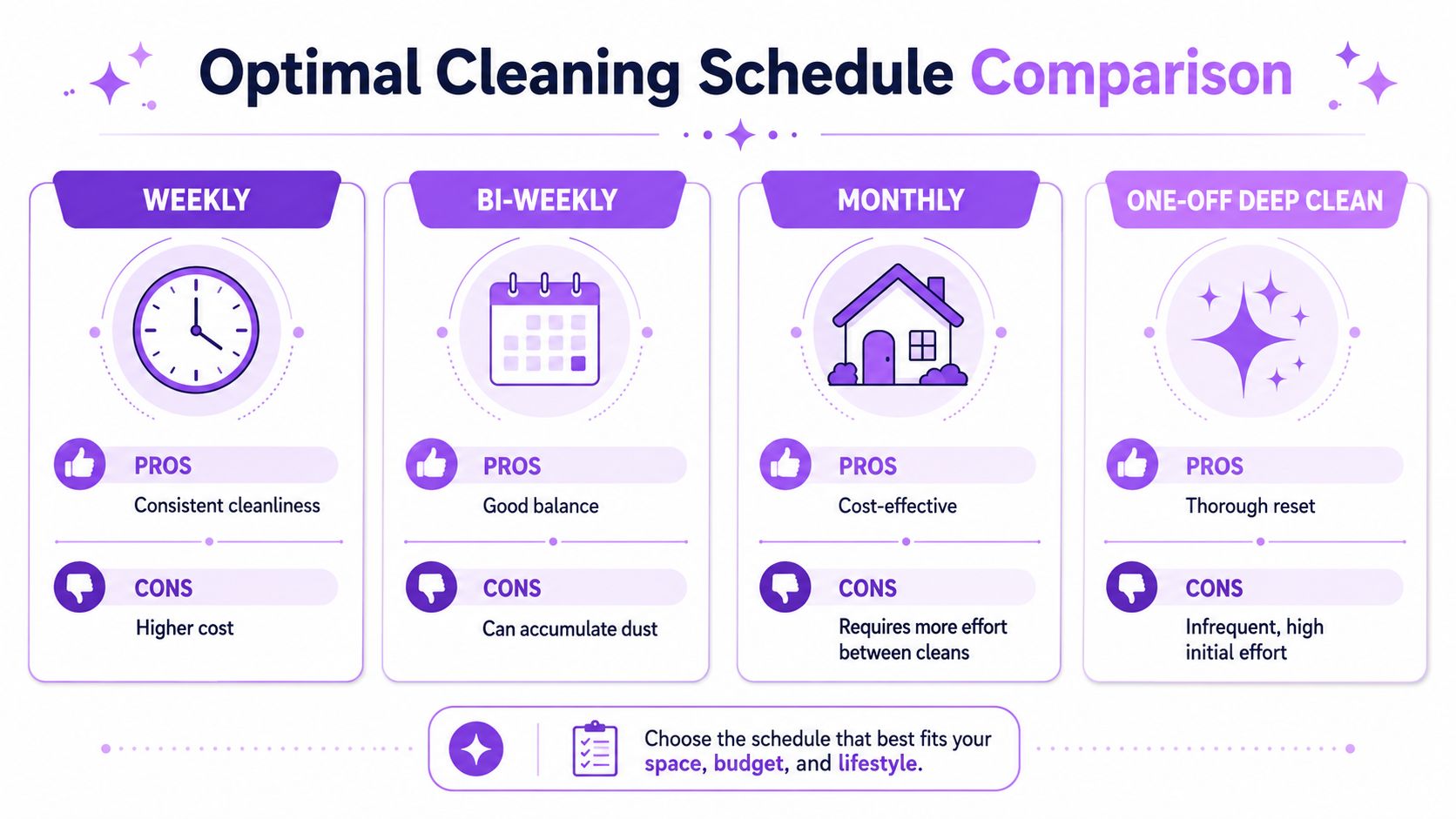
Australian households often need flexibility because work, school, and care responsibilities shift week to week. That's why the decision is usually about fit, not perfection. The Australian-focused discussion of regular cleaning frequency points to the same practical issue: time-poor households get the most value when the cleaning cadence matches daily life.
How household patterns change the answer
A cleaner should come often enough to stop buildup, but not so often that the service is solving a problem the home doesn't have.
A weekly service usually suits homes with:
- Heavy kitchen use: Lots of cooking means faster grease, crumbs, splash marks, and bin turnover.
- Young children: Bathrooms, floors, and touchpoints rarely stay settled for long.
- Pets indoors: Hair, dander, nose prints, and tracked-in dirt build up quickly.
- Frequent visitors or home-based work: The home needs to stay ready, not just recover eventually.
A fortnightly service often fits homes where people are out during the day, mess is moderate, and someone can do light touch-ups between visits.
Weekly vs fortnightly cleaning which is right for you
| Factor | Weekly Cleaning | Fortnightly Cleaning |
|---|---|---|
| Best fit | Busy families, pet owners, high-use homes | Couples, smaller households, steadier routines |
| Kitchen condition between visits | Easier to keep grease and crumbs under control | More wiping needed between cleans |
| Bathroom upkeep | Less buildup, easier maintenance | More soap scum and splash accumulation |
| Effort required by household | Lower day-to-day catch-up | Moderate touch-up needed |
| Budget pattern | Higher ongoing commitment | Better balance for many households |
| Overall feel of the home | Consistently reset | Good standard, with more fluctuation |
If a household is already doing a mini clean before the cleaner arrives, the frequency is probably too low or the scope is too narrow.
When monthly cleaning makes sense
Monthly cleaning can work, but only in specific homes. It tends to suit lighter-use properties, disciplined households, or homes where residents already maintain a decent standard themselves. It's often less effective for family homes because the cleaner spends more time catching up on buildup rather than maintaining a clean baseline.
One-off deep cleans serve a different purpose again. They're useful as a reset at the beginning of service, after renovation dust, before guests, or when a home hasn't been professionally cleaned for some time. They aren't a substitute for a recurring schedule.
The most accurate answer usually comes from an on-site quote, because layout, bathrooms, floor types, clutter levels, and access all change the actual workload. That's one reason some professional systems, including Star Cleaner Australia, quote on site before placing work on a regular schedule. It removes a lot of the guesswork that comes with quick online estimates.
Understanding the Benefits and Real Costs
A regular cleaner changes the rhythm of the week. For a busy household, the ultimate gain is not a perfect-looking home. It is walking into a kitchen and bathroom that have already been handled, without another job sitting on the family list after work, school pickup, appointments, or care duties.
The time savings matter, as noted earlier in this article, but the practical benefit runs deeper than hours recovered. Regular service reduces decision fatigue. It also lowers the quiet tension that builds when one person keeps spotting what still needs doing and someone else thinks the house is “fine for now.”
For households supporting an older family member, an NDIS participant, or anyone with reduced mobility, consistency also has a safety value. Clean, dry bathroom floors, clear walkways, controlled dust, and predictable cleaning methods are not cosmetic details. They affect day-to-day comfort and risk inside the home.
What households are actually paying for
Households are paying for repeatability.
A good regular cleaner follows a set standard each visit, notices early signs of buildup, and helps stop the home sliding back into catch-up mode. That matters more than a long list of one-off tasks. In practice, a cleaner who knows the home well often works better and more carefully than someone attending as a once-off with no context about the household, pets, surfaces, or access routine.
Product choice also affects value. Some families want stronger disinfecting in certain areas. Others are trying to reduce residues, fragrances, or harsher chemicals around children, respiratory issues, or support needs. Households comparing methods can review these eco-friendly cleaning services in Australia before asking what products are used on benches, bathrooms, and high-touch surfaces.
What usually changes the price
Quotes usually move for practical reasons, not mysterious ones:
- Bathrooms and kitchens: These are the slowest rooms and often decide the job time.
- Layout: Stairs, multiple living zones, and spread-out rooms add labour.
- Condition of the home: Ongoing maintenance costs less to keep on track than a home with backlog in showers, floors, and detailed surfaces.
- Scope: Internal windows, oven cleaning, fridge cleaning, bed changes, and detailed dusting all add time.
- Access and preparation: Heavy clutter, locked areas, pets that need managing, or difficult parking can all affect the visit.
- Risk and care requirements: Homes with vulnerable clients may need the same cleaner, tighter hygiene processes, or more careful product selection.
The cheapest quote often leaves out one of those realities. Then the service feels rushed, rooms get skipped, or standards drift after the first few visits. A clear scope, insured and safety-checked operators, and a written process for handling issues give a household a better way to judge value.
That is especially true for Australian families trying to balance school schedules, shift work, and cost of living pressure. Weekly service can feel expensive on paper, but fortnightly can become false economy if the house keeps slipping far enough between visits that everyone is still spending weekends catching up. The right choice is the schedule and scope that your household can sustain without stress.
In our experience, that is why on-site quoting matters. It gives a more accurate picture of workload, access, and any care or safety considerations before a regular plan starts.
Setting Up Your Regular Cleaning Arrangement with Confidence
Setting up a recurring arrangement means the same person, or the same provider, will be in a private space on an ongoing basis – often when no one is home. That makes the setup step more important than for a one-off clean, and it deserves the same care used for any service involving keys, alarm codes, or personal routines.
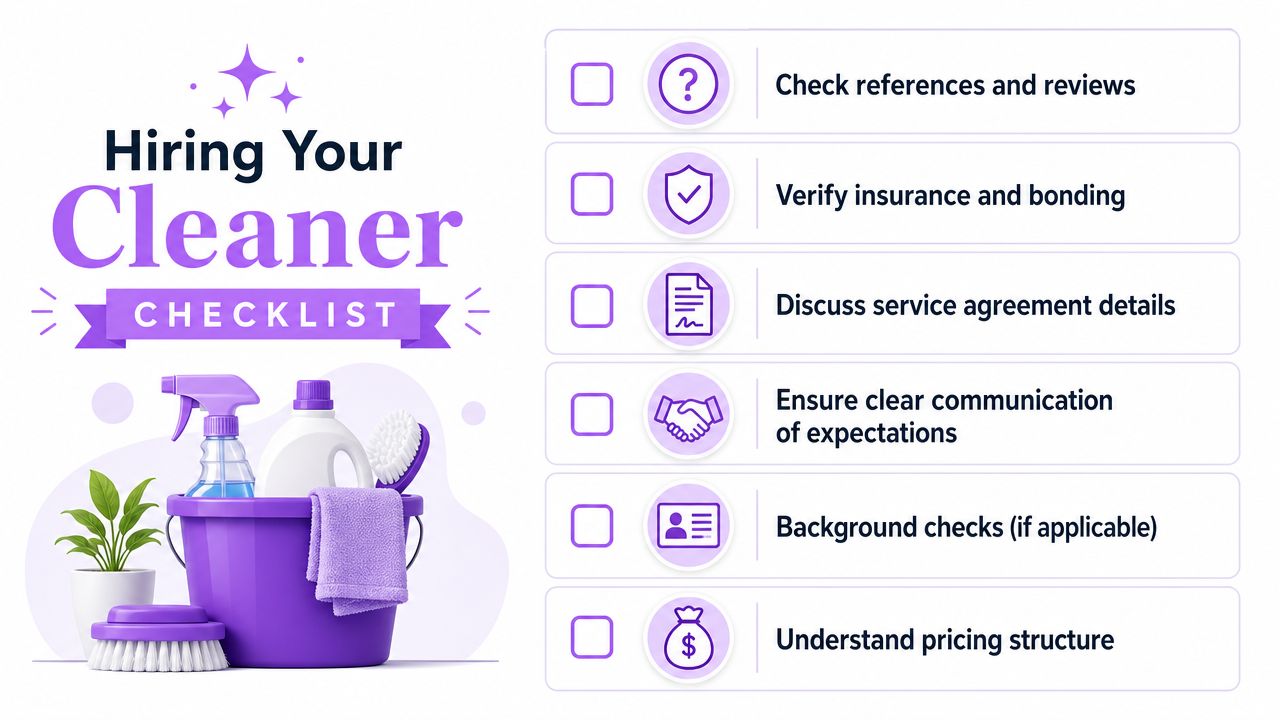
The simplest way to avoid trouble is to ask direct questions before the first visit. A clear process isn't a bonus. It's the baseline.
Questions worth asking before booking
Who is attending the job
Households should know whether the same operator returns each time, whether substitutions happen, and how they're managed.What checks and insurance are in place
Ask whether the cleaner or company carries insurance, how vetting is handled, and what happens if there's accidental damage.What equipment is included
Some cleaners bring everything. Others expect access to a vacuum, mop, or products. That should be settled upfront.How is the scope documented
A written service agreement matters. It should state the regular tasks, add-ons, exclusions, and any access instructions.How are issues resolved
If something is missed, the household should know the process for reporting it and what the remedy looks like.
Households that want a clearer picture of how managed services operate can review how cleaning services work in Australia before comparing providers.
Before you commit to a regular arrangement
Beyond the questions above, it is worth doing a basic screening check on any provider before locking in an ongoing schedule – confirming insurance, how substitutions are handled, and how issues get resolved. A full walkthrough of how to find and vet a cleaner near you covers that screening process in detail, including warning signs to watch for and what a properly vetted provider should sound like.
Once that groundwork is done, a managed platform is often the simpler path for an ongoing arrangement, because the vetting, insurance, scheduling, and complaint handling are already built into the service.
Specialised Cleaning for Airbnb and NDIS Participants
A standard recurring clean doesn't cover every type of property. Short-stay accommodation and vulnerable-household cleaning both need tighter systems, clearer communication, and stronger follow-through.

Short stay turnovers need speed and consistency
Airbnb and short-stay jobs aren't just house cleans with fresh linen. They run on deadlines. The cleaner often has a narrow turnover window, and the result has to be guest-ready, not merely tidy.
That means presentation matters at a higher level. Beds need to be reset properly, amenities checked, rubbish removed completely, and the property inspected with fresh eyes. A missed bathroom detail or greasy cooktop can affect the guest experience immediately. For hosts, reliability matters as much as cleaning skill, because delays can disrupt check-in.
For stubborn guest-related issues such as kitchen grease, bathroom staining, or carpet marks between bookings, using targeted products from the Star Cleaner Shop can help maintain standards between professional visits.
NDIS and vulnerable households need stronger controls
For NDIS participants, older Australians, and households with disability-related routines, the service standard has to go beyond surface cleanliness. Trust, privacy, documentation, and schedule reliability matter more because the cleaner may be working around care plans, support workers, medications, mobility equipment, or sensory needs.
The key issue is operational consistency. As the discussion of trust and compliance for vulnerable-household cleaning notes, the right cleaner for these households isn't simply the cheapest or most flexible one – it's a dependable, recurring arrangement with consistent attendance, clear documentation, and the same operator returning each visit wherever possible.
That's why one-size-fits-all cleaning often fails in these settings. Vulnerable households usually need a provider with safety-checked operators, reliable scheduling, and clear accountability if routines need to be protected.
For households that want recurring home cleaning with safety-checked operators, clear scope, specialised options for Airbnb or NDIS work, and a 100% satisfaction guarantee, Star Cleaner Australia Pty Ltd offers a managed way to organise the service properly.