






Typical gutter cleaning for a standard Australian home usually costs $150 to $300, but that figure can change quickly if the house is larger, taller, or harder to access. That's why two homes with similar gutter length can still get very different quotes.
A lot of homeowners only start looking up gutter cleaning rates after water begins spilling over the edge in a storm, or when leaves start sprouting from the gutter line. The problem is that most online price guides flatten everything into a per-metre number, which sounds tidy but often isn't how real quoting works on site. Height, roof pitch, ladder setup, debris condition, and whether downpipes are blocked all matter.
A fair quote should reflect labour, safety setup, and time involved. It shouldn't be inflated by vague “average” pricing, and it shouldn't ignore the risks that make one property straightforward and another one slow and hazardous.
Table of Contents
- Why Gutter Cleaning Rates Are More Than a Simple Number
- Gutter Cleaning Price Ranges Across Australia
- What Really Drives Your Gutter Cleaning Quote
- Professional Service vs DIY Gutter Cleaning
- Smart Ways to Reduce Your Gutter Cleaning Costs
- How to Get an Accurate and Fair Quote
Why Gutter Cleaning Rates Are More Than a Simple Number
A lot of gutter jobs get booked the same way. The first big rain hits, water starts spilling over the front gutter, and the homeowner wants a price fast.
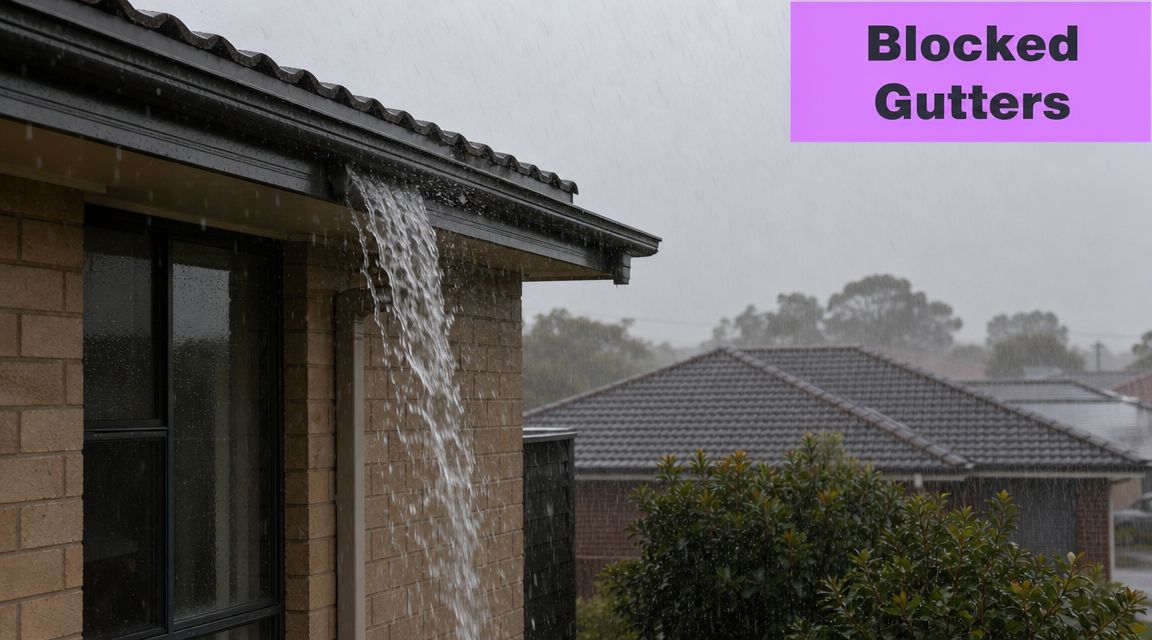
That urgency is exactly why flat online rates cause trouble. They sound clear, but they leave out the parts that usually decide the quote: how safely the gutters can be reached, how much setup the crew needs, what condition the gutters are in, and how long the job will take on site.
Two houses can have a similar roofline length and still price very differently. One might have wide, level access around the home and light leaf build-up. The other might need ladder repositioning in tight side passages, careful work around solar panels, and extra time clearing wet, compacted debris from blocked valleys and downpipes. The metre rate does not explain that difference. The work does.
Why flat averages often mislead
Per-metre pricing works better for materials than for site labour. Gutter cleaning is a service job, and service jobs are shaped by risk, access, and time.
A cheap number given before anyone asks about storeys, roof pitch, access points, or obstructions usually means one of two things. The contractor is guessing, or the quote excludes work that will be added later.
That is where homeowners get caught. They compare a low headline figure against a more realistic quote and assume the higher one is overpriced, when often it just reflects the actual conditions of the property.
What a homeowner should actually focus on
Look at what makes the job simple or difficult to complete properly. Can the technician reach every section safely? Is the debris dry and loose, or heavy and packed down? Are there brittle tiles, steep sections, pergolas, extensions, or landscaping that slow access and increase care requirements?
Those details affect labour time, safety controls, equipment, and cleanup. They also explain why an on-site assessment from a vetted professional is usually the fairest way to price the work.
Homeowners who want practical maintenance guidance before booking can also use Star Cleaner Australia's gutter and exterior cleaning knowledge hub. The useful way to read any quote is simple: check whether it reflects the actual property, not just a generic average.
Gutter Cleaning Price Ranges Across Australia
A homeowner in Brisbane might pay one figure for a straightforward single-storey clean, while a homeowner in Melbourne with a narrow side path, second-storey roofline, and heavy leaf build-up gets a much higher quote for a house that looks similar on paper. That is why national price tables only work as rough budgeting guides.
Estimated Gutter Cleaning Rates in Australia 2026
| Property Type | Average Price Range (AUD) |
|---|---|
| Standard house | A$150 to A$300 |
| Single-storey home | A$130 to A$250 |
| Two-storey home | A$150 to A$350 |
| Three-storey home | A$200 to A$450+ |
Earlier market references place standard house gutter cleaning around A$150 to A$300, with taller homes often landing higher once extra setup, safety controls, and labour time are factored in.
The useful part of these ranges is not the exact number. It is the spread. A wide spread usually means the trade is pricing real site conditions, not just gutter length.
How to use these ranges without getting misled
Use the table to set a budget, then expect the final quote to move once someone checks the property properly.
A simple single-storey home with open access, light debris, and regular maintenance often sits toward the lower end. The same house can move up fast if there is a conservatory below the roof edge, tight ladder access, solar panels in the working area, or wet compacted debris that takes longer to remove and bag.
Height still matters, of course. So does the shape of the job.
A few practical patterns tend to hold:
- Single-storey homes: Usually cheaper because setup is faster and technicians can move around the perimeter more easily.
- Two-storey homes: Commonly cost more because ladder work is slower, repositioning takes longer, and the margin for error is smaller.
- Three-storey or highly awkward properties: These often need custom quoting because standard rate tables stop being useful once specialist access or added safety planning is involved.
Why broad price bands beat flat per-metre claims
Per-metre figures sound tidy, but they hide the parts of the job that affect cost. Two homes can have similar gutter lengths and still price very differently if one has clear ground access and the other has steep sections, extensions, fencing, or fragile roof materials that slow the work.
That is why experienced cleaners treat national averages as a starting point only. Fair pricing comes from seeing the property, checking access, and quoting for the actual risk and labour involved.
Regional labour costs can shift the number as well, especially between metro and regional areas, but the bigger difference usually comes from the site itself. For homeowners, the safest reading of any Australia-wide price range is simple. Use it to plan. Use an on-site quote to decide.
What Really Drives Your Gutter Cleaning Quote
Two houses can have almost the same gutter length and end up with very different quotes. One has clear side access, firm ground, and light leaf build-up. The other has a steep section over a pergola, tight access down one side, and gutters packed with wet debris. The metre count barely explains the gap.
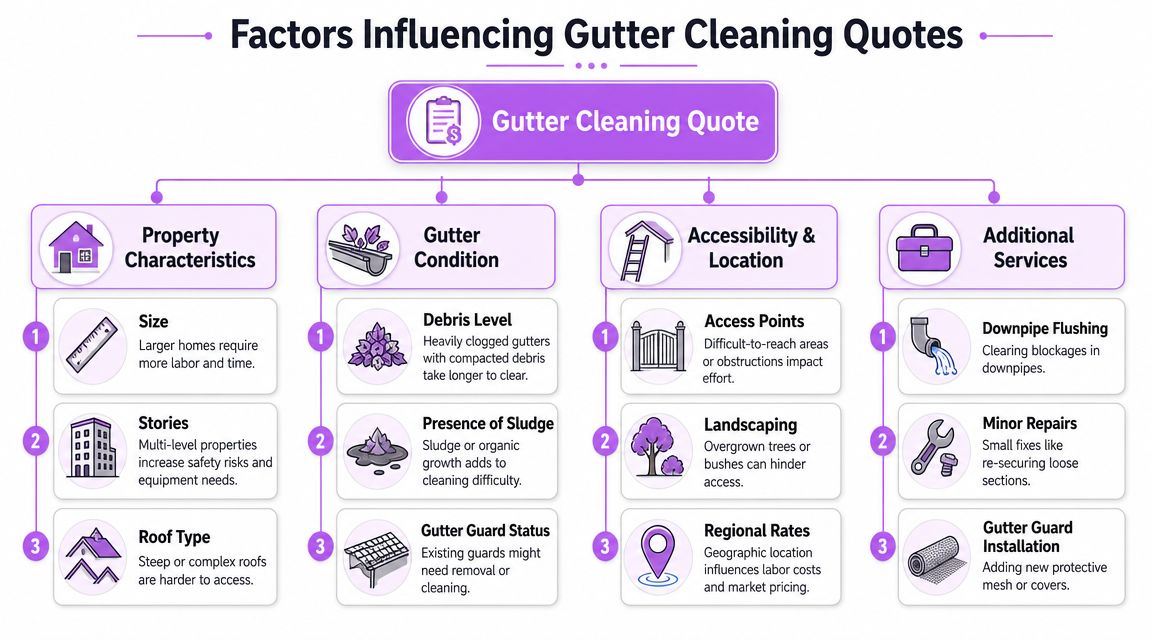
That is why flat per-metre rates often mislead homeowners. Gutter length sets a starting point, but the actual price comes from labour time, access difficulty, setup limits, and the level of safety control the job needs. In day-to-day quoting, those factors change the number far more than online rate tables suggest.
Height affects labour, pace, and risk
Once cleaners are working higher up, everything slows down. Ladder placement takes longer. Repositioning is more frequent. Tool handling is more deliberate, and clearing, bagging, and checking flow all take extra time when the margin for error is smaller.
The difference is not just height on paper. It is the working method that height forces on the crew.
Access issues often matter more than gutter length
Some of the most time-consuming jobs are not the tallest ones. They are the properties where getting to the gutters is awkward from the start.
Common quote drivers include:
- Tight side access: Less space for ladders, hoses, buckets, and safe movement.
- Obstructions below the roofline: Pergolas, awnings, solar equipment, carports, fencing, and dense gardens can limit setup points.
- Difficult roof layout: Valleys, split levels, rear extensions, and broken roof lines create slower, stop-start work.
- Poor ground conditions: Slopes, soft soil, loose gravel, and wet paving can rule out the fastest setup options.
These details decide whether a cleaner can work efficiently or has to keep resetting position and approach.
Debris condition changes the workload
A gutter full of dry leaves is one type of job. Wet sludge, seed growth, moss, and compacted organic matter are another. Heavier debris usually needs scraping, hand removal, bagging, and flushing. It is slower, messier, and harder to estimate from a photo alone.
Gutter guards can reduce leaf volume, but they do not always reduce the quote. If guards need to be lifted, worked around, or refitted carefully, labour goes up.
Cheap quotes usually rely on favourable assumptions.
Small site details can push a quote up or down
Downpipe condition matters. So does whether water can be tested properly after the clean. If sections are blocked solid or overflow points suggest a hidden issue, the crew needs more time to clear and check the system properly.
Properties with poor maintenance habits often have related issues elsewhere too. The same kind of neglect shows up in other jobs, which is why common home cleaning mistakes that create extra work later tend to have a similar pattern. What looks minor early becomes slower and more expensive to fix later.
What accurate quoting looks like on a real job
Accurate pricing usually comes from seeing the site. Photos help with first screening, but they rarely show ladder footing, narrow access points, hidden obstructions, or how badly material is packed into the gutter channel.
Star Cleaner Australia handles this through vetted operators and on-site quoting. That approach gives homeowners a fairer number because it prices the actual job, not a simplified version of it. It also cuts down on one of the biggest quoting problems in this trade: low initial pricing followed by added charges once the crew sees the access and debris conditions.
Professional Service vs DIY Gutter Cleaning
DIY looks cheaper at first because the labour line disappears. The trade-off is that the homeowner takes on the setup, the physical work, and the safety risk.
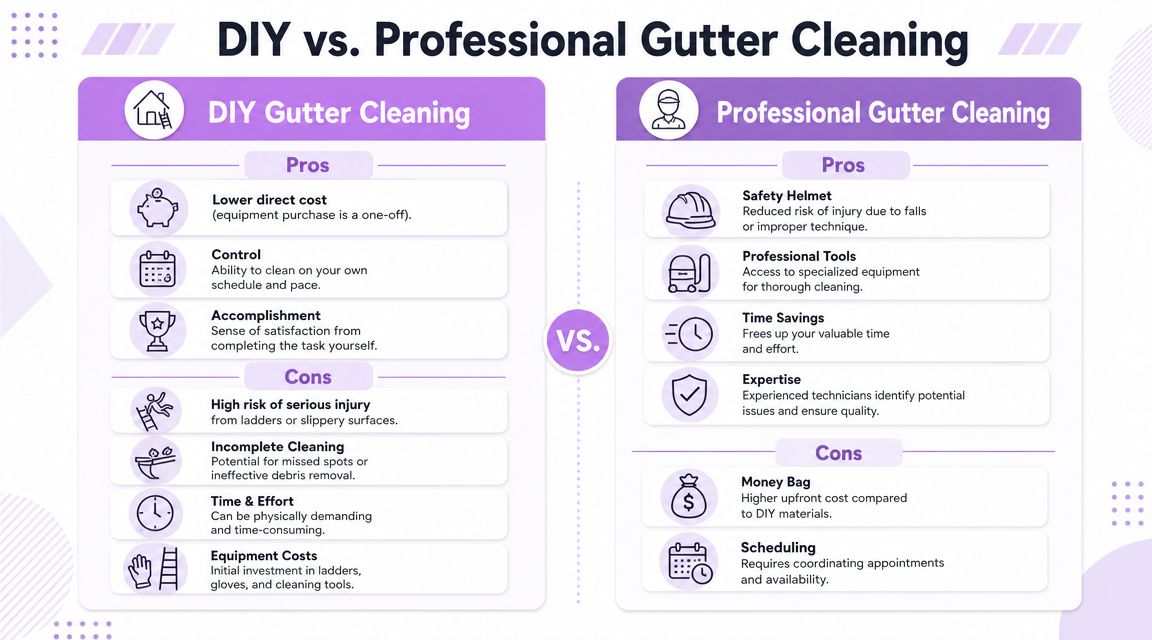
That risk is not theoretical. Safe Work Australia's guidance on falls from height is one reason professional pricing includes compliance and safety costs, and a related industry discussion notes that falls from height remain a leading cause of serious injury in work settings, which helps explain why roof-access jobs aren't quoted like simple ground-level chores in this discussion of height-related gutter cleaning cost factors.
Where DIY can make sense
Some homeowners can manage very light maintenance on a simple, accessible single-storey property. If the goal is clearing a small amount of dry leaf litter from a low, reachable section, DIY may be practical for people who already have the right equipment and are comfortable working safely.
Even then, the job tends to be underestimated. Debris removal is only part of it. Proper work also means checking flow, clearing downpipes where possible, and spotting loose brackets or overflow points.
Where professional service is usually the better decision
Professional service becomes the sensible choice when the property includes any of the following:
- Multiple storeys: Height increases the chance of a bad fall and usually changes equipment needs.
- Heavy sludge or moss: Wet organic build-up is messier, slower, and harder to remove thoroughly.
- Blocked downpipes: Surface clearing alone won't fix the drainage problem.
- Complex roof lines: Split levels and awkward corners create blind spots and access issues.
Professional operators also bring process. They don't just scoop debris and leave. A proper visit should include controlled access, thorough clearing, cleanup, and a clear explanation of anything found.
The hidden cost of doing it halfway
A rushed DIY clean often removes visible debris but leaves the underlying blockage in place. That's where many problems start. Water still backs up, but the gutter looks “clean enough” from ground level.
For homeowners determined to tackle minor organic build-up themselves, using suitable tools and a purpose-made cleaner matters. For moss or grime on nearby exterior surfaces, Star Cleaner Shop eco-friendly cleaning products are one option to consider because they're designed for practical cleaning use rather than improvised household mixes.
Professional work costs more upfront than DIY materials, but it can remove a lot of uncertainty, especially where height and water flow are involved.
Useful maintenance habits also overlap with broader home care. Many of the same avoidable errors show up in roofline cleaning and routine upkeep, which is why this guide to common cleaning mistakes Australians make is worth a look.
Smart Ways to Reduce Your Gutter Cleaning Costs
The cheapest gutter clean is usually the one that doesn't become urgent. Once a property owner waits until overflow, storm debris, or visible blockage appears, the job often becomes slower, messier, and harder to schedule at a calm price.
Use timing to your advantage
Demand often rises after major leaf-fall periods and storms, and many service providers recommend maintenance every 6 to 12 months, which helps keep the job preventive rather than reactive, according to this guide on gutter and downspout cleaning frequency.
That gives homeowners a practical cost-control strategy. Book before the obvious rush, not during it.
A few smart timing habits help:
- Schedule before storm season: It's easier to book calmly before everyone else notices an overflow problem.
- Stay on a maintenance cycle: Regular servicing usually means less compacted debris and fewer surprises.
- Avoid emergency bookings when possible: Urgent work often comes with fewer appointment options and less room to compare providers.
Reduce the work, not just the rate
Trying to force a lower quote on a difficult property rarely ends well. The better approach is reducing the amount of labour the next visit requires.
That can include trimming back overhanging branches, clearing side access, or discussing gutter guard options where debris load is consistently high. Guards aren't a complete substitute for maintenance, but on the right property they can reduce how much material enters the system.
Bundle where it makes practical sense
If a provider is already on site, combining compatible exterior services can sometimes improve value. The key is making sure each task is clearly listed so nothing important gets vaguely bundled and then skipped.
A homeowner should ask what's included and what isn't. Gutter cleaning, downpipe flushing, minor debris removal from the ground, and any basic inspection notes should be spelled out. Clear scope prevents false savings.
The goal isn't to find the lowest sticker price. It's to keep the property out of the expensive, reactive cycle.
How to Get an Accurate and Fair Quote
A fair quote is specific. It tells the homeowner what the operator is pricing, what's included, and what might change if site conditions differ from the initial description.

A quick self-check before you call
Before requesting a quote, a few property details help a cleaner give an accurate figure instead of a placeholder number:
- Count the storeys: Single- and double-storey homes are priced differently for good reason.
- Describe the debris: Dry leaf litter, seed pods, moss, and wet compacted sludge each change how long the job takes.
- Note any access limits: Side gates, pergolas, extensions, and sloped ground all affect setup.
- Flag overflow or staining: Water marks on walls or paving usually point to a blockage, not just surface debris.
Sharing these details upfront narrows the gap between an online estimate and the number a cleaner actually confirms on site.
Questions worth asking before booking
A homeowner doesn't need trade knowledge to filter out weak quoting. A short checklist does the job:
- What exactly is included: Ask whether the quote covers debris removal, clearing accessible downpipes, and site cleanup.
- How was the property assessed: If the provider hasn't asked about storeys, access, or roof form, the quote may be too rough to trust.
- What happens if the gutters are worse than expected: Good operators explain this upfront instead of surprising the customer on the day.
- Are the operators insured and safety-checked: That should be standard, especially for height work.
- Is there a service guarantee: Clear aftercare matters if flow issues remain after the job.
Signs of a quote that's probably reliable
The strongest quotes usually have three traits.
First, they acknowledge that access and safety affect the rate. Second, they define inclusions in writing. Third, they come from a process that doesn't rely on guesswork alone.
That's one reason on-site quoting works well for this kind of service. It lets the operator price the actual job rather than a simplified version of it. Homeowners who want to understand that process better can review how cleaning service quoting and booking works in Australia.
What a trusted provider should offer
Reliability in this category isn't just about arriving on time. It also means turning up with the right equipment, pricing the work fairly, and backing the service if something needs attention afterward.
For homeowners using a professional network, the strongest model is one built around vetted operators, clear scope, and follow-through. Star Cleaner Australia fits that approach by using safety-checked professionals, on-site quoting for accuracy, and a 100% satisfaction guarantee, which aligns well with what homeowners should be looking for in any gutter cleaning provider.
Get the quote in writing. Verbal assumptions are where scope disputes usually start.
If the gutters are overflowing, overdue, or just hard to assess from the ground, Star Cleaner Australia Pty Ltd offers a practical path forward. The platform connects households with vetted, insured, safety-checked operators who quote on site, explain the cost drivers clearly, and back the work with a 100% satisfaction guarantee.