




The last day in a Sydney rental rarely feels organised. There are boxes in the hallway, the fridge still needs to be emptied, the removalist window is getting tight, and the final inspection sits in the back of the mind the whole time. For many tenants, bond cleaning sydney becomes the last job left standing. It's also the one that can decide whether the bond comes back cleanly or gets chipped away by deductions.
A lot of stress comes from not knowing what the agent will focus on. Most tenants clean for appearance. Most agents inspect for missed detail, consistency, and whether the property matches the condition report closely enough to satisfy the lease standard. That difference matters. A place can look tidy on first glance and still fail on oven grease, shower glass, window tracks, switch plates, or outdoor grime.
Professional support can help, but a key advantage is knowing the standard before the inspection starts. Tenants comparing service options often look for providers that combine practical systems with safer methods, such as eco-friendly cleaning services in Australia, because harsh product mistakes can create a fresh dispute just before handover.
Table of Contents
- Your Guide to a Stress-Free Sydney Move-Out
- Your Legal Obligations for Bond Cleaning in Sydney
- The Ultimate Sydney Bond Cleaning Checklist
- Decoding Agent Expectations to Avoid Bond Disputes
- Typical Bond Cleaning Prices in Sydney for 2026
- DIY vs Professional Bond Cleaning Which is Right for You
- Frequently Asked Bond Cleaning Questions
Your Guide to a Stress-Free Sydney Move-Out
The pressure point usually arrives after the furniture is gone. Empty rooms make every mark more visible. Dust lines appear where the lounge used to sit. Grease on the splashback suddenly stands out. The balcony that seemed acceptable with pot plants on it now looks like part of the inspection risk.

Tenants often make the wrong call. They treat the clean as a rushed cosmetic job instead of the final part of the tenancy handover. A successful exit clean isn't about making the place smell fresh for ten minutes. It's about removing the issues that trigger comments on the outgoing report, especially in kitchens, bathrooms, internal glass, tracks, floors, and outside areas.
Practical rule: Clean for inspection distance and close-up distance. Agents open cupboards, slide windows, look behind doors, and check the rooms that carry the most cleaning risk.
A better approach is to think like a property manager. Is the oven free of residue. Are the taps and shower screen free of soap build-up. Are skirting boards dusty. Are the bins, balcony, patio, or lawn likely to be photographed as “not cleaned”. Those are the details that decide whether the property feels finished.
Bond cleaning sydney works best when the property is empty, power and water are still connected, and enough time is allowed for problem areas instead of trying to wipe everything once and hope for the best.
Your Legal Obligations for Bond Cleaning in Sydney
Tenants don't need to guess the legal benchmark. A NSW-focused guide notes that under the Residential Tenancies Act 2010, tenants must leave the property “reasonably clean” and in the same condition as at the start of the lease, allowing for fair wear and tear, and disputes are often referred to NCAT if they can't be resolved earlier through the usual process of bond handling and tenancy dispute pathways in NSW (NSW end-of-lease cleaning guidance).
That wording matters because “reasonably clean” is not the same as “brand new”. It also doesn't excuse obvious dirt, residue, or neglect. The practical test is whether the condition at handover reflects ordinary use plus proper cleaning, rather than a tenant leaving behind work for the owner or agent to organise.
What fair wear and tear usually means
Fair wear and tear comes from normal living over time. It can include things like carpet flattening from foot traffic, light fading, or minor ageing that cleaning can't reverse. Cleaning won't turn age back, and agents generally shouldn't treat normal deterioration as if it were dirt.
Damage is different. A heavy stain, adhesive residue, mould caused by poor ventilation management, burns, chipped surfaces, or greasy build-up that's never been removed can fall outside fair wear and tear. That's where disputes start.
A simple way to separate the two is this:
- Wear and tear comes from ordinary use over time.
- Cleaning issues come off with the right process.
- Damage remains after cleaning, or needs repair rather than washing.
What the legal standard means in practice
The legal obligation usually lands hardest in the rooms that show hygiene and maintenance issues fastest. Kitchens, bathrooms, floors, appliances, windows, and outdoor areas are common inspection points because they reveal whether the property was brought back to handover condition.
A practical move-out standard often includes:
- Kitchen detail work: inside cupboards, stovetop, oven surfaces, rangehood filters, sink, splashback, and floor edges.
- Bathroom reset: soap scum removal, toilet sanitising, vanity cleaning, mirrors, chrome, and drains.
- Whole-property finish: vacuuming or mopping, skirting boards, switches, internal glass, tracks, and spot marks.
- External presentation where relevant: balconies, patios, bins, lawns, and other listed outdoor spaces.
Leave the property as if the next inspection will involve opening everything, not just walking through once.
Why documents matter as much as cleaning
The legal standard isn't judged in isolation. It's judged against the start-of-lease condition. Entry reports and time-stamped photos are often the difference between a straightforward bond return and an argument about whether a mark, stain, or defect was already there.
Tenants who document the exit condition properly give themselves a much better footing if a disagreement appears after keys are handed over.
The Ultimate Sydney Bond Cleaning Checklist
The final inspection usually takes only a few minutes. An agent walks in, opens a few cupboards, checks the oven, looks along skirting boards, and notices the spots tenants often assume will be overlooked. That is why a bond clean needs an inspection order, not just effort.
The safest approach is to clean once the property is empty, rubbish is out, and removable items are gone. Empty rooms show dust, grease, marks, and missed edges much more clearly than furnished ones.
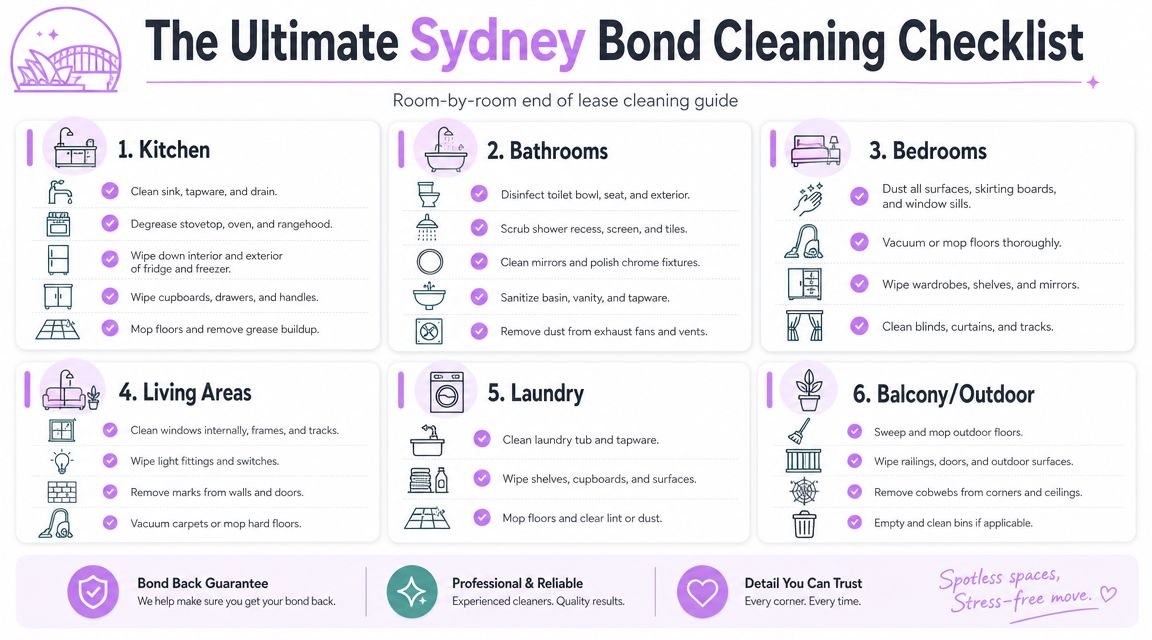
If you want to avoid the issues that commonly trigger a second clean, this guide to common cleaning mistakes Australians make is useful background before you start.
These four areas (kitchen, bathrooms, bedrooms and living areas, and outdoor spaces) are the ones a Sydney inspection focuses on most, so use the summary below as a quick guide to what to check in each before the final walkthrough. If you want the full step-by-step process, room by room, our detailed room-by-room end of lease cleaning checklist walks through every task in order.
Kitchen
Kitchens attract the most scrutiny because they show grease and food residue fast. Property managers rarely stop at the benchtop. They check cupboard fronts at eye level, the oven door glass, the rangehood, and the corners where crumbs collect.
Work through the kitchen in this order:
- Oven and stovetop: remove grease, burnt residue, and loose debris. Let product sit long enough to break down buildup before scrubbing.
- Rangehood and filters: wipe the outer housing and clean removable filters if the manufacturer allows it.
- Cupboards and drawers: clean inside, outside, handles, edges, and back corners.
- Sink and tapware: remove scale, polish surfaces, and clear residue around the drain.
- Benchtops and splashbacks: wipe off grease film, fingerprints, and cooking marks.
- Fridge space if included: clean shelves, seals, handles, and the floor area underneath or behind the appliance cavity.
- Floor edges and corners: vacuum first, then mop, so debris is not pushed into joins or grout.
A kitchen can look presentable from the doorway and still fail on close inspection. The oven, rangehood filter, and cupboard tops are common re-clean items because agents often check them by touch, not just by sight.
Bathrooms
Bathrooms tell an agent whether the clean was detailed or rushed. A fresh smell does not help if the shower screen is cloudy, the grout still shows buildup, or hair is left around the drain cover.
Focus on the points that get photographed during disputes:
- Shower recess: remove soap scum, body oil residue, and product film from tiles and fittings.
- Shower screen and tracks: clean both the glass and the lower channel where residue hardens.
- Toilet: clean the bowl, seat, hinges, cistern, base, and the floor around it.
- Vanity and basin: wipe cupboards, handles, overflow openings, and the underside edges.
- Mirrors and chrome: leave dry and streak-free.
- Exhaust covers and vents: remove visible dust.
- Tiles and grout touch points: treat mould and mineral marks where they can be safely removed.
Dwell time matters here. Many bathroom misses happen because product is wiped away before it has time to soften scale or soap scum.
Bedrooms and Living Areas
These rooms are usually quicker, but they are where incomplete work stands out. Agents often scan these spaces for consistency. Clean floors with dusty skirting boards, marked switches, or dirty wardrobe tracks suggest the whole job was rushed.
Use this room-by-room check:
- Skirting boards and window sills: dust first, then wipe marks and settled grime.
- Light switches and power points: remove fingerprints carefully.
- Wardrobes: clean shelves, rails, doors, tracks, and lower corners.
- Doors and handles: wipe touch points, edges, and around the latch area.
- Windows internally: clean glass, frames, and tracks.
- Floors: vacuum edges and corners before finishing the full surface.
- Wall marks: spot clean gently so paint is not rubbed through.
Carpet stains need judgment. Some lift with light treatment. Others spread, wick back, or set harder if too much water or the wrong product is used. If a stain is deep, arranging separate carpet cleaning is often the lower-risk option.
Outdoor Areas
Outdoor spaces are easy to leave until the end and easy to underdo. In Sydney rentals, balconies, courtyards, entry areas, and bins often affect the agent's first impression before they even step inside.
Check these areas before key handover:
- Balcony or patio floors: sweep thoroughly, then mop if suitable for the surface.
- Cobwebs and corners: remove them from ceilings, walls, lights, and railings.
- Outdoor glass if required: clean reachable panes and frames listed in the tenancy.
- Bins: empty and wipe them out if they form part of the property return.
- Lawns or yard presentation: leave them trimmed and tidy if that matches the lease obligations.
- Storage areas: clear dust, leaves, and loose debris.
The practical standard is simple. Clean for the way an agent inspects. Open cupboards. Check low corners. Look at reflective surfaces in natural light. If a spot would stand out in listing photos or during a routine inspection, deal with it before the final handover.
Decoding Agent Expectations to Avoid Bond Disputes
Many disputes don't come from major mess. They come from a mismatch between what the tenant thought was acceptable and what the inspecting agent considered incomplete. That gap is one of the most useful things to understand before booking or starting any bond cleaning sydney job.
A Sydney-focused checklist guide highlights this inspection-standard mismatch. It notes that many guides explain tasks but don't clearly explain what counts as fair wear and tear versus damage under NSW settings, which is exactly where tenants can lose money through deductions or disputes if they don't understand how the inspection is being judged (Sydney bond cleaning checklist guidance).
What agents actually notice first
Property managers are usually looking for consistency. If the benchtops shine but the oven still has residue, the clean feels unfinished. If the floor is mopped but the tracks are full of grit, the room feels partially done.
Common failure points include:
- Window tracks and door runners: easy to miss, easy to photograph.
- Light switches and handles: high-touch areas that show grime quickly.
- Lingering odours: food, pets, smoke, dampness, and strong perfume masking.
- Cupboard interiors: especially under sinks and in pantry corners.
- Shower details: lower screen edges, drain covers, grout lines, and tap bases.
- Outdoor presentation: leaves, dust, cobwebs, and dirty bins.
The agent's eye view of clean versus acceptable
Agents don't normally expect a lived-in property to look newly built. They do expect the place to look reset. That means no obvious residue, no overlooked hygiene points, and no sense that a contractor or owner needs to finish basic cleaning work after handover.
A useful way to self-check is to inspect like this:
| Inspection pass | What to check |
|---|---|
| Standing at the doorway | overall presentation, odour, floors, obvious marks |
| At arm's length | switches, handles, splashbacks, taps, mirrors |
| With cupboards and windows open | tracks, shelves, hinges, corners, seals |
If a surface only looks clean from the centre of the room, it probably won't pass a final inspection.
Documentation that protects the tenant
Exit photos matter most when they match the problem areas agents commonly raise. Good documentation includes kitchens, bathrooms, internal windows, floors, outdoor areas, and any pre-existing marks or ageing that cleaning can't resolve.
Time-stamped photos help show two things clearly. First, the condition at handover. Second, whether the issue raised later was already documented as wear, damage, or a pre-existing defect.
Typical Bond Cleaning Prices in Sydney for 2026
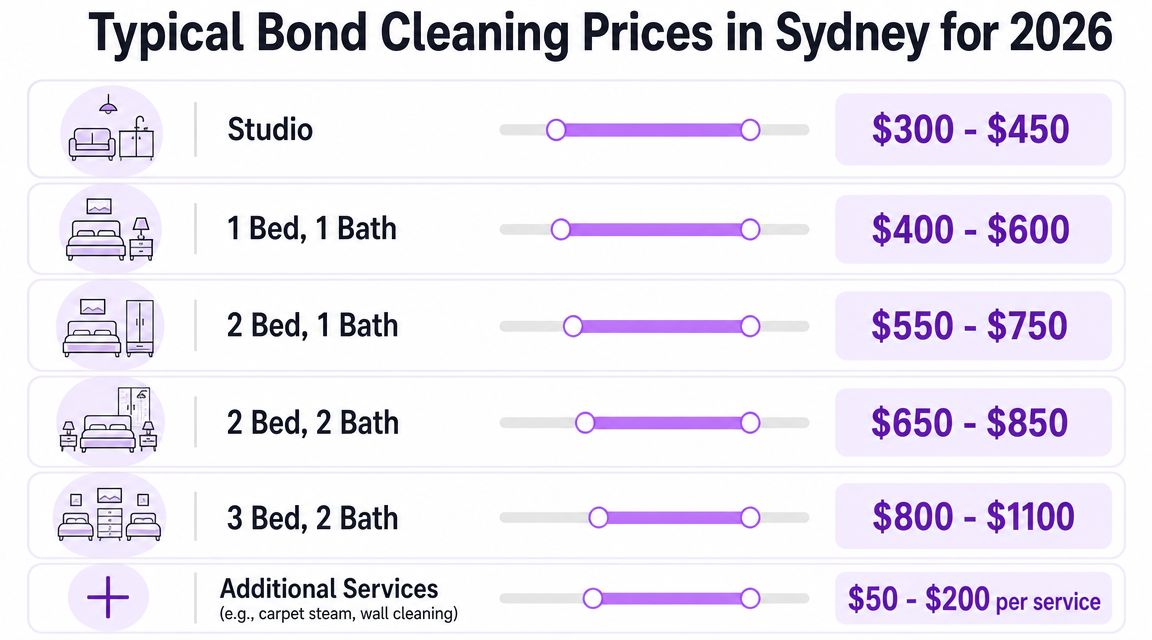
Sydney pricing usually follows two models. Some providers quote by property size as a package. Others quote around average job cost, then adjust for condition and extras. The difference matters because a cheap headline figure often excludes the exact items most likely to come up at inspection.
Published Sydney pricing guides show a clear size-based structure. One source lists $250 to $500 for a 1-bedroom property, $400 to $825 for 2 bedrooms, $484 to $1,045 for 3 bedrooms, $528 to $1,440 for 4 bedrooms, and $572 to $1,670 for 5 bedrooms, while another Sydney marketplace gives an end-of-lease cleaning range of $250 to $400 with a median of $300 for the city. Together, those figures show how far prices can move once property size, condition, and add-ons are factored in (Sydney bond cleaning price guide).
Why quotes vary so much
Two properties with the same room count can price very differently. One may need a routine reset. The other may need oven carbon removal, mould treatment, wall spot cleaning, pet hair removal, and carpet work.
Price usually shifts because of:
- Condition load: grease, soap scum, staining, mould, and hair take time.
- Bathrooms and toilets: more wet areas usually mean more labour.
- Add-on services: carpet cleaning, wall washing, internal appliances, blinds, or exterior windows.
- Access and layout: parking, stairs, lift access, and distance from water points can affect setup and workflow.
What's usually included and what isn't
A base end-of-lease clean commonly covers the main room-by-room tasks. That often means kitchen surfaces and appliances, bathrooms, floors, internal glass, and general detailing.
Extras are where tenants should read the quote carefully. Carpet steam cleaning, wall washing, external windows, heavy blind cleaning, and more intensive outdoor work are often treated separately. That's why on-site quoting is often the fairest method. It reflects the actual labour and avoids disputes about scope later.
For budgeting, the useful takeaway isn't just the lowest advertised number. It's whether the quote matches the inspection risk in that specific property.
DIY vs Professional Bond Cleaning Which is Right for You
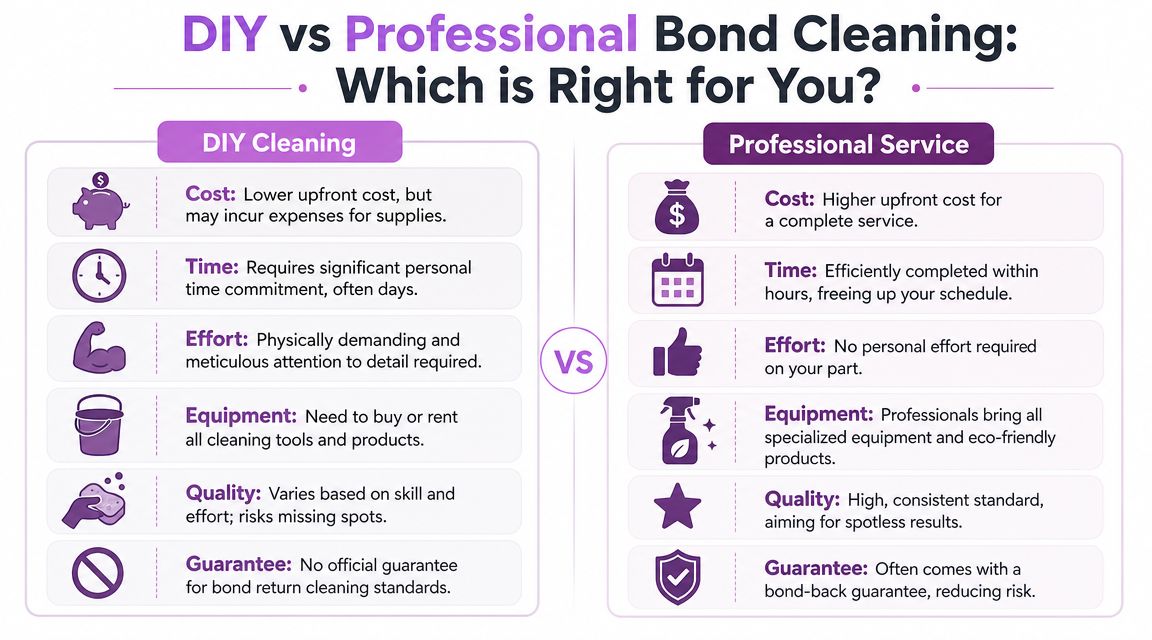
The right choice depends on time, condition, physical capacity, and how much inspection risk the tenant is comfortable carrying. Some properties are realistic DIY jobs. Others become expensive in time and stress if they're tackled without the right tools or process.
A published Sydney estimate puts a one-bedroom apartment at about 4 to 8 hours, while a three-bedroom house commonly takes 8 to 12 hours, with kitchens and bathrooms driving much of that labour rather than floor area alone (Sydney bond cleaning time guide). That's why DIY plans often run over schedule. Tenants count rooms. The actual workload sits in degreasing, rinsing, detailing, and re-checking.
When DIY makes sense
DIY can work well when the property has been maintained consistently and there aren't many heavy-problem surfaces to recover. It also suits tenants who still have enough time after packing, key coordination, and moving logistics.
DIY is usually more realistic if the property has:
- Light build-up only: no severe oven carbon, mould, or deep staining.
- Simple flooring: easy-to-vacuum hard floors or low-risk carpet condition.
- Good maintenance history: regular cleaning throughout the tenancy.
- Enough lead time: at least enough time to clean, inspect, and fix misses before handover.
The biggest DIY mistakes are usually process mistakes. Using the wrong cloth on glass. Scrubbing painted walls too aggressively. Mopping before vacuuming edges. Cleaning the bathroom too early, then leaving footprints and dust behind during the rest of the move.
When professional cleaning is the better option
Professional help usually makes sense when time is compressed or the property condition is uneven. It also helps when the tenant doesn't want the inspection resting on a last-minute personal clean after a tiring move.
The practical advantages are straightforward:
| Factor | DIY | Professional service |
|---|---|---|
| Time pressure | Tenant has to fit cleaning around the move | Work is scheduled as a dedicated job |
| Equipment | Must source sprays, cloths, vacuums, mop systems, possibly extraction | Team arrives with gear suited to the task |
| Consistency | Depends on energy, method, and inspection knowledge | Usually follows a repeatable checklist and sequence |
| Risk of missed detail | Higher in tracks, appliances, and wet areas | Lower when the operator knows common inspection points |
What tenants should look for in a provider
If a professional service is the better fit, reliability matters more than advertising language. The provider should be clear about scope, access, timing, and what counts as an extra. Safety and accountability also matter because vacant properties still involve keys, chemicals, ladders, and appliance cleaning.
One practical option in the market is Star Cleaner Australia, which operates as a platform connecting clients with vetted, insured, safety-checked operators and supports jobs with on-site quoting and a 100% satisfaction guarantee. For tenants trying to understand booking flow and service expectations before choosing any provider, this overview of how cleaning services work in Australia is useful context.
The best cleaner for a bond clean isn't the one with the shortest checklist. It's the one who can explain exactly what's included, what isn't, and how the property condition affects the job.
A practical decision test
DIY is the better call when the property is already close to inspection standard and the tenant has the time to do a final self-audit. Professional cleaning is usually the safer call when the move-out schedule is tight, the kitchen or bathrooms are labour-heavy, or the tenant wants a cleaner handover process with less guesswork.
The key is being honest about the property, not optimistic about the calendar.
Frequently Asked Bond Cleaning Questions
Can a landlord or agent force the tenant to use their preferred cleaner
Usually, no. What agents care about at final inspection is whether the property meets the required standard, not whether a particular company did the work. If a tenant chooses a different cleaner and the result is up to inspection standard, that alone is not a breach.
The practical step is to read the lease carefully, keep the invoice and photos, and confirm what the agent expects before keys are returned. That paper trail helps if there is a dispute later.
What's the difference between cleaning and damage
Agents separate dirt from defects very quickly. Cleaning issues include grease, soap scum, dust, hair, food residue, and marks that come off with normal products and labour. Damage is different. Burn marks, chipped tiles, torn flyscreens, swollen cabinetry, or carpet stains that remain after cleaning usually fall into repair, not cleaning.
That distinction matters because tenants often spend time trying to scrub a repair issue instead of addressing it properly.
What should a tenant do if the agent disputes the clean
Ask for a written list with photos if possible. Good agents usually identify exact items such as oven trays, shower screen buildup, internal glass, or skirting dust, not vague comments like "property not clean enough."
Then compare that list against the entry condition report, your exit photos, and the actual condition of the property. If the complaint is fair, organise a targeted re-clean fast. If it relates to fair wear and tear or a pre-existing issue, your records do the heavy lifting.
Is it worth cleaning after the removalists leave
Yes. Agents inspect empty rooms, not rooms with boxes pushed against the wall. Once the property is vacant, marks on walls, dust along skirtings, debris in wardrobes, and dirt in corners become much easier to see.
Final cleaning should be the last major job before handover.
What's most often missed in bond cleaning sydney jobs
From an agent's point of view, the common misses are the small presentation items that suggest the clean was rushed. Window tracks, light switches, cupboard lips, rangehood filters, grout lines, toilet bases, and balcony floors are frequent problem areas. Smell matters too. A room can look clean and still raise concern if there is a lingering pet, bin, or smoke odour.
Those details are where many bond deductions start.
Tenants who want a more predictable handover can book through Star Cleaner Australia Pty Ltd. Jobs are matched with vetted, insured, safety-checked operators, with clear scope, eco-friendly product options, and a 100% satisfaction guarantee.