





The build is finished, the trades are nearly off site, and the handover date is locked in. Then the dust shows up properly. It sits on skirtings, tracks into grout lines, clings to joinery, dulls glass, and turns a good project into a poor first impression.
That last clean isn’t cosmetic. It affects safety, compliance, defect lists, and whether the client sees quality or chaos. Good construction site cleaning removes risk, protects new finishes, and gives the site a handover standard that matches the work that went into the build.
Table of Contents
- Why Professional Construction Site Cleaning Is Non-Negotiable
- The Three Crucial Stages of Construction Site Cleaning
- Detailed Handover Checklists for Each Cleaning Stage
- Understanding Safety and Australian Compliance Requirements
- Essential Equipment and Recommended Cleaning Products
- Budgeting and Scheduling Your Construction Clean
- Hiring the Right Professionals for Your Construction Clean
Why Professional Construction Site Cleaning Is Non-Negotiable
A rushed handover clean usually fails in the same places. Window tracks still hold plaster dust. Sticker adhesive gets left on glazing. Fine debris stays in corners and inside cabinets. The site might look acceptable from the doorway, but it won’t hold up under an inspection.
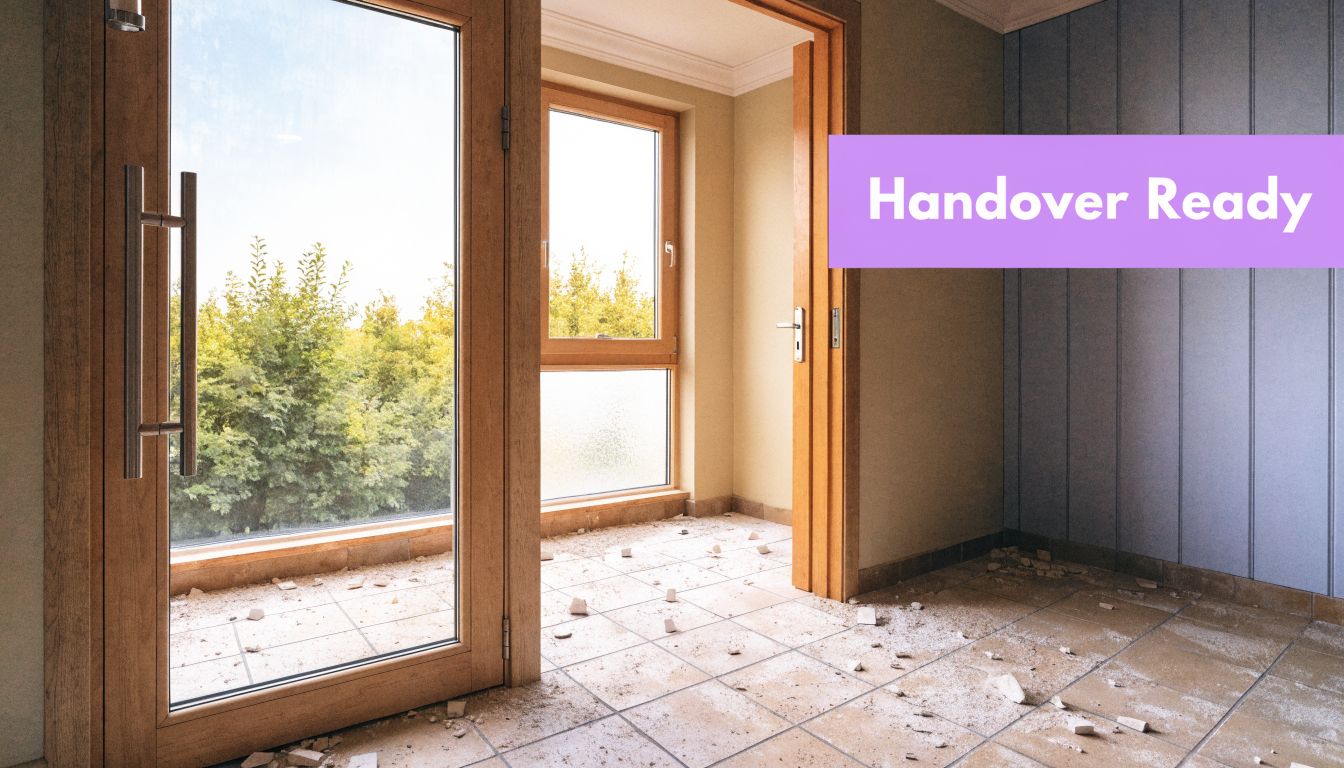
That’s why professional construction site cleaning has to be treated as part of project delivery, not a loose end. In Australia, the industry recorded over 250,000 new dwelling approvals in the 2022-23 financial year, a 2.9% increase, which has pushed up demand for specialist post-build cleaning, and slips, trips, and falls account for approximately 20% of all serious claims in the sector according to Safe Work Australia data cited by Grand View Research on contract cleaning services in Australia.
What a proper clean actually protects
A professional clean protects more than presentation:
- Safety on site: Loose debris, dusty floors, blocked access paths, and off-cut residue create avoidable hazards.
- Finish quality: New surfaces scratch easily when the wrong pads, blades, or chemicals are used.
- Inspection readiness: Builders need a site that presents cleanly under natural light, torchlight, and close visual checks.
- Brand reputation: Clients remember the condition of the site at handover, not the excuses.
Practical rule: If the clean starts after every trade has already left a mess behind, the job will take longer, cost more, and create more rework.
Why internal teams often miss the standard
General labour can remove rubbish. That isn’t the same as delivering a handover clean. Construction cleaning needs sequencing, residue identification, dust control, and the discipline to leave untouched finishes untouched.
A final clean also needs coordination with the rest of the project. Floors can’t be detailed before overhead dust is removed. Glass shouldn’t be scraped with the wrong blade. Silicone haze, grout film, and paint specks need different methods.
Builders that want a dependable finish usually separate the tasks clearly. Waste removal, rough clean, detailed clean, and final presentation should never be treated as one rushed sweep. Teams looking at ongoing commercial cleaning support for Australian sites and facilities usually understand this already. The standard comes from systems, not from last-minute effort.
The Three Crucial Stages of Construction Site Cleaning
Construction site cleaning works best when it follows a staged process, similar to finishing timber. First the bulk material comes off. Then the surface is prepared. Then the detail work brings out the final result. Skip a stage and the next one becomes slower, rougher, and less reliable.
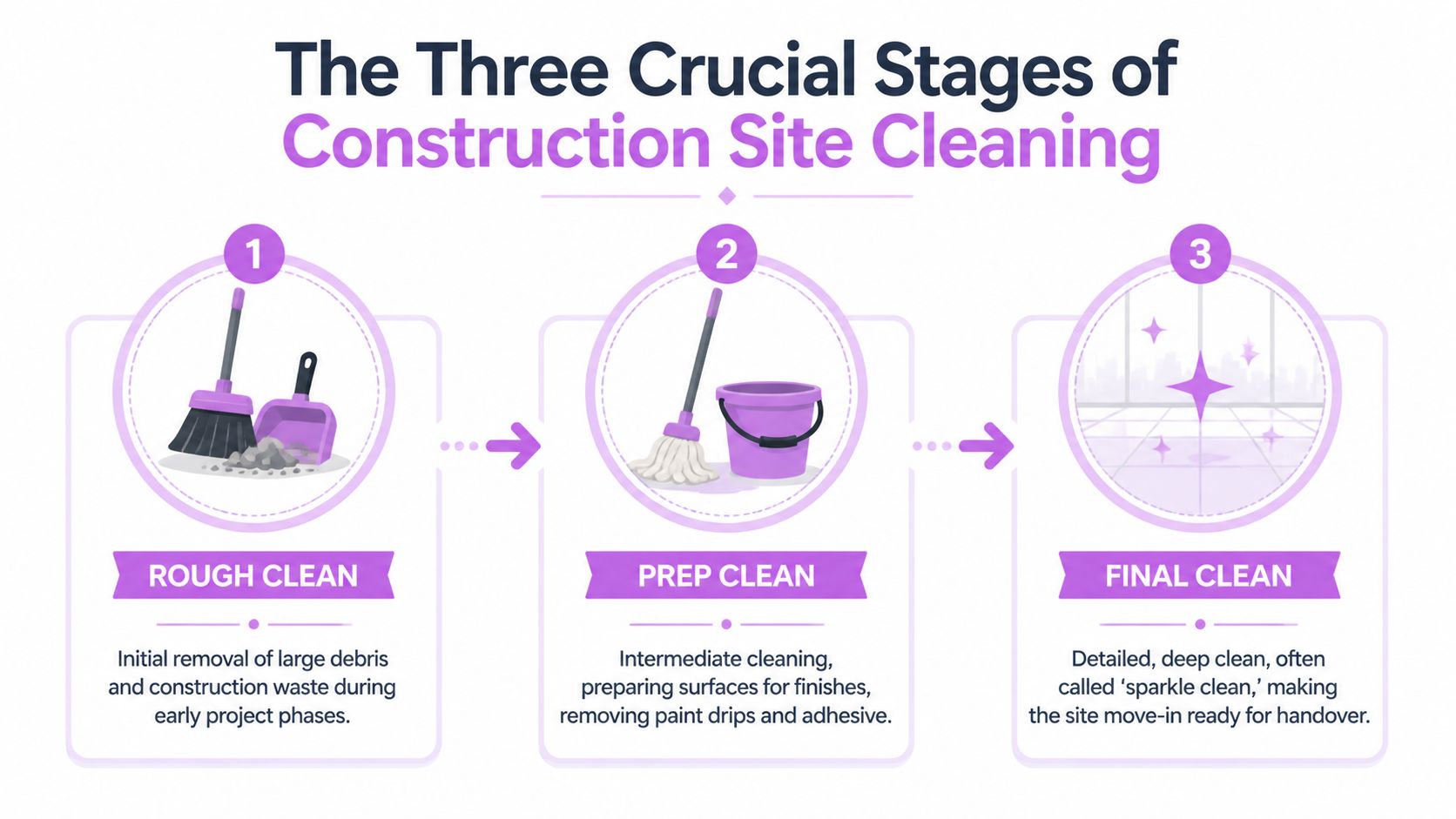
The staged model is backed by the three-phase approach described by Summit Facility Solutions in its post-construction cleaning guide, which recommends rough clean work using industrial vacuums with H13 HEPA filters to remove 80-90% of gross debris, then a light clean 24-48 hours later to capture settled silica dust, followed by a final polish targeting less than 10μg/m² residual dust.
Rough clean
This starts before the site is presentation-ready. The focus is bulk removal and hazard control.
Typical rough clean tasks include removing packaging, sweeping hard debris, vacuuming accessible areas, collecting labels and protective wrap, and clearing access routes. It’s also the stage where crews identify residue that will need specialist treatment later, such as mortar splash on frames or adhesive on vinyl.
The rough clean shouldn’t aim for shine. It should aim for control.
Prep clean
Some teams call this the light clean. It happens after major works are complete and after dust has had time to settle.
This stage is where construction site cleaning shifts from broad removal to surface preparation. Walls, ledges, fittings, inside cupboards, switch plates, door frames, and tracks all need detailed attention. This is also where poor sequencing shows up. If electricians, painters, or flooring installers still need access, there’s a good chance parts of the clean will have to be repeated.
A prep clean done too early usually becomes two cleans. A prep clean done at the right time becomes the foundation for a proper finish.
Final clean
The final clean is what the client sees. It’s the polish stage.
Glass gets detailed. Chrome gets wiped free of haze. Floors are finished according to material. Joinery is checked inside and out. Bathrooms are presentation-ready. Any removable labels or smears are gone. This is also the point where lighting matters. A surface can look fine under low light and still fail badly in sunlight.
The trade-off that matters
The trade-off isn’t speed versus quality. It’s sequencing versus rework. A site cleaned in the right order moves faster because crews aren’t cleaning the same room twice. A site cleaned out of order burns labour and still misses details.
If you’re a homeowner or renovation client rather than managing an active commercial build, our post construction cleaning guide for homeowners and renovation projects covers the residential-focused version of this process.
A simple way to view the stages is below:
| Stage | Main purpose | What success looks like |
|---|---|---|
| Rough clean | Remove bulk debris and immediate hazards | Safe movement through the site and clear work areas |
| Prep clean | Remove settled dust and prepare surfaces | Finishes are ready for detailed treatment |
| Final clean | Present the site for inspection and handover | Clean, sharp, move-in-ready result |
Detailed Handover Checklists for Each Cleaning Stage
A handover clean should run like a controlled site process, not a memory test. On a busy build, the misses are predictable. Dust sits in tracks, labels stay on glazing, silicone smears get left on tapware, and the client finds them in the first five minutes.
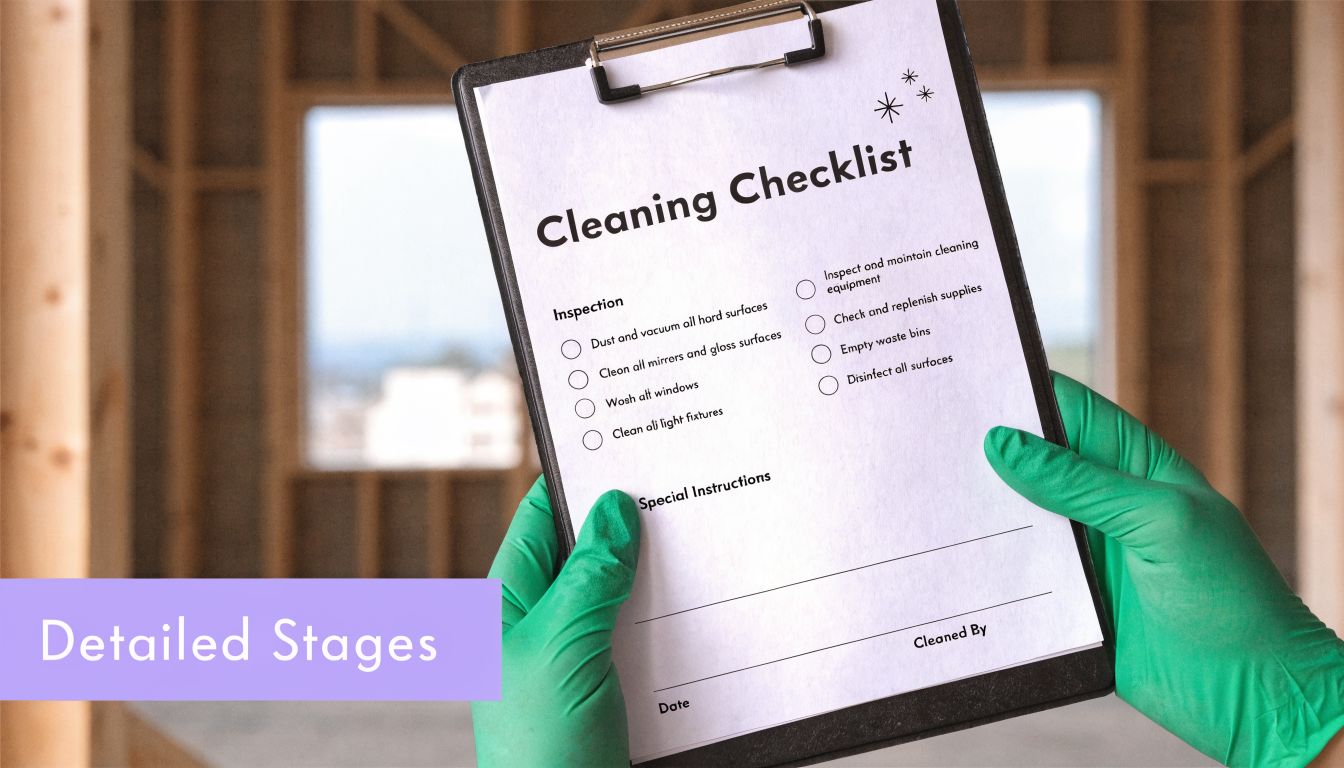
The fix is a staged checklist tied to the build sequence, access conditions, and finish standard. That matters on live sites, fit-outs handed over in zones, and projects where defects and final trade visits are still happening. Good operators also separate presentation issues from compliance issues. A dusty shelf is one problem. Silica-contaminated debris, sharp waste, or suspected asbestos-containing material is a stop-work issue until the right controls are in place.
Rough Clean Checklist
The rough clean sets the site up for safer access, cleaner follow-on trades, and less rework later.
- Remove bulk waste: Pick up off-cuts, strapping, plastic wrap, cardboard, cable ties, empty containers, and loose rubbish.
- Clear movement paths: Keep stairs, corridors, entries, exits, and work zones free from debris and stacked waste.
- Vacuum fine dust: Use a HEPA industrial vacuum on floors, ledges, sills, tracks, and window reveals. Dry sweeping only spreads dust back onto finished surfaces.
- Check wet areas early: Remove grout droppings, silicone off-cuts, packaging, and film from bathrooms, laundries, and kitchen zones.
- Empty joinery cavities: Clear cupboards, drawers, robes, vanities, and service voids of sawdust and installation debris.
- Flag residue before it cures: Mark paint overspray, adhesive transfer, mortar spots, and tape residue for the right treatment at the next stage.
- Sort waste streams properly: Separate general waste, recyclable packaging, and any material that may need controlled disposal under site rules.
The trade-off at this stage is speed versus surface protection. Metal scrapers and harsh chemicals can save a few minutes and create damage claims that cost far more to fix.
Prep and Final Clean Checklist
Prep and final cleaning should be checked together at handover because one stage supports the other. If the prep clean is weak, the final clean turns into spot-fixing under pressure.
Ceilings, walls, trim, and fittings
- Work top down: Start with cornices, bulkheads, vents, cable trays, and light fittings so dust does not fall onto finished surfaces below.
- Remove settled dust carefully: Use dry microfibre or vacuum attachments suited to painted surfaces and delicate trims.
- Spot clean marks: Lift scuffs, pencil marks, plaster dust, and handprints without over-wetting paintwork.
- Wipe switches and plates: Check for fine dust build-up, fingerprints, and paint flecks.
- Detail doors and frames: Clean rebates, hinges, handles, tops of doors, strike plates, and threshold edges.
Kitchens, bathrooms, and joinery
- Clean every internal surface: Wipe shelves, drawer bases, runners, hinge recesses, cupboard tops, and undersides of overhead units.
- Remove labels and protective film: Check appliances, mirrors, splashbacks, metal trims, and sanitary fixtures.
- Cut installation film properly: Treat greasy residue, silicone smears, and adhesive marks with the least aggressive product that will do the job.
- Finish tapware and stainless correctly: Use lint-free cloths and check from more than one angle to catch smears and haze.
- Inspect under task lighting: Benchtops and glossy joinery can look clear in low light and still show residue in direct light.
Floors, glass, and presentation surfaces
- Vacuum before any wet work: Grit left on the floor can scratch tile, vinyl planks, laminate, and timber-look finishes.
- Treat grout haze and paint specks with care: Start with the mildest effective method and confirm it suits the surface.
- Detail glazing properly: Clean glass, edges, corners, frames, tracks, and sticker residue.
- Check sliding components: Doors, windows, and wardrobe tracks should move freely without packed dust or grit.
- Review reflected light lines: Walk each room from entry to window and back. Swirl marks and residue usually show from only one angle.
Crews who want one supply point for removers, degreasers, neutral surface cleaners, carpet spotters, and microfibre systems usually source them through the Star Cleaner Shop. Product choice still needs to match the substrate, the residue, and the site rules.
Check what the client will touch, open, slide, and look through first. Those are the defects that get written on the handover list.
Touch-Up Clean Checklist
Touch-up cleaning is short, targeted work after defects, late trade access, styling, or final inspections. It protects the finish without restarting the whole clean.
- Recheck entry routes: Boot marks, fresh dust, and packaging debris usually return near doors, hallways, and lift lobbies first.
- Wipe high-contact points: Handles, switches, benchtops, sanitary fixtures, and appliance fronts pick up marks during final visits.
- Spot clean glass and mirrors: Remove fingerprints, tape marks, splashback smears, and fresh dust.
- Refresh affected floors only: Vacuum and damp mop localised areas unless the traffic pattern justifies a full reclean.
- Prioritise handover rooms: Kitchens, bathrooms, reception spaces, meeting rooms, and master suites usually carry the inspection outcome.
- Do a final walk with the checklist: Confirm presentation, note any damage outside cleaning scope, and record items handed back to the builder or supervisor.
A strong handover checklist does three jobs at once. It keeps labour under control, protects finished surfaces, and gives the builder a clear record of what was cleaned, what was excluded, and what needs another trade before sign-off.
Understanding Safety and Australian Compliance Requirements

A site can look ready for handover and still fail on safety, waste handling, or documentation. That usually happens when the clean is treated as basic labour instead of controlled work inside an active compliance framework.
On Australian jobs, the cleaning scope has to line up with WHS duties, EPA waste rules, site inductions, and the actual condition of the build. Renovation work raises the risk again. Older linings, demolition residue, contaminated runoff, solvent containers, sharps, and fibre-cement dust all change the method, the PPE, and the disposal path.
The biggest failures are predictable. Crews dry sweep fine dust. Mixed waste goes into one skip. Suspect material is handled as general rubbish. No one records what was removed, where it went, or who approved the method.
That is where defects become incidents.
The hazards that change the method
General post-build dust is one category. Respirable crystalline silica and asbestos-contaminated material are another, and they must be handled that way.
If asbestos-containing material is known or suspected, work stops in that area until the material is assessed and the correct licensed process is confirmed. The legal duties sit under the model WHS framework, including asbestos requirements set out by Safe Work Australia for asbestos at work. Cleaning crews are not there to guess.
Silica needs the same discipline. Dry sweeping and domestic vacuums can spread fine particles through finished rooms, ducts, and joinery. The control method should match the risk assessment, the substrate, and the site rules. On many jobs that means HEPA-filtered extraction, controlled damp wiping, exclusion zones, and disposal procedures that stop dust being re-released.
What compliant practice looks like on site
A compliant construction clean starts before the first vacuum is switched on. The supervisor needs a clear site review, a defined waste plan, and confirmation of who is responsible for regulated materials.
On well-run jobs, the process usually includes:
- Pre-start hazard review: Check demolition residue, fibre risk, silica-producing dust, sharps, chemical containers, restricted areas, and unfinished services.
- Task-matched SWMS and permits: Use documented methods for high-risk work, plant access, work at height, and any regulated waste streams.
- Dust suppression that suits the hazard: HEPA vacuuming and controlled wiping are standard. Dry sweeping should not be the default.
- PPE matched to exposure: Gloves, eye protection, protective clothing, and correctly selected respiratory protection where the assessment requires it.
- Waste segregation from the start: Keep general construction debris separate from suspect asbestos, silica-heavy residue, liquids, chemical waste, and recyclable material.
- Lawful disposal and traceability: Use the correct transport and disposal pathway for the waste category, then keep the dockets and site records.
Site rule: If the waste stream is unclear, isolate it and escalate it. Do not put it in the general skip.
Training, environmental control, and records
Good crews do not improvise around hazardous residue. They know when to stop, who to notify, and what paperwork the builder or principal contractor will need before sign-off. That usually means induction records, insurance, SWMS, PPE compliance, incident reporting, and disposal evidence where the job calls for it.
Environmental control matters as well. Runoff from pressure cleaning, slurry from floor prep, adhesive residue, and chemical wash water can create EPA issues if they enter stormwater. On projects with sustainability targets or stricter client standards, crews often pair the compliance process with eco-friendly construction cleaning practices in Australia so surface safety, waste control, and environmental obligations stay aligned.
In practice, the clean that finishes fastest is rarely the one that cuts corners. The clean that finishes cleanly is the one with the right method, trained operators, clear escalation points, and records that stand up if the site is audited later.
Essential Equipment and Recommended Cleaning Products
Domestic tools make post-build cleaning harder than it needs to be. Fine dust overwhelms standard vacuums. Cheap pads mark new floors. The wrong scraper can damage glass or powder-coated frames in seconds.
This is one reason construction site cleaning carries a heavier labour load than standard work. According to Market Report Analytics on post-construction cleaning services, the work often requires 20-30% more labour than standard cleans and specialised equipment such as HEPA vacuums to meet Australian dust-control requirements, especially across commercial and public facilities.
Core equipment that earns its place
A practical post-build kit usually includes the following:
- Industrial HEPA vacuum: Essential for collecting fine dust from floors, tracks, vents, and joinery without blowing it back into the air.
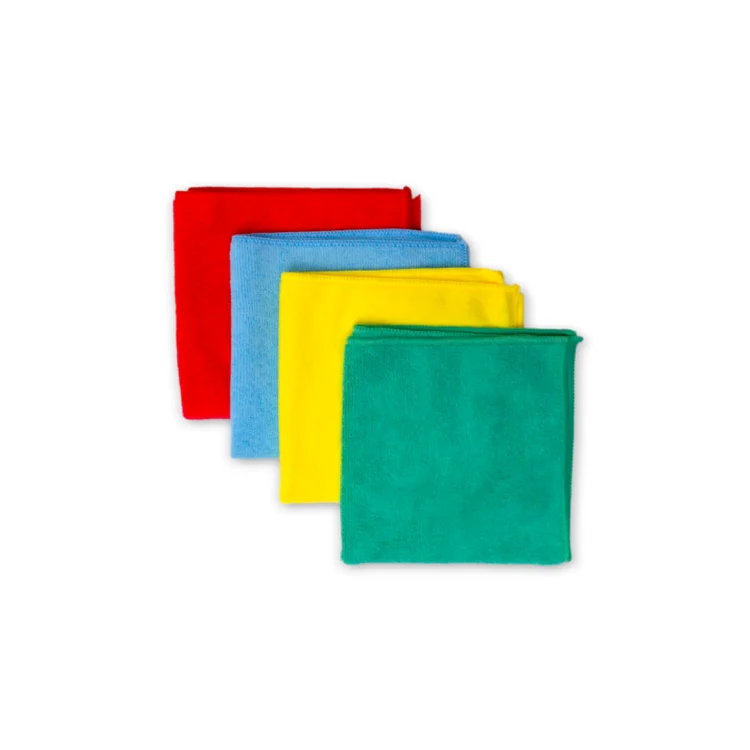
- Microfibre cloth system: Better control on painted surfaces, chrome, glazing, and cabinetry.
- Extension poles and soft dusters: Needed for bulkheads, ledges, and tops of frames.
- Floor scrubber or rotary machine where suitable: Useful on larger hard-floor areas, but only when the floor type allows it.
- Scrapers and blades matched to the surface: Glass-safe tools only, and only in trained hands.
- Buckets with measured dilution control: Over-strong chemical mixes leave residue and can damage finishes.
For builders and facility managers who want lower-tox products without giving up performance, this guide to eco-friendly cleaning services in Australia is a useful reference point for product and service standards.
Products matched to actual site problems
A strong clean comes from matching the product to the residue, not reaching for one bottle for everything.
| Problem | Better product choice | What to avoid |
|---|---|---|
| Greasy kitchen film | Eco-friendly degreaser | Heavy perfume cleaners that smear on gloss joinery |
| Sticker and tape residue | Adhesive remover | Metal scraping on delicate frames |
| Carpet marks from trade traffic | Low-residue carpet spotter | Over-wetting and soaking underlay |
| Grout haze or mineral film | Surface-safe residue remover | Harsh acids on sensitive stone or metal |
| General dust on finished surfaces | Neutral cleaner with microfibre | Dry dusting that just redistributes powder |
A few product choices matter more than others. Neutral pH floor cleaner protects sealed hard floors. A proper glass cleaner reduces rework on glazing. A low-foam degreaser helps in kitchens and utility areas. For mould-prone damp corners on renovation projects, an eco-friendly anti-mould treatment from the Star Cleaner Shop is a sensible addition where the surface and site conditions allow it.
Budgeting and Scheduling Your Construction Clean
A builder books the final clean on Friday, trades are still fixing defects on Monday, and the client walkthrough is Tuesday. That sequence burns time and money. The site gets cleaned twice, finishes pick up fresh marks, and the argument starts over who pays for the return visit.
Budgeting works best when the clean is treated as part of the build programme, not an afterthought. Labour hours depend on what stage the site is at, how much residue is present, what finishes need protection, and whether the crew is cleaning for practical completion or a polished handover. Square metre rates can help with early budgeting, but they do not capture the full job on their own.
What actually drives the cost
Quotes usually move for five practical reasons:
- Cleaning stage: A rough clean, final clean, and handover touch-up each require different labour and detail levels.
- Residue load: Fine dust, grout haze, silicone smears, paint specks, adhesive, and concrete splatter all slow the job.
- Finish quality: Standard vinyl and basic glass are faster to clean than stone, stainless, feature glazing, timber finishes, and textured surfaces.
- Site logistics: Multi-storey access, limited water or power, lift bookings, parking, waste handling, and induction requirements all add setup time.
- Return risk: If other trades are still active after the clean, allow for a touch-up visit in the original scope.
One line in the quote matters more than many builders realise. It should state what is included, what is excluded, and what triggers extra charges. If you want a clear picture of how scopes, labour, timing, and service levels are usually set out, this guide on how cleaning services work in Australia is a practical reference.
Where the cheaper option usually fails
Low quotes often assume light residue, open access, and no return work. Real sites rarely run that cleanly.
An in-house team can be the right choice for simple amenity cleaning or basic debris removal. It is usually a poor fit for detailed post-build work where glass, joinery, tile finishes, and fine dust control all need the right method. The saving disappears if scratched frames, smeared glazing, residue complaints, or failed inspections lead to rework.
A final clean should be priced against the cost of delay, call-backs, and finish damage. That is the trade-off.
If the programme still includes defect work, book a staged clean and a final touch-up. It is cheaper than pretending one visit will hold.
A scheduling sequence that holds up on site
The clean should follow the build sequence, not fight it. A practical programme usually looks like this:
- Rough clean after the heaviest installation and cutting work eases off.
- Detailed final clean after major dust-generating trades are out.
- Defect window for minor returns, testing, and sign-off issues.
- Touch-up clean immediately before handover or client walkthrough.
Large projects benefit from area release instead of waiting for the whole site to be finished. Clean completed zones, protect them, and sign them off while the rest of the project continues. That gives better labour control and makes it easier to trace new damage or fresh dust back to the right stage.
| Task | Poor timing | Better timing |
|---|---|---|
| Floor detailing | Before overhead work and dust are finished | After ceiling, sanding, and drilling work are complete |
| Glass polishing | While stickers, labels, and trade traffic remain | Near final presentation, after access traffic drops |
| Bathroom detailing | Before plumbing checks and defect rectification | After fittings, testing, and sealant work are complete |
| Touch-up clean | Several days before handover | On the day of walkthrough, or as close as access allows |
Build in a buffer. Every experienced site manager knows the last 5 percent of the programme causes a disproportionate share of cleaning disruption. Scheduling for that reality protects the finish and keeps the handover cleaner, faster, and easier to control.
Hiring the Right Professionals for Your Construction Clean
Plenty of operators can quote a clean. Fewer can manage a live or recently completed site properly. The difference shows up in documentation, communication, residue handling, and how the crew responds when the site isn’t as straightforward as expected.
A good vetting process is simple. Ask direct questions and look for specific proof.
The non-negotiables to check
- Insurance and site readiness: The contractor should be insured and comfortable working to site induction, access, and WHS requirements.
- Experience with post-build work: Standard domestic cleaning experience doesn’t automatically transfer to construction site cleaning.
- Clear scope: The quote should state what’s included, what isn’t, and what counts as additional work.
- Residue knowledge: Teams should know how to approach paint specks, grout haze, silicone smears, adhesive, and fine dust without damaging finishes.
- Defect and touch-up process: Ask how they handle return visits after minor trade work.
Signs the contractor will likely cause problems
Some warning signs are easy to spot:
- Flat quotes without inspection: These often miss access issues and residue severity.
- No mention of HEPA dust control: Fine dust is one of the main challenges on post-build jobs.
- No process for hazardous material escalation: Renovation projects especially need this.
- Vague communication: If the scope is blurry before the job, disputes usually follow after it.
The handover result depends on systems. Builders should favour operators who can explain their method clearly, document what they’re doing, and work cleanly around programme pressure. A service model that outlines how cleaning services work in Australia is a good benchmark for what organised job management should look like.
What reliability looks like in practice
Reliable cleaners arrive with the right kit, understand the sequence of a build, and don’t guess around sensitive finishes. They know when to clean, when to protect, and when to stop and raise an issue. That matters far more than polished marketing copy.
The best construction cleaning partners also make handover easier for everyone else. Site managers get fewer complaints. Builders get fewer callbacks. Clients walk into a site that feels complete.
For builders, developers, and renovation teams that need dependable construction site cleaning, Star Cleaner Australia Pty Ltd offers a practical system built around reliability, safety-checked operators, and a 100% satisfaction guarantee. Jobs are managed properly from quote to completion, with vetted professionals, access to commercial-grade supplies, and support that suits real handover pressures across Australian sites.
Made with the Outrank app