


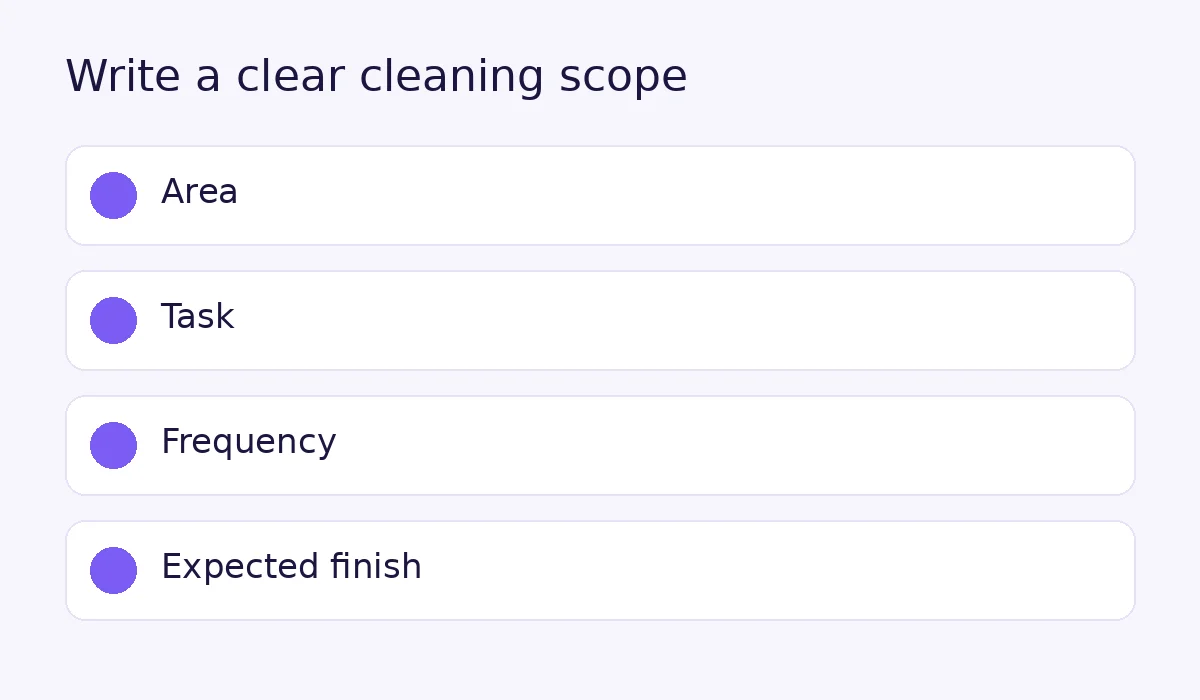
An office cleaning scope of work should list every area to be cleaned, the tasks in each area, how often each task is done and the finish you expect. It should also state exclusions, who supplies products and consumables, how cleaners access the site and how quality is checked.
Use the cleaning scope of work template below to build yours. For Sydney office managers, this written record makes quotes easier to compare and missed work easier to resolve.
Quick answer: what to include in an office cleaning scope of work
- Site details: address, floors, rooms included and service days.
- Area-by-area tasks: reception, workstations, meeting rooms, kitchens, washrooms and floors.
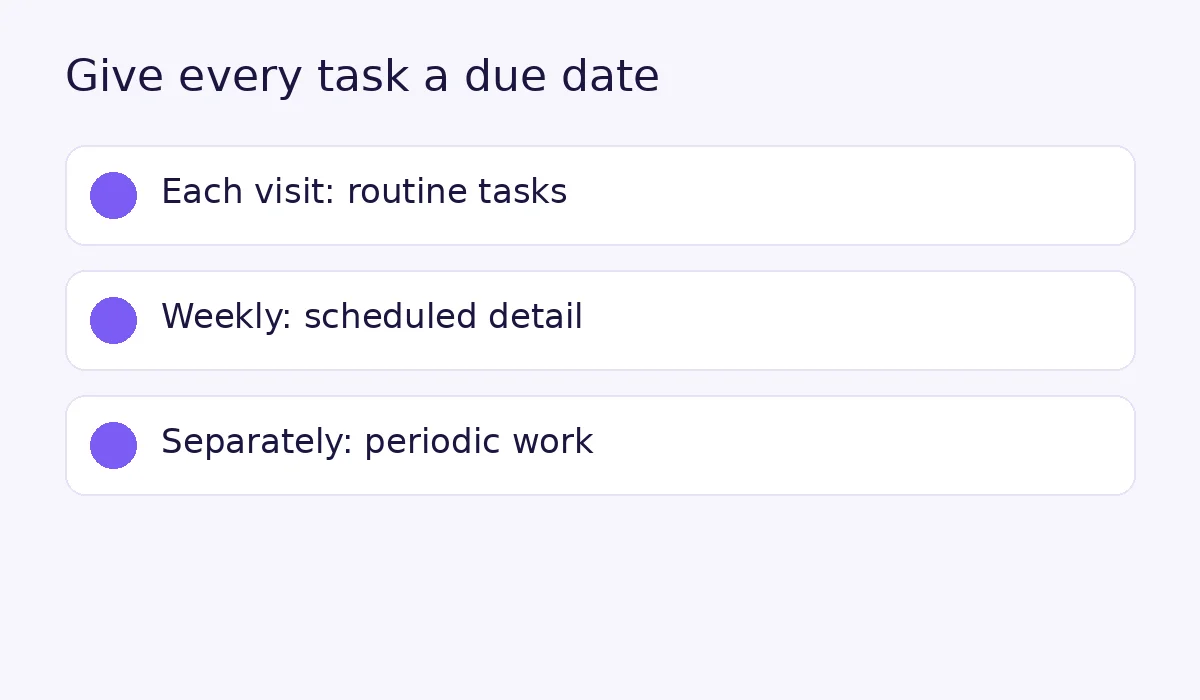
- Frequency: each visit, weekly or scheduled separately.
- Finish standard: an observable result for each task.
- Exclusions: work that sits outside the routine service.
- Supplies: who buys, stores and refills products and consumables.
- Access and safety: entry process, restricted rooms and SDS information.
- Quality and changes: how work is checked and how the scope is updated.
Download the free printable Office Cleaning Checklist (PDF). Use it to build your task list, then add the site details below.

What is an office cleaning scope of work?
An office cleaning scope of work is a written list of the cleaning tasks agreed for your site. Each task needs a location, frequency and finish standard.
Start with a walk-through while the office is in normal use. Count the workstations, washrooms and bins. Note the floor types and rooms that stay locked. A floor plan helps you mark the cleaning boundary.
Record the service days and cleaning window. Then name the person who can approve extra work. Keep contact details in the private site record.
- Site address, floors and rooms included.
- Tasks due each visit and on scheduled detail cleans.
- Expected finish and how it will be checked.
- Responsibility for products, equipment and consumables.
Be specific about exclusions. If computer screens, internal cupboards or high windows are outside the routine service, write that down. Clear boundaries help both the manager and cleaner plan the work.
A scope is not the same as a contract. The scope describes the work; the contract usually also covers payment and other service terms. Both documents should describe the same service.
How do you write an office cleaning scope of work step by step?
Write the scope in the order you would walk the site: start with the boundaries, then add tasks, frequencies and responsibilities. The steps below turn a walk-through into a document a cleaner can follow.
- Walk the site during normal use. Note rooms, floor types, washrooms, kitchens, bins and areas with restricted access.
- List every area in scope. Use the same room names that staff and building management use.
- Write each task with a visible result. “Wipe cleared desktops; no crumbs or wipe marks” is clearer than “clean desks”.
- Set a starting frequency. Mark each task as each visit, weekly or scheduled separately.
- Assign responsibilities. Name who clears desks, who buys consumables and who approves extra work.
- Record exclusions and access details. Note anything outside the routine service and how cleaners enter the building.
- Review it with your provider. Confirm the draft during an on-site visit, then date and approve the final version.
Once the steps are done, transfer the details into the cleaning scope of work template below so every task sits in one table.
How do you use a cleaning scope of work template?
Use one row for each task, with its frequency and expected finish beside it. The table below is a starting example, not a fixed schedule. Copy this cleaning scope of work template into a spreadsheet or document, then add one row for each room and task on your site.
Your cleaning scope of work template: sample task rows
| Area and task | Suggested starting frequency | Expected finish | Responsibility to confirm |
|---|---|---|---|
| Reception: vacuum entrance mat | Each scheduled visit | No loose grit or visible debris | Cleaner; building team handles mat replacement |
| Workstations: wipe cleared desktops | Each scheduled visit | No crumbs, dust or wipe marks | Staff clear papers; cleaner wipes surface |
| Kitchen: clean sink and benches | Each scheduled visit | No food residue or standing water | Cleaner; staff remove dishes |
| Washrooms: clean fixtures and check dispensers | Each scheduled visit; review busy periods | No visible soil; stock at agreed level | Cleaner reports stock; named contact orders |
| Floors: vacuum carpet, including reachable edges | Each scheduled visit | No loose debris on open carpet | Cleaner; staff clear items from the floor |
| Bins: empty general waste and recycling | Each scheduled visit | Bins emptied; soiled or damaged liners replaced | Cleaner; named contact orders liners |
| Kitchen: wipe microwave and appliance exteriors | Each scheduled visit | No visible spills or fingerprints | Cleaner; interiors scheduled separately |
| High dusting and vents | Scheduled separately | No visible dust on nominated surfaces | Quoted separately; access equipment confirmed |
| Meeting rooms: clean internal glass | Weekly starting point | No fingerprints or streaks | Cleaner; high glass quoted separately |
Add a completion column for periodic tasks. Review the starting frequencies after the first month against occupancy and actual use.
Keep the approved version with the quote. Date each revision so everyone works from the same list.
What should desks, meeting rooms and reception include?
List the surfaces cleaners can touch and the items staff must clear first. Reception and shared meeting rooms often need different tasks from individual desks.
For desks, specify wiping cleared tops with a clean microfibre cloth. State whether chair bases, desk legs and partitions have a separate detail schedule. Keep papers and personal belongings in place.
- Reception: wipe the counter, dust reachable ledges and remove entrance debris.
- Meeting rooms: wipe tables, remove rubbish and check chair positions.
- Workstations: clean cleared desktops and reachable shared surfaces.
- Bins: empty agreed containers and replace damaged or soiled liners.
Agree separately on screens, keyboards and other electronics. Product choice and manufacturer instructions matter for these surfaces.
Define what happens when a desk is covered. A useful rule is to record “surface blocked” rather than move documents. The manager can then address access without treating the task as completed.
What should kitchens and washrooms include?
Kitchen and washroom rows in your cleaning scope of work template should name individual fixtures and stock checks. “Clean amenities” leaves too much room for different expectations.
In kitchens, list benches, sinks, taps, splashbacks and appliance exteriors. Separate wiping the microwave exterior from cleaning its interior. Decide who clears dishes before the cleaner arrives.
- Remove food residue from benches and sinks.
- Wipe agreed cupboard handles and appliance exteriors.
- Clean toilet bowls, seats, basins and taps.
- Wipe mirrors and check soap, paper and toilet roll dispensers.
Use separate cloths and tools for washrooms and food areas. Record the site’s colour-coded cleaning cloth system in the office cleaning scope of work so replacement operators can follow it.
Fridge interiors need their own arrangements. Agree who removes food, whether shelves can be taken out and when the work happens. For washrooms, define the stock level to leave and who receives a low-stock message. Empty dispensers should have a clear reporting path.
How should you schedule floors, glass and periodic tasks?
In your office cleaning scope of work, separate routine floor cleaning from work that needs more time or equipment. Give periodic tasks a due date instead of leaving them under “occasionally”.
Identify carpet, tile, vinyl and other finishes during the walk-through. Write “vacuum carpet, including reachable edges” or “remove loose debris, then mop tiled floor”. Confirm products against the surface manufacturer’s instructions.
For glass, name the panels and sides included. Reachable internal partitions differ from exterior windows or high glass.
- Each visit: remove loose floor debris and attend to agreed visible marks.
- Weekly starting point: detail reachable edges and clean nominated internal glass.
- Scheduled separately: carpet extraction, high dusting and floor restoration.
These are planning examples. Foot traffic and surface condition should set the final schedule.
Mark furniture movement clearly. Cleaning beneath a light meeting chair differs from moving filing cabinets. Record blocked areas so the manager can arrange access before the next scheduled detail clean.
Who supplies cleaning products and washroom stock?
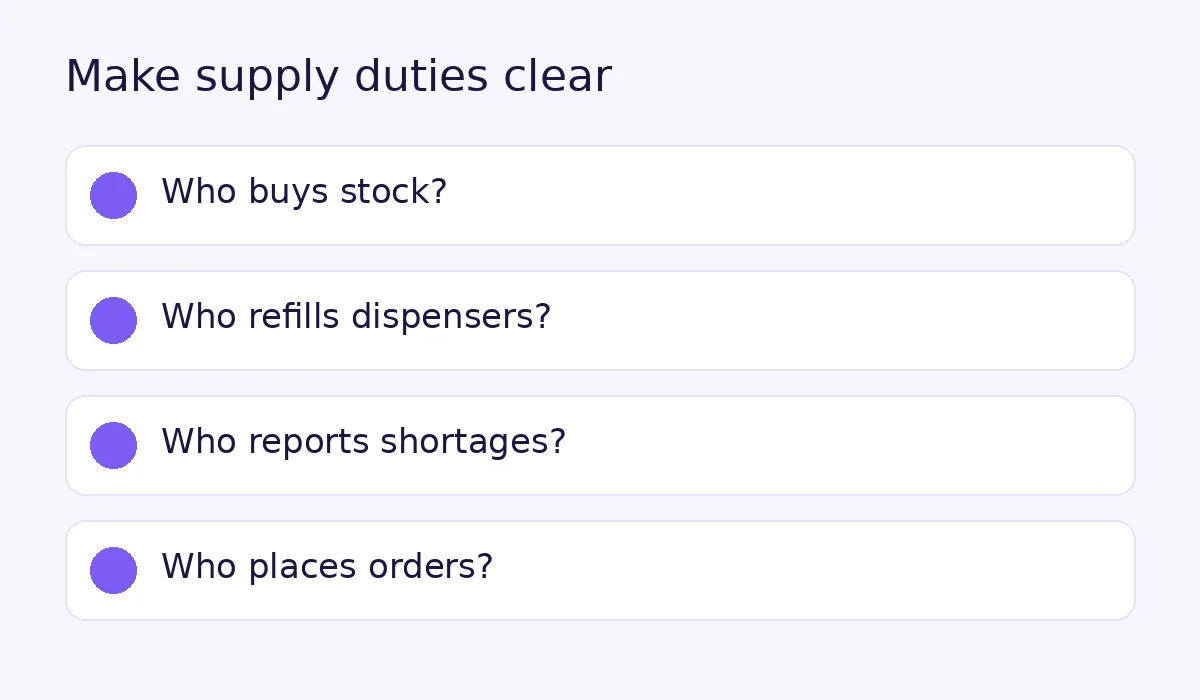
Your office cleaning scope of work should name who buys, stores and replenishes every supply category. Include cleaning tools as well as soap, paper products and bin liners.
A service may include cleaning labour while consumables remain a separate purchase. Record that arrangement in the quote. Also note whether cleaners refill dispensers from stock held on site.
Useful items to include in your stock list are:
- Microfibre cloths, 40-pack mixed colours, for separate area tool sets.
- Glass microfibre cloths, blue 5-pack, for nominated glass tasks.
- ELKA 27L Tidy Liners on Rolls, where that size matches your bins.
- Pullman Yellow Caution Sign, for warning people about wet floor areas.
Check sizes and compatibility before ordering. Set a minimum stock level and an ordering contact. That gives the cleaner a clear action when supplies run low.
What access and safety details should you record?
Add the entry process, restricted rooms and site hazards to the cleaning scope of work before work starts. Keep alarm codes and key details in a secure site record.
Sydney offices may have shared loading areas, lift bookings or building access windows. Check these with building management rather than assuming the cleaner can enter at any time.
List the equipment storage area and approved water points. Note who to contact if access fails. Agree how a blocked room is recorded and when its cleaning can be rescheduled.
Safety note: Follow the product label and Safety Data Sheet (SDS). Use the specified PPE, ventilate the area and never mix cleaning chemicals. Store products securely and mark wet floors.
Safe Work Australia explains workplace safety data sheet requirements. Use its guidance alongside your site’s safety procedures.
Keep the Chemical Safety and PPE Checklist with the site induction materials. Review arrangements when products or access conditions change.
How do you check quality and approve changes?
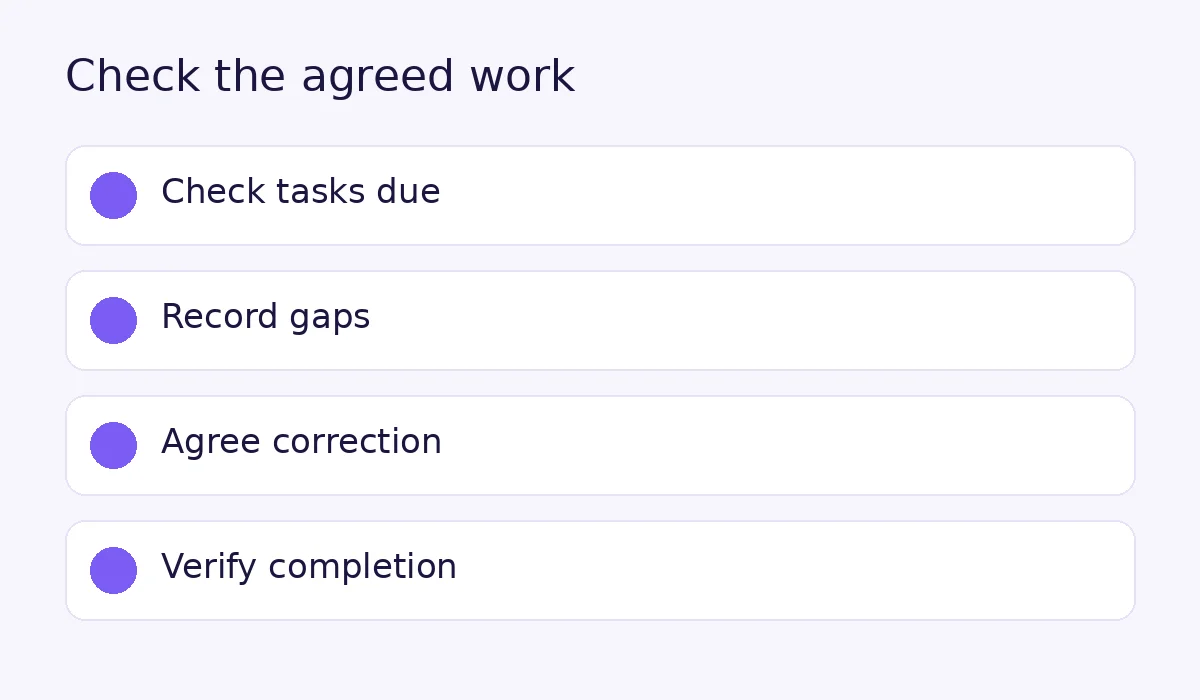
Check finished work against the tasks listed in the cleaning scope of work for that visit. Record any gap with its location, date and agreed follow-up.
Use observable standards. “No crumbs on the cleared meeting table” is easier to check than “excellent presentation”. Look at surfaces soon after cleaning so fresh office use does not confuse the result.
- Choose a small sample of tasks due that day.
- Compare each result with the written finish standard.
- Record missed work and blocked access separately.
- Agree the correction and check it after completion.
Set the response and correction times with your provider. Do not assume those times are included unless they appear in the agreement.
When occupancy increases or a new room opens, revise the task list. Confirm any extra cost before adding work. Keep the previous version for reference, and make the latest approved scope easy for the cleaning operator to access.
What mistakes make a cleaning scope of work hard to follow?
Most problems come from vague wording or missing responsibilities rather than poor cleaning. Check your draft for these gaps before you request quotes.
- Vague tasks: “Clean amenities” or “tidy kitchen” leaves too much room for different expectations. Name the fixtures and surfaces.
- No frequency: Tasks listed as “occasionally” are easy to miss. Give periodic work a due date.
- No exclusions: If screens, high windows or appliance interiors are not included, write that down.
- Unassigned supplies: State who buys, stores, refills and reorders consumables.
- Outdated versions: Date each revision and keep the latest approved office cleaning scope of work where the cleaner can access it.
How do you turn the scope into an accurate quote?
Use the same cleaning scope of work template when requesting quotes so you can compare the proposed work. An on-site visit lets the provider check surfaces and access.
Walk through during normal operations where possible. Point out busy washrooms, food areas and rooms with limited access. Show the provider where equipment can be stored.
Ask each quote to separate routine cleaning, periodic work and consumables. Check whether internal glass, appliance interiors and extra visits are included. Compare the proposed frequencies before comparing totals. Our guide to commercial cleaning rates explains how pricing is commonly structured.
Star Cleaner arranges on-site quotes for commercial cleaning in Sydney. Its managed platform uses vetted, insured and safety-checked independent operators. Star Cleaner handles scheduling, quality and complaints.
Get an on-site quote for commercial cleaning. Bring your draft scope and Office Cleaning Checklist to the walk-through.
If you are reviewing a current arrangement, identify repeated gaps first. That helps you decide whether the scope needs updating or agreed tasks need better follow-through.
Office cleaning scope of work FAQs
What is the difference between a scope of work and a cleaning schedule?
The scope of work defines what is included: areas, tasks, finish standards, responsibilities and exclusions. A cleaning schedule sets when each task happens. Many offices combine both in one table, as the cleaning scope of work template above does with its frequency column.
Who should write the office cleaning scope of work?
The office or facilities manager usually drafts it, because they know how the space is used. Refine it with the cleaning provider during an on-site visit, then date the approved version and keep it with the quote.
Is a cleaning scope the same as a cleaning contract?
A scope describes the tasks, locations, frequencies and finish standards. A contract usually also covers payment and other service terms. Your scope can sit alongside that agreement. Make sure both documents describe the same service, and seek professional advice if you need help understanding contract terms.
How often should an office cleaning scope of work be reviewed?
Review it after the first month to check whether the schedule matches actual use. Revisit it when occupancy, rooms or operating hours change. Repeated missed tasks also warrant a review. Use completion records and inspection notes to distinguish an unclear scope from work that was agreed but missed.
Should washroom supplies be included in the cleaning quote?
They should be addressed clearly, even when purchased separately. Ask who buys the stock, refills dispensers and reports shortages. Confirm dispenser compatibility and storage space. A quote that includes refill labour may still exclude the paper or soap itself, so check both responsibilities before agreeing to the service.
Is there a free cleaning scope of work template I can use?
Yes. The sample table in this article is a cleaning scope of work template you can copy into a spreadsheet or document and adapt to your site. You can also download the free printable Office Cleaning Checklist (PDF) to build your task list before adding frequencies, finish standards and responsibilities.
Can I use this cleaning scope of work template for a small office?
Yes. Remove areas your office does not have and keep each task specific. A small workplace still needs clear arrangements for floors, bins and shared facilities. Use the table as a starting point, then confirm the schedule during an on-site visit. Building-managed spaces may sit outside your own scope.