





A ceiling fan usually looks harmless until the first time it runs after weeks of neglect. Dust lifts off the blade edges, drifts across the room, and settles back onto furniture, bedding, and floors. In homes where someone reacts to dust or pollen, that's more than an appearance problem.
That's why cleaning ceiling fans deserves a place in regular home care. In Australian homes, fans are often used in bedrooms and living areas for comfort through warmer months, so any build-up gets circulated exactly where people sleep, rest, and breathe. A good clean isn't complicated, but it does need the right method, the right amount of moisture, and a safety-first approach.
Table of Contents
- Why Cleaning Your Fan Is About More Than Just Dust
- Preparing for a Safe and Tidy Clean
- The Pillowcase Method for a No-Mess Clean
- Cleaning Different Fan Types and Tackling Tough Grime
- A Simple Maintenance Schedule for Every Home
- When to Call a Professional Cleaner
Why Cleaning Your Fan Is About More Than Just Dust
A dusty fan doesn't just look neglected. In Australia, where indoor air can accumulate allergens quickly, a dirty ceiling fan can redistribute settled dust back into the room every time it runs, and the National Asthma Council recommends reducing dust build-up through regular cleaning, which makes fan maintenance part of indoor air quality management rather than just a cosmetic task, as noted in this Australian cleaning advice on fan dust and allergens.
Dust moves when the fan runs
The problem is simple. Dust settles on still surfaces, then the fan switches on and sends some of that material back into circulation. In a bedroom, that means the particles aren't staying on the blade where they're easy to remove. They're moving through the space people use most closely.
That's one reason fan cleaning often gets overlooked until someone notices dust collecting on nearby furniture again. The fan can subtly keep re-soiling the room.
Practical rule: If a blade edge looks furry or grey, it's already affecting more than the fan itself.
Homes near busy roads, coastal areas, or places with open windows through summer often notice build-up faster. The same goes for households with pets, fabric-heavy rooms, or children's rooms where airborne dust tends to matter more day to day.
Why allergy-sensitive homes need a better routine
For homes with asthma, allergies, or general dust sensitivity, the standard “clean it when it looks bad” approach isn't enough. Fan care works best as part of a broader dust-control habit that includes regular surfaces, fabrics, and airflow points. This allergy-friendly cleaning guide for Australian homes is useful for building that wider routine.
A clean fan won't solve every indoor air issue, but it removes one very common source of recirculated dust. That matters most in bedrooms, living rooms, nurseries, and any room where the fan runs for long stretches.
The useful shift is this. Cleaning ceiling fans isn't just about making the room look neater. It's about stopping dust from being thrown back into the air in the first place.
Preparing for a Safe and Tidy Clean
A rushed fan clean usually creates two problems at once. Dust drops into the room, and the person cleaning starts stretching, twisting, or balancing badly to reach the far edge of a blade. In allergy-sensitive Australian homes, that first mistake matters more than it seems because disturbed dust does not just land on the floor. Some of it hangs in the air you are about to breathe.
Set up the area before touching the fan
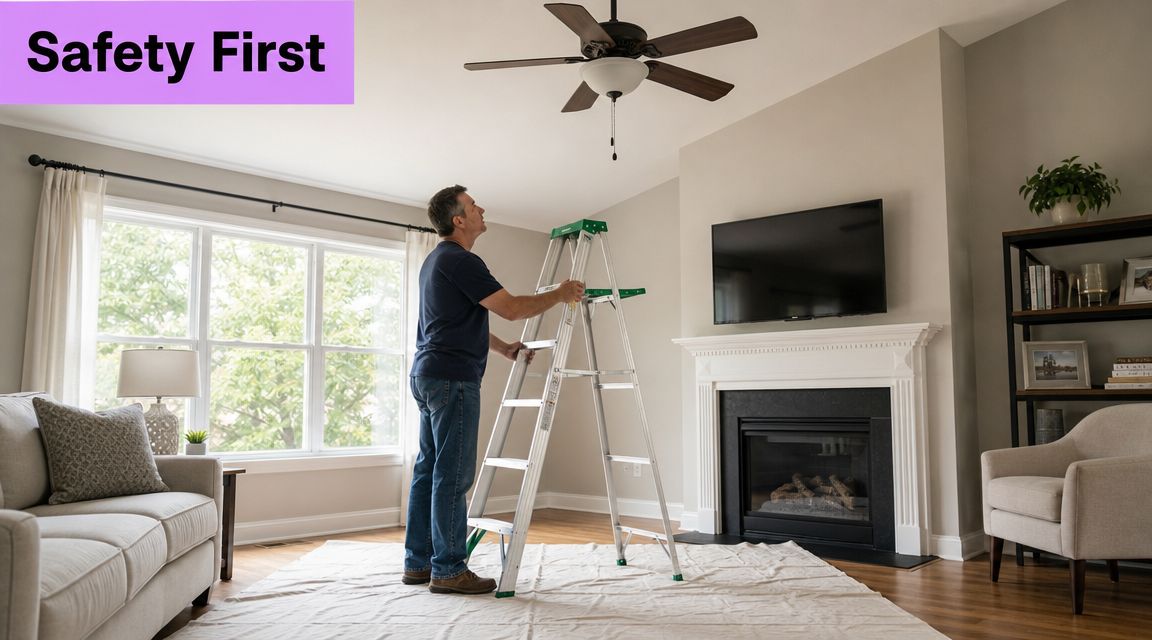
Switch the fan off at the wall first. If anyone else is home, or the switch position is unclear, turn the circuit off at the breaker as well. A fan that starts unexpectedly can throw dust outward and turn a simple clean into a safety issue.
Use a stable step ladder that puts the blades at a comfortable working height. Most awkward slips happen from overreaching. If you cannot keep your hips centred between the ladder rails while wiping, reposition the ladder instead of stretching for one more pass.
Clear the space underneath before you climb. Move light furniture, shift bedding if the fan is above the bed, and put down an old sheet if the build-up looks heavy. That step keeps loosened dust off soft furnishings, which is worth doing in bedrooms and living rooms where trapped dust tends to affect indoor air quality more noticeably.
Some fan locations need extra caution. High ceilings, stair voids, uneven floors, and fans mounted above bulky furniture are the jobs that push people into bad angles. They are also a common example of cleaning mistakes many Australians make at home, especially when trying to finish quickly.
What to keep within reach
Keep the kit simple so you are not climbing up and down with full hands:
- A clean pillowcase to contain loose dust from each blade
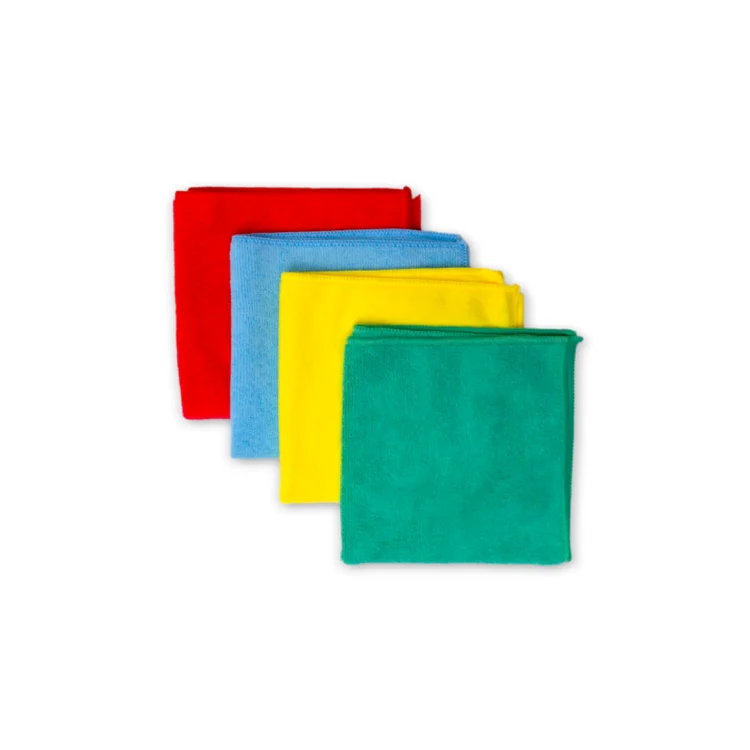
- Microfibre cloths for detail wiping and drying
- A soft brush or vacuum attachment for thick, fluffy build-up
- A mild cleaning solution for greasy residue or sticky film
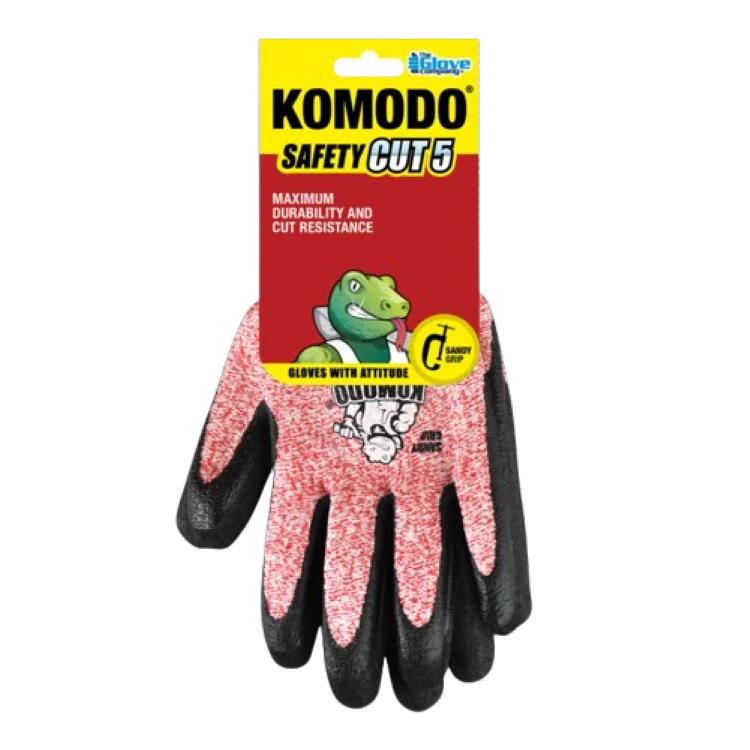
- Gloves and a rubbish bag for cleaner handling and disposal
For stubborn marks or a sticky film, use a mild cleaner on the cloth rather than spraying directly onto the fan.
Spray the cloth, not the fan. That keeps moisture away from the motor housing and reduces drips.
Ceiling fan blades usually need restraint, not saturation. In many Australian homes, especially near the coast or in kitchens and open-plan living areas, dust can mix with salt, grease, or fine outdoor grime. That residue lifts better with a lightly damp microfibre cloth than with aggressive scrubbing. Too much liquid can stain some blade finishes, loosen warped laminate edges, or creep into parts that should stay dry.
A careful setup saves cleanup time, but its chief advantage is stopping you from knocking dust straight back into the room. That matters most in homes with asthma, hay fever, or year-round dust sensitivity.
The Pillowcase Method for a No-Mess Clean
Many have tried the fast version of cleaning ceiling fans. Stand on a ladder, swipe each blade with a dry cloth, then spend the next ten minutes cleaning whatever fell onto the floor, sofa, and bedside table. It feels efficient, but it spreads the mess.
Why this method works better than dry wiping
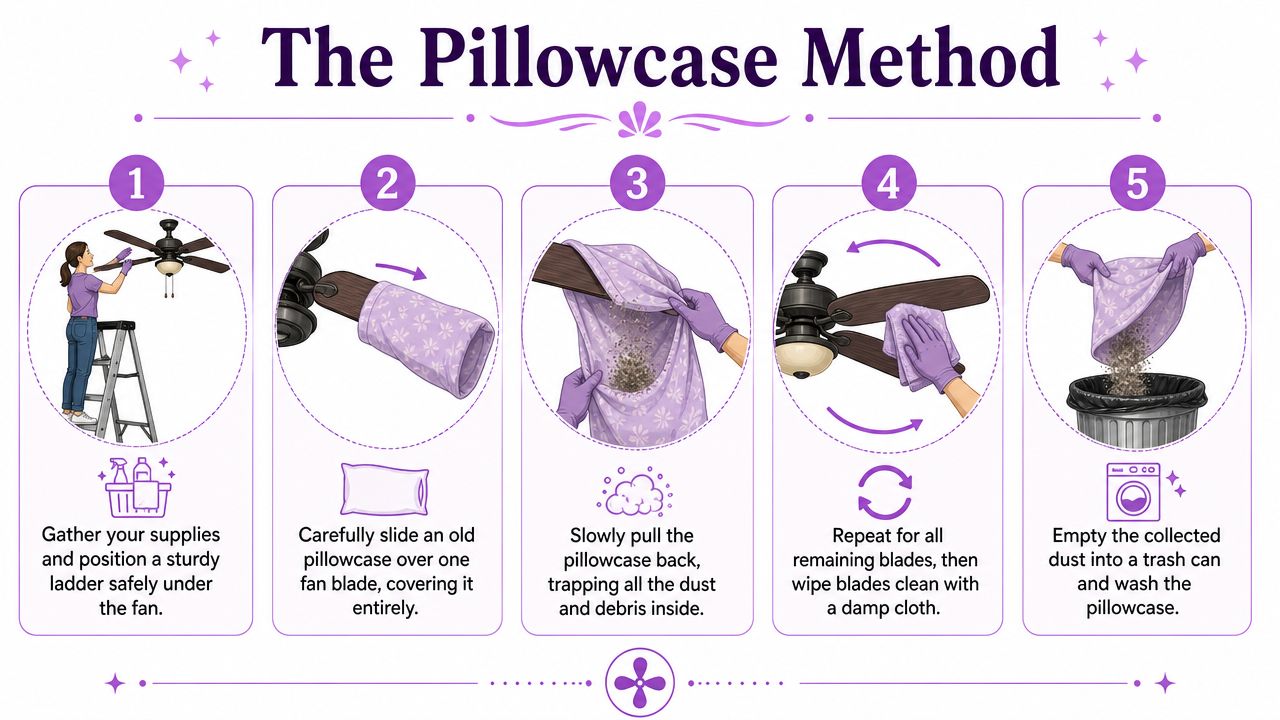
The pillowcase method is highly recommended because it contains dust at the source. Slide a clean pillowcase over a blade, pull it back to trap dust from both sides, and repeat. That keeps dust from becoming airborne or settling on floors and furniture, while also avoiding liquid spray near the motor housing, as described in this professional guide to the pillowcase cleaning method.
That containment is the whole advantage. Instead of knocking debris loose and chasing it around the room, the cleaner removes most of it in one controlled motion.
This is also one of the easiest ways to make a routine clean less unpleasant. The dust ends up inside the fabric, not in the cleaner's face.
How to do it properly
The sequence matters more than speed.
Position the ladder properly
Stand where the blade is easy to reach without twisting. If the body has to lean sideways to get full contact, reposition the ladder.Slide the pillowcase over the blade
Cover as much of the blade as possible, right up toward the centre without forcing the fabric against the housing.Pull back slowly
The pillowcase should grip both the top and underside of the blade as it comes off. Slow movement works better than a quick tug because it keeps the dust inside.Rotate to a clean section
If the case is heavily coated after one blade, turn it to a clean part or switch to another one. Smearing the same dust across the next blade defeats the point.Finish with a lightly damp microfibre cloth
This picks up the thin film the pillowcase won't always remove, especially on darker blades where residue shows more clearly.
A lot of avoidable mess comes from poor habits. This guide to common cleaning mistakes Australians make covers the same principle in broader household cleaning. Containment and controlled moisture nearly always beat aggressive wiping.
A ceiling fan should be cleaned with patience, not pressure. Force bends blades, spreads dust, and turns a quick task into a repair risk.
Once the blades are done, empty the pillowcase into a bin and wash it separately. If the fan has a central light fitting, wipe around it carefully with a dry or barely damp cloth, paying attention to seams where dust gathers.
Cleaning Different Fan Types and Tackling Tough Grime
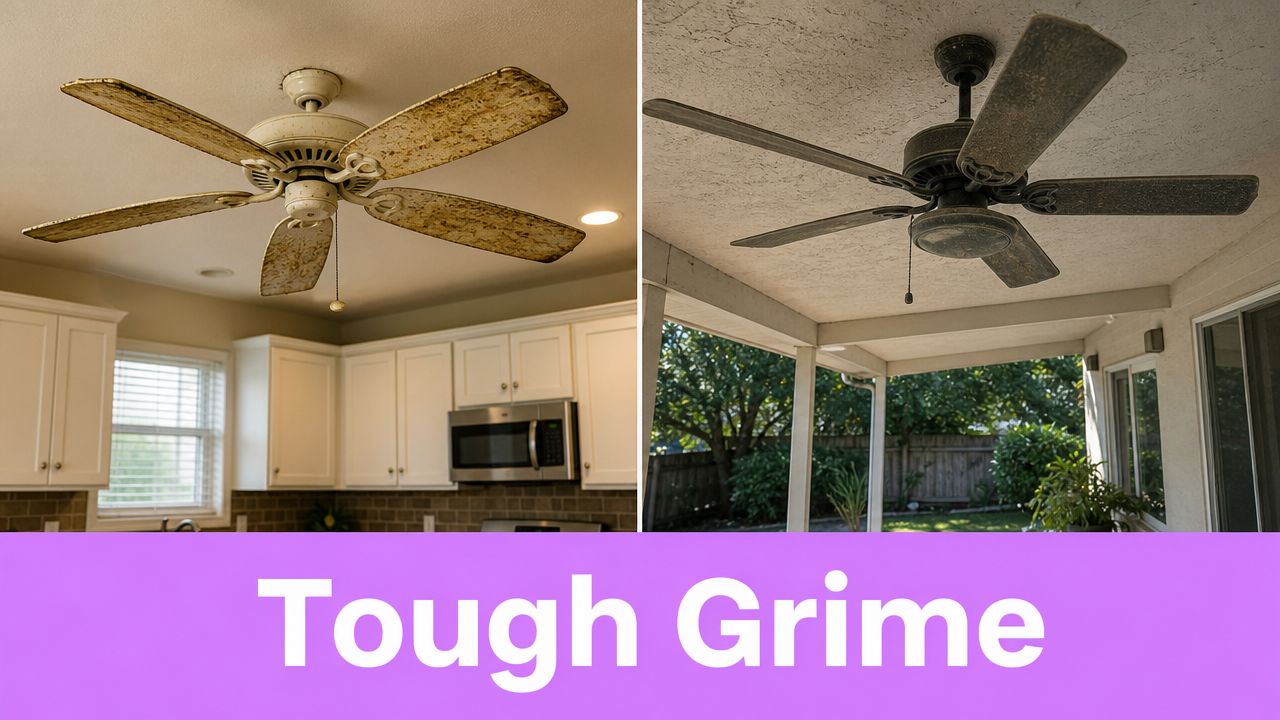
A fan in a Perth bedroom and a fan over a Brisbane kitchen bench can look equally dusty, but the cleaning job is not the same. Dry lint in a sleeping space tends to lift away cleanly. Grease, outdoor grit, and humidity-driven residue cling to the blade and are more likely to break loose into the air the next time the fan runs. In homes with asthma or allergy sensitivities, that difference matters.
Bedroom and living room fans
These fans usually collect fine dust, fibres, and light airborne residue. In Australian homes with open windows, evaporative cooling, or pets, that dust often includes pollen and soft lint that can recirculate through the room once the blades start up again. A careful clean does more than improve appearance. It reduces what gets pushed back into breathing height.
If the fan sits above a bed, cot, or fabric lounge, protect that area before you start. Dust that lands on bedding ends up close to the face, which is the last thing you want in an allergy-sensitive room.
A practical guide looks like this:
| Fan location | Typical build-up | Best approach |
|---|---|---|
| Bedroom | Fine dust, lint | Dry dust removal first, then a lightly damp microfibre finish |
| Living room | Dust plus light film | Contained dust removal, then spot-clean fingerprints or marks |
| Study or nursery | Fine dust in sensitive spaces | Slow wiping with very little disturbance and immediate drying |
Long, lightweight blades need a gentle hand. Pressing hard can shift alignment or leave the fan wobbling later, which turns a simple clean into a maintenance problem.
Kitchen and outdoor fans
Kitchen fans are usually the toughest because the dust is mixed with cooking oils. That combination forms a tacky film that grabs more particles every week. If you only dry-wipe it, the residue often smears and stays on the blade. If you use too much liquid, it can creep into joins, mark the finish, or leave streaks that attract the next layer of grime faster.
The better method is staged. Remove loose dust with a dry cloth first so you are not grinding grit into the surface. Then wipe with a barely damp microfibre cloth and a mild dish soap mix. Dry each blade straight away. That last step is easy to skip, but it makes a visible difference on painted, laminate, and timber-look finishes.
Outdoor fans need even more restraint. Weather-resistant fittings still have vulnerable parts, and outdoor build-up is often rougher because it includes fine soil, pollution, and insect residue. Use less moisture than you think you need, keep it off the motor housing, and dry every surface fully before turning the fan back on.
One trade-off is product strength. A stronger degreaser cuts through kitchen film faster, but harsh solvents can dull coatings or damage decorative finishes. For sticky residue, use a mild degreasing product suited to finished household surfaces, as noted earlier, and test it on a small hidden patch first.
Modern fans with delicate finishes or fittings
Many newer fans are less forgiving than older painted metal models. Matte finishes can show streaks. Timber-look blades can mark if they stay wet. Integrated lights, concealed screws, and remote-control components all need a more controlled approach.
Use this quick check before wiping:
- If the blade has a delicate finish, test your cloth and cleaning solution on an inconspicuous spot first.
- If there's built-in lighting, keep moisture away from seams, switches, and the edge of the fitting.
- If the blade is narrow or decorative, support it lightly underneath while wiping to limit flex.
- If dust has gathered around the motor housing, remove it with a soft dry cloth instead of spraying into crevices.
The method changes with the fan, but the priority stays the same. Remove what can become airborne first, use the least moisture that will do the job, and leave the fan dry before it runs again. In allergy-prone homes, that approach keeps the clean-up controlled and helps stop settled dust, pollen, and greasy particles from being thrown back through the room.
A Simple Maintenance Schedule for Every Home
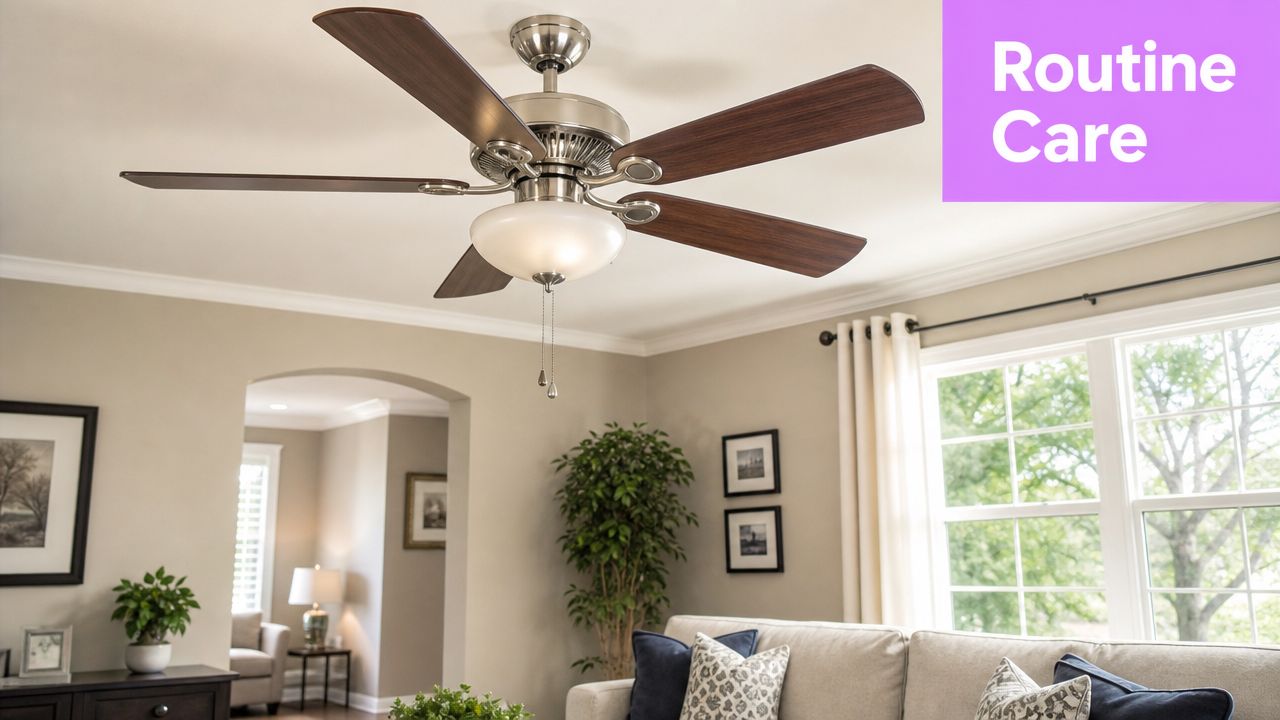
The easiest way to keep fan cleaning manageable is to stop treating it like a major project. A practical benchmark for most households is to clean ceiling fans monthly, which helps prevent build-up from becoming heavy enough to fall or recirculate widely when the fan is running, according to this home maintenance guidance on monthly fan cleaning.
A routine that stays manageable
Monthly works because it keeps the task light. The dust is easier to trap, the wipe-down is faster, and there's less chance of flakes dropping onto surrounding surfaces.
In practical terms, many households do well by pairing fan cleaning with another repeating task such as changing bed linen, vacuuming upholstered furniture, or doing a seasonal room reset. The exact day matters less than the consistency.
Missed one month doesn't ruin the routine. Leaving it until the blades look thick with dust usually does.
When to clean more often
Some homes need a tighter rhythm than others. Bedrooms used nightly, homes with open windows, pet-heavy households, and rooms occupied by allergy-sensitive family members often benefit from more frequent light dust removal.
A simple guide looks like this:
- Use the monthly clean as the baseline for most living spaces.
- Check bedroom fans more often if someone wakes congested or reacts to dust.
- Clean before heavy-use periods such as warmer weather, when fans are about to run regularly.
- Don't wait for visible build-up on dark blades, because by then the dust is already circulating when the fan starts.
That approach keeps each clean shorter and helps stop the room from being re-dusted by its own fan.
When to Call a Professional Cleaner
Some fan-cleaning jobs are straightforward. Others look simple until the cleaner is balancing on the top steps of a ladder, reaching over a staircase void, or trying to remove greasy residue from a blade that hasn't been touched in ages.
Jobs that aren't worth the risk
Professional help makes sense when access itself is the issue. High ceilings, awkward stairwells, fans above large furniture, and fittings near fragile décor all change the risk level. The same goes for blades that wobble, fittings with complicated light assemblies, or fans that are heavily soiled and likely to drop debris across the room.
For general household support with safe access and routine upkeep, many homeowners prefer to book residential cleaning services through a professional cleaner. It's often the safer option when the task sits outside a normal weekly clean.
When convenience matters as much as access
Busy households don't always need a dramatic reason to outsource the job. Sometimes the better choice is having someone reliable handle it properly, especially when fans are part of a larger house clean.
The value of a professional clean isn't just labour. It's controlled methods, suitable tools, and less risk of bending blades, marking finishes, or spreading grime through the room. For allergy-sensitive homes, that attention to containment matters.
Professional cleaning is also a sensible option for holiday rentals, shared homes, and properties where presentation and hygiene both matter. Fans are easy to miss during rushed surface cleaning, but they're very obvious once guests look up.
For homeowners who'd rather leave overhead cleaning to professionals, Star Cleaner Australia Pty Ltd offers a reliable option backed by safety-checked operators and a 100% satisfaction guarantee. Whether the job is part of regular house cleaning or a one-off tidy-up before summer, the focus stays on safe access, careful methods, and a properly finished result without the mess or guesswork.