





A lot of homes look tidy long before they feel properly clean. The cushions are straight, the dishes are done, and the floors have had a quick pass, yet the place still feels a bit stale. That usually comes down to the parts of the home routine cleaning doesn't reach. Dust sits on fans and vents, grease builds inside appliances, grout holds onto residue, and the edges behind furniture keep collecting what the eye no longer notices.
For busy Australian families, the bigger issue often isn't whether deep cleaning matters. It's whether there's enough time to do it properly. Research indicates that Australian households can spend 8-12 hours monthly on deep cleaning tasks, which equates to over $200 in opportunity cost at median wage rates. For time-poor families, a professional service costing $300-$600 can recover over 40 hours of personal time annually. That changes the conversation. A deep clean house cleaning service isn't just about appearance. It's often a practical trade of labour-heavy weekend work for time, energy, and less household friction.
Table of Contents
- Why Your Home Needs More Than Just a Tidy Up
- Deep Cleaning Versus Regular Cleaning
- The Ultimate Deep Cleaning Checklist
- Understanding Deep Cleaning Costs in Australia
- How to Prepare Your Home for a Deep Clean
- Specialised Deep Cleaning Services
- Booking Your Service and Frequently Asked Questions
Why Your Home Needs More Than Just a Tidy Up
Saturday morning often starts with good intentions. You clear the bench, run the vacuum, mop the obvious areas, and by lunch the house looks better. By Sunday night, the bathroom still feels grimy, the kitchen still has a greasy film, and the job you meant to finish has eaten most of the weekend.
That gap between looking tidy and being clean matters more than many busy households realise. A tidy-up handles clutter and the surfaces everyone sees first. A proper deep clean deals with the residue, dust, grease, and moisture build-up that slowly affect how the home feels to live in.
The signs are usually subtle. Splashbacks stay slightly sticky after a quick wipe. Bathroom corners lose their brightness. Skirting boards pick up a grey line of dust, and door frames collect build-up that sits there for months. None of that means a home is poorly kept. It means the house is doing what lived-in Australian homes do. They collect grime in the places routine cleaning rarely reaches.
Surface order doesn't remove hidden build-up
Daily and weekly cleaning tends to focus on the highest-traffic surfaces because that is what keeps a home workable. Benchtops, sinks, visible floors, and the main bathroom surfaces get done first, and often that is where the available time runs out.
The problem is what gets left behind.
Dust settles on ledges, fan blades, vents, and the tops of frames. Grease hangs onto vertical kitchen surfaces. Soap residue builds in grout and around fittings. Touchpoints such as switches, handles, and cupboard fronts pick up a film that is easy to miss because it develops gradually. A true deep clean targets those slower-forming layers, including inside appliances, along edges, and under or behind furniture where practical.
Practical rule: If the room looks presentable but still feels dusty, sticky, or flat, the issue is usually in the detail work, not the open floor area.
Why DIY deep cleaning often stalls
DIY deep cleaning is not just a cleaning job. It is a time-allocation problem.
Once the task list includes oven degreasing, internal window glass, grout scrubbing, vent vacuuming, cupboard fronts, appliance interiors, and moving lightweight furniture, the work stops being a quick weekend reset. It becomes several hours of repetitive labour, plus set-up, pack-down, and product changes from room to room. For working parents, shift workers, and households with young kids, that usually means sacrificing rest, family time, or both.
That is the hidden cost many people miss. Doing it yourself may save money on paper, but it often consumes the only free block of time the household has that week.
A professional service makes sense at that point, not as a luxury add-on, but as a practical trade. You hand over the fiddly, time-heavy work to a team that already has the equipment, process, and stamina for it. Homeowners comparing residential deep cleaning services usually want the same outcome. A cleaner home without burning an entire weekend to get there.
Star Cleaner Australia is one example of an operator households consider for that reason. The appeal is not hype. It is the structure: safety-checked cleaners, a defined scope, and a 100% satisfaction guarantee when the job needs to be detailed rather than rushed.
Deep Cleaning Versus Regular Cleaning
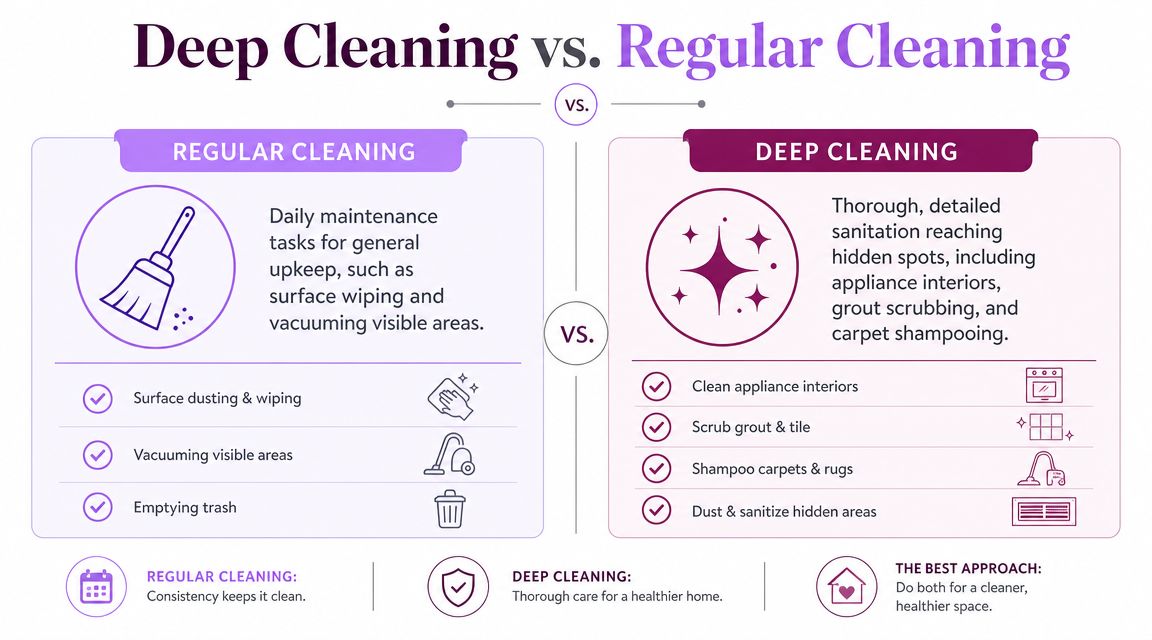
A regular clean is like brushing teeth each day. A deep clean is closer to the more detailed clean-up that deals with what daily upkeep leaves behind. Both matter, but they serve different jobs.
Regular cleaning keeps a home presentable and functional. Deep cleaning restores neglected detail and resets areas that have gradually built up residue.
The maintenance clean
A maintenance clean focuses on the day-to-day layer of mess. Think wiping benches, cleaning sinks, vacuuming open floor areas, mopping accessible floors, and giving bathrooms a standard once-over. It's about keeping the home from sliding backwards.
That sort of service suits weekly or fortnightly schedules well. It maintains order, but it usually won't deal with inside appliances, edge detailing, built-up soap scum, or dust in overhead fixtures.
The restorative clean
A deep clean house cleaning service goes after what routine visits skip. It involves detail work, more agitation, more hand wiping, and more time in the corners and vertical surfaces that don't get touched often enough.
Typical restorative work includes grime removal on skirting boards, dusting fans and vents, scrubbing grout lines, cleaning inside ovens and fridges if included, wiping switches and handles, and cleaning behind or under movable items where practical. If a home hasn't had that reset in a while, a deep clean is usually the better starting point before moving onto a maintenance schedule.
For homeowners comparing options, this is also why scope clarity matters more than a vague promise of a “full clean”. A provider should spell out what's included. That's especially important when reviewing residential cleaning service options so there's no confusion between upkeep and restoration.
Regular Clean vs. Deep Clean At a Glance
| Task Area | Regular Cleaning (Maintenance) | Deep Cleaning (Restorative) |
|---|---|---|
| Kitchen benches and sink | Wiped and sanitised | Detailed cleaning plus attention to splashback build-up and hidden grease zones |
| Bathroom surfaces | General clean of basin, toilet, shower, mirror | Detail scrubbing of grout lines, soap scum, corners, and fittings |
| Floors | Vacuumed and mopped in visible areas | Finished after overhead and detail work, including edges and harder-to-reach zones |
| High-touch points | May be spot-cleaned | Wet cleaning and disinfection of handles, switches, and contact surfaces |
| Overhead dust | Usually limited | Ceiling fans, vents, and light fixtures addressed first |
| Appliance interiors | Usually excluded | Often included as add-ons or by specific request |
| Behind and under furniture | Usually skipped | Included where access and scope allow |
| Result | Keeps things under control | Resets the home to a more thorough standard |
A regular clean manages the week. A deep clean corrects the backlog.
The Ultimate Deep Cleaning Checklist
A deep clean works best when the job is sequenced properly. That is what separates a true reset from a long day of wiping surfaces that still feel dusty a few hours later.
For busy households, the checklist matters for another reason. DIY deep cleaning often spills across a full weekend, then into weeknights because the hard parts were underestimated. A professional service earns its keep by handling the slow, labour-heavy tasks in the right order, with the right tools, and without turning family time into catch-up cleaning.
The right order matters
Professionals clean from top to bottom and from dry soil to wet residue. Ceiling fans, vents, ledges, and light fittings are handled before floors. Loose dust is removed before any wet scrubbing starts.
That sequence avoids rework. If floors are cleaned too early, everything knocked down later lands on a finished surface. If damp cloths hit dusty areas first, fine debris turns into streaks and paste, which takes longer to remove and usually needs a second pass.
Kitchen
The kitchen is usually the most time-expensive room in the house. Grease travels further than people expect, especially around rangehoods, upper cupboards, splashbacks, and the tops of appliances.
A proper kitchen deep clean should cover:
- Rangehood and splashback: Remove grease film, especially around filters, edges, and grout lines.
- Cupboard fronts and handles: Clean doors, pulls, and the areas around handles where oils build up.
- Benchtop joins and corners: Detail seams, edges, and the back line against walls or splashbacks.
- Small-appliance zones: Clean around kettles, toasters, coffee machines, and microwaves where crumbs and splatter collect.
- Sink and tapware: Treat scale, residue around the mixer base, drain collar, and overflow opening.
- Large appliance exteriors: Wipe fridge doors, oven fronts, dishwasher faces, and side panels where accessible.
- Inside oven and fridge if included: These are separate labour items in many quotes because they take time and often need soak time, scraping, and repeat wiping.
For stubborn grease or baked-on food, eco-friendly degreasers from the Star Cleaner Shop product range can help when standard multipurpose sprays are not strong enough. Food-contact areas also need the right product choice, especially for fridge shelves, drawers, and dishwasher components.
Bathrooms
Bathrooms reward patience more than force. Soap scum, body oil, hard water residue, and early mould growth often sit in layers, so the cleaner has to break down the build-up before rinsing and finishing.
A detailed bathroom checklist should include:
- Shower glass and frames: Remove film, clean around seals, and clear residue from tracks and corners.
- Tiles and grout lines: Scrub grout, lower wall sections, and tile edges where moisture sits.
- Tapware and fittings: Clean around bases, under spouts, and behind mixers.
- Toilet exterior: Detail hinges, the rear of the pan, the cistern, and the floor line around the base.
- Vanity fronts, drawers, and handles: Wipe high-touch points and remove toothpaste or product residue.
- Exhaust covers and vents: Dust and wipe where safely accessible.
Mould needs more than scrubbing. If it keeps returning around silicone, grout, or window frames, the issue is often moisture plus incomplete removal. Eco-friendly mould-targeted products from the Star Cleaner Shop line are a practical option for treating those areas properly.
Bedrooms and living areas
These rooms usually create the biggest false sense of cleanliness. Floors may look fine, but dust settles on skirting boards, door frames, blinds, fan blades, lamp fittings, and the edges behind furniture.
The checklist here should include ceiling fans, accessible vents, light fittings, skirting boards, switches, handles, door frames, window sills, and reachable surfaces behind beds, lounges, and side tables. Upholstery should be vacuumed with the correct attachment, not rushed over with a standard floor head.
Dust builds where airflow slows and routine cleaning rarely reaches.
General tasks
Whole-home deep cleaning is often won or lost in the detail items that are easy to skip because they do not stand out at first glance.
- Skirting boards and floor edges: Remove settled dust after overhead work is finished.
- Door handles and light switches: Wet clean and disinfect after dry dust has been removed.
- Behind and under furniture: Clean accessible areas so old dust is not left to recirculate.
- Internal windows and tracks if included: Clear compacted debris from tracks, sills, and corners.
- Final floors: Vacuum thoroughly, then mop last.
If you are pricing up the job, it helps to compare house cleaning estimates with the checklist beside you. That makes it easier to see whether you are paying for real detail work or a lighter service described with deep-clean language.
Understanding Deep Cleaning Costs in Australia
Deep cleaning prices vary because the labour varies. That's the part many homeowners underestimate.
A whole-home deep clean can take significant time, and quoting it accurately means understanding the actual condition of the property, not just the number of bedrooms. According to this deep clean checklist guidance, a whole-home deep clean can take 8 hours or more, especially when the scope includes labour-heavy add-ons like ovens, blinds, and grout cleaning.
Why quotes vary
Two homes with the same layout can require very different levels of effort. One may only need detail work and a reset. The other may need grease removal, soap scum treatment, interior appliance work, and access around heavier furniture.
The main price drivers usually include:
- Initial condition: Built-up grime takes more passes, more dwell time, and more hand detailing.
- Scope per room: A kitchen with appliance interiors included is a different job from a kitchen with external surfaces only.
- Bathrooms: More wet-area detailing usually means more time on tile, grout, fittings, and shower glass.
- Access and clutter: Cleaners move faster in prepared spaces where the task is cleaning, not reorganising.
- Add-ons: Internal windows, blinds, ovens, fridges, and filters can meaningfully expand the job.
What usually increases the scope
Some tasks are small in appearance but large in labour. Blinds are a good example. Each slat needs individual attention. Grout is another. It turns a quick bathroom wipe into a detail scrub.
Internal glass, vent covers, dishwasher filters, appliance interiors, and the areas behind or under furniture all push the service beyond a standard routine clean. That's why homeowners should ask whether the quote includes detail cleaning or just broad-surface cleaning.
A useful way to sense-check pricing is to compare house cleaning estimates and then match those estimates against the exact tasks being offered, not just the headline figure.
Why detailed quoting is a good sign
Flat-rate pricing sounds simple, but it often creates friction. If the cleaner arrives and finds more work than expected, something usually gives. Tasks get skipped, the service runs late, or the client and operator end up renegotiating on the spot.
On-site or detailed quoting is usually the more professional approach because it defines the scope before work starts. That leads to better labour planning, fewer missed items, and more predictable results. It also fits the way dependable operators work. With Star Cleaner Australia, quoting is done with the service scope in mind, and the use of safety-checked operators plus a 100% satisfaction guarantee gives homeowners a clearer framework for what's being promised and delivered.
How to Prepare Your Home for a Deep Clean
A common mistake is spending the night before a booking doing half the cleaner's job. Busy families wipe benches, start on the bathrooms, then still wake up to a house that needs proper attention. The better approach is simpler. Set the home up so the booked hours go into detailed cleaning, not shifting clutter or chasing access.

What to do before the cleaner arrives
Preparation is about protecting the value of the service. If a cleaner spends the first hour sorting toys, stacking paperwork, or clearing bathroom shelves, that is an hour not spent on soap scum, built-up grease, skirting boards, or detail work around fittings.
Start with access and visibility. Clear floors and benchtops, put loose items in baskets or cupboards, and make sure the cleaner can reach the areas you want done. If certain rooms are off-limits, say so early. If the oven, shower grout, or inside windows matter more than a spare room, make that clear at the start of the job.
A few practical steps make a big difference:
- Declutter working areas: Put away clothes, toys, chargers, mail, and small items from floors and surfaces.
- List your priorities: Choose the rooms or tasks you care about most so time is used where it counts.
- Secure pets: Dogs, cats, and nervous animals can get stressed by vacuums, open doors, and unfamiliar people.
- Check access: Open gates, clear driveways if needed, and make sure power and water are available.
- Point out problem areas: Flag mould-prone corners, delicate finishes, loose handles, or furniture that should not be moved.
Good preparation also reduces decision-making on the day. That matters more than many homeowners expect. For a busy household, every phone call, text message, or mid-job clarification adds friction to an already full day.
What not to spend time on
Skip the pre-scrub. There is little value in cleaning the shower or degreasing the cooktop before a deep clean unless you are trying to manage an urgent hygiene issue. The smarter use of your time is putting belongings away, making priorities clear, and leaving notes if you will not be home.
Avoid panic-buying cleaning products too. Professional operators usually bring what they need, and if you prefer lower-toxicity options, ask in advance whether the booking can be completed with eco-friendly cleaning products and services in Australia. That gives you a clearer match between your household preferences and the products used on the day.
If indoor dust is part of the problem, surface cleaning may only be one piece of it. Air movement from vents can keep reintroducing dust into freshly cleaned rooms, which is why some homeowners also review guidance from Purified Air Duct Cleaning before booking related work.
For managed bookings, including those arranged through Star Cleaner Australia, a safety-checked operator should still confirm the scope on arrival. That final check keeps expectations clear and helps ensure the time you pay for goes into cleaning outcomes, not avoidable delays.
Specialised Deep Cleaning Services
Not every deep clean follows the same pattern. Some environments need a different workflow, a different standard of presentation, and a different kind of trust.

Airbnb and short-stay cleaning
Short-stay properties need more than cleanliness. They need reset-ready presentation. The cleaner has to notice crumbs in the toaster tray, fingerprints on mirrors, hair in bathrooms, and dust on bedside lamps because guests notice those details immediately.
Turnover work also depends on pace and consistency. Linen changeovers, restocking, bathroom detailing, kitchen presentation, and final visual checks need to happen in a sequence that leaves the property guest-ready, not just generally clean.
NDIS cleaning
NDIS-related cleaning requires sensitivity, reliability, and respect for the participant's home routine. The technical work matters, but so does the way the service is delivered.
Operators need to communicate clearly, work safely, and follow the agreed scope without creating extra stress in the home. In these settings, trust is part of the service. That's why homeowners and coordinators often prefer providers that use vetted personnel, clear booking systems, and documented expectations.
Post-construction cleaning
This is one of the most misunderstood categories in residential cleaning. Builders' dust behaves differently from ordinary household dust. It settles repeatedly, enters tracks and vents, coats horizontal surfaces, and needs careful removal rather than rushed wiping.
For homes after renovation work, air movement and vent contamination can also become part of the clean-up picture. Homeowners dealing with that issue may find this guide on what to expect from Purified Air Duct Cleaning useful when dust seems to keep returning after the visible debris has already been removed.
Specialised work also tends to align well with lower-toxicity products, especially in occupied homes, participant settings, and short-stay spaces where odour and residue matter. Homeowners looking into that approach can review eco-friendly cleaning service options in Australia to see how product choice and workflow affect the result.
Booking Your Service and Frequently Asked Questions
A deep clean is usually most valuable when it acts as a reset. After that, homeowners can decide whether they want occasional restorative work, regular maintenance, or a mix of both.
The booking process should be simple. The homeowner outlines the property, identifies priorities, confirms any add-ons, and gets a quote based on the actual scope. Flexible scheduling matters, but scope accuracy matters more. That's how reliable providers avoid missed tasks and rushed finishes.
What a straightforward booking process looks like
A good booking process usually includes:
- Property details: Size, layout, and the areas needing attention.
- Scope confirmation: Standard deep clean items plus any extras such as oven, fridge, blinds, grout, or internal windows.
- Scheduling: A time that suits the household, tenant handover, or property turnover.
- Arrival and walkthrough: The operator confirms expectations before starting.
- Completion and review: The result is checked against the agreed scope.
Homeowners who want to understand the service flow before booking can review how cleaning services work in Australia, especially if they're comparing one-off deep cleaning with ongoing service arrangements.
Frequently asked questions
How often should a home be deep cleaned?
Deep cleaning is usually scheduled infrequently rather than as a weekly task. The right timing depends on the household, how quickly grime builds up, and whether the home already has regular maintenance cleaning.
Do cleaners bring their own equipment and products?
Many professional operators do. It's still worth confirming this at booking stage, especially if the home has specific surface requirements or the client prefers eco-friendly products.
Is a deep clean the same as an end-of-lease clean?
Not always. There can be overlap, but end-of-lease work may involve additional real estate expectations and a more formal scope.
What does a satisfaction guarantee mean?
It should mean the service is reviewed against the agreed scope and any genuine service issue is addressed properly. A 100% satisfaction guarantee is most useful when the inclusions were clearly defined before the work began.
Why does trust matter so much in residential cleaning?
Because the cleaner is working inside the home, often around family routines, personal belongings, pets, and access points. Safety-checked operators, clear communication, and managed support reduce risk and make the experience more predictable.
If the house feels clean enough to get by but not clean enough to feel reset, a properly scoped deep clean is often the fix. Star Cleaner Australia Pty Ltd connects Australian homes with vetted, insured professionals, with on-site quoting, safety-checked operators, and a 100% satisfaction guarantee so the scope is clear before the work begins.