

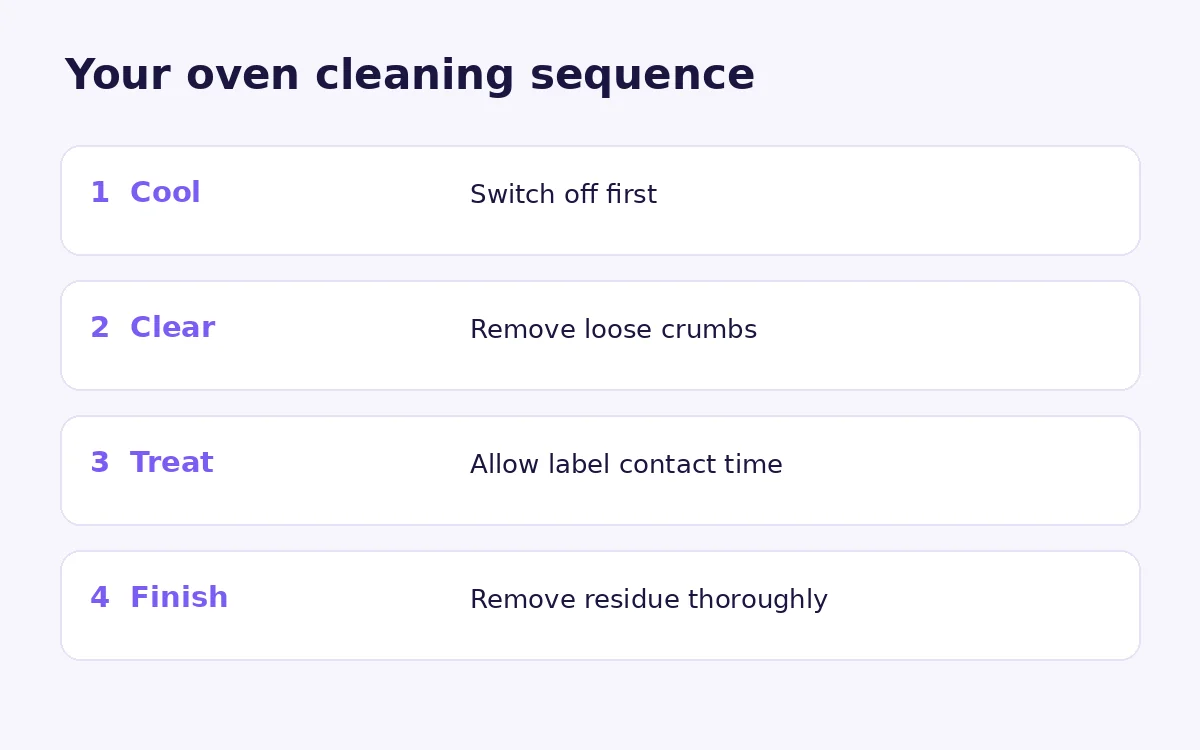
For effective oven cleaning, start with a cool appliance, remove loose crumbs and treat grease with a cleaner approved for its surfaces. Clean removable racks separately, wipe accessible door glass and remove all cleaner residue before cooking again.
This guide covers seven manual oven cleaning steps for Australian households. Check your oven manual first: catalytic liners, pyrolytic ovens and coated parts need specific care.
Download the free Deep Clean Checklist to plan the rest of your kitchen clean.
Which oven surfaces can you clean?
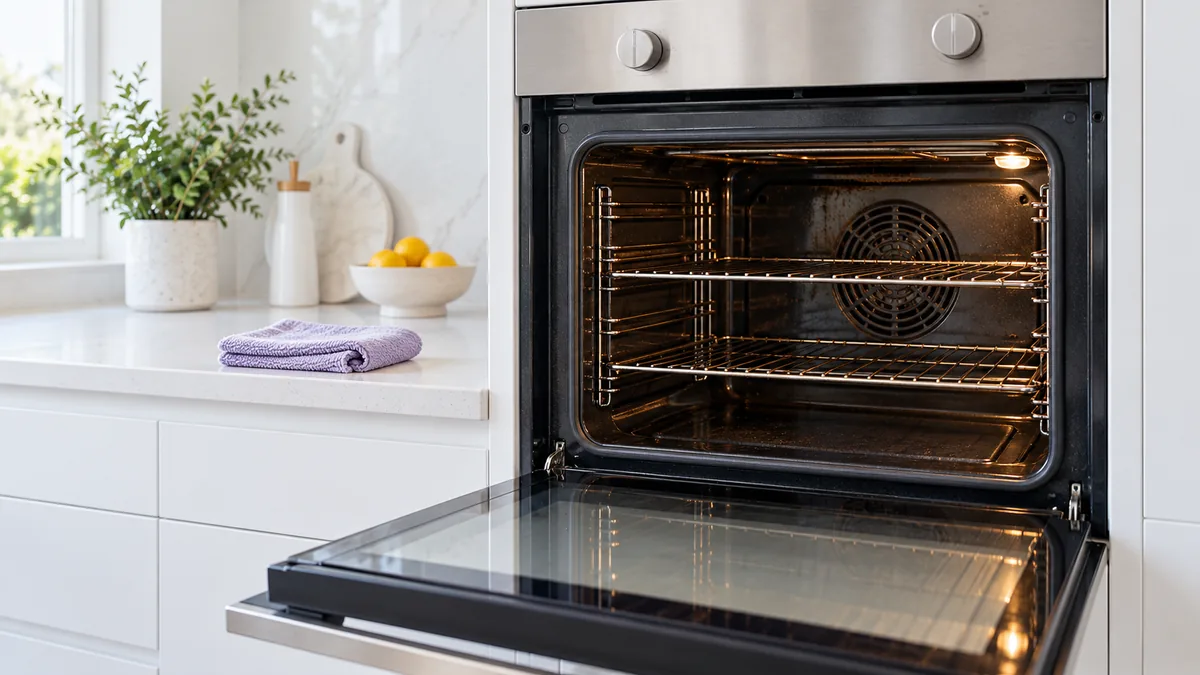
Manual oven cleaning usually covers accessible surfaces that your appliance manual permits you to wipe. Identify the oven type before choosing a product.
A standard enamel interior, catalytic liner and self-cleaning cavity can look similar at first glance. Find the model number and check the cleaning section of its manual.
- Standard ovens: follow the instructions for the cavity, door and removable accessories.
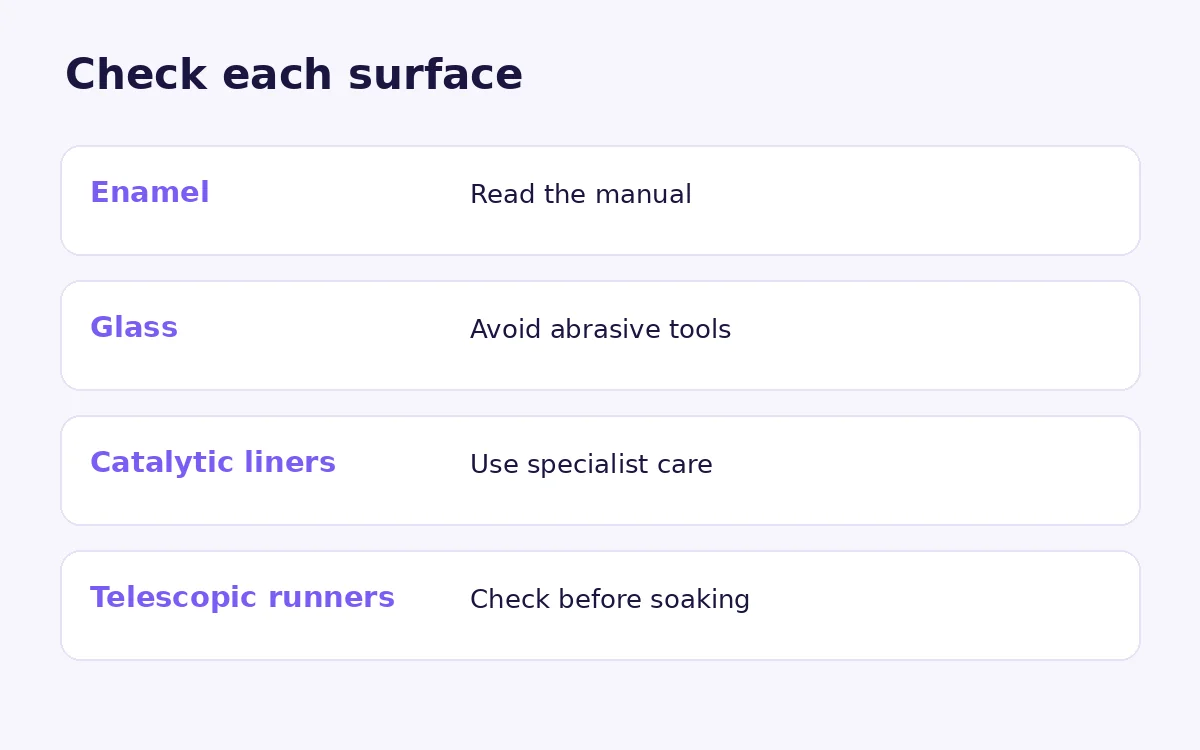
- Catalytic liners: use the manufacturer’s care method. Do not treat them like ordinary enamel.
- Pyrolytic ovens: follow the manual for the cleaning cycle and removal of accessories.
- Steam-assisted ovens: check instructions for the water reservoir and cleaning programme.
Westinghouse explains that catalytic liners absorb cooking fat. Their specialised surface needs different care from a removable tray.
Avoid spraying cleaner into fans, vents, electrical openings or door seals. Keep liquids away from controls, and leave inaccessible parts to the appliance manufacturer.
What do you need for oven cleaning?
You need a compatible cleaner, clean cloths, a non-scratch pad and protection specified on the product label. Gather everything before removing the racks.
- Enzyme Wizard Oven & Cooktop Cleaner, 500ml RTU: a ready-to-use option for compatible oven surfaces.
- Microfibre cloths, blue 5-pack: keep separate cloths for lifting grease and final wiping.
- AGAR Double Bubble Dishwashing Liquid: for washable accessories where the manual permits detergent cleaning.
- A non-scratch pad, a basin of clean water and a towel to protect the floor.
Safety note: follow the product label and Safety Data Sheet (SDS), including gloves, eye protection and ventilation. Never mix cleaning products. Keep children and pets away, and store chemicals in their original containers.
The ACCC’s household chemical safety guide explains safe storage and the importance of following instructions.
Oven cleaning in seven practical steps
Work from loose debris to grease treatment, then finish with careful wiping and drying. These steps apply only to surfaces approved for manual cleaning.
1. Prepare the kitchen for oven cleaning
Switch the oven off and let it cool fully. Clear nearby benches, protect the floor and place your clean cloths within reach.
Take a quick look at the cavity and door. Note damaged seals, chipped surfaces or loose fittings before you start.
2. Remove racks and loose crumbs
Lift out removable racks and trays according to the manual. Set them on a protected surface.
Use a dry cloth or soft brush to collect crumbs. Removing debris first keeps the wet cleaning stage from spreading food around.
3. Test the cleaner on an approved surface
Check that the label allows use on the surface you want to clean. Test a small, hidden area before treating a larger section.
Stop if the finish changes colour or texture. A product sold for ovens can still be incompatible with individual coatings.
4. Apply cleaner and allow contact time
Treat greasy patches according to the current label. Keep the product away from seals, vents and heating elements.
Let the cleaner work for its stated contact time. Contact time means how long a product stays on the surface before removal.
5. Lift softened grease gently
Wipe loosened grease with a clean cloth. Use a non-scratch pad only where the appliance manual allows it.
Work in small sections and turn the cloth frequently. Replace a heavily soiled cloth instead of spreading grease back over clean areas.
6. Clean removable accessories and door glass
Wash compatible racks separately, then clean the accessible inner glass. The sections below explain both jobs.
Do not dismantle the door or remove glass panels unless the manual gives clear instructions for your model.
7. Remove residue and let everything dry
Complete the product label’s removal procedure. Wipe with fresh cloths and clean water wherever instructed, including accessible corners.
Dry the cleaned surfaces and accessories before refitting them. Follow the appliance instructions before returning the oven to use.
How do you clean oven glass?
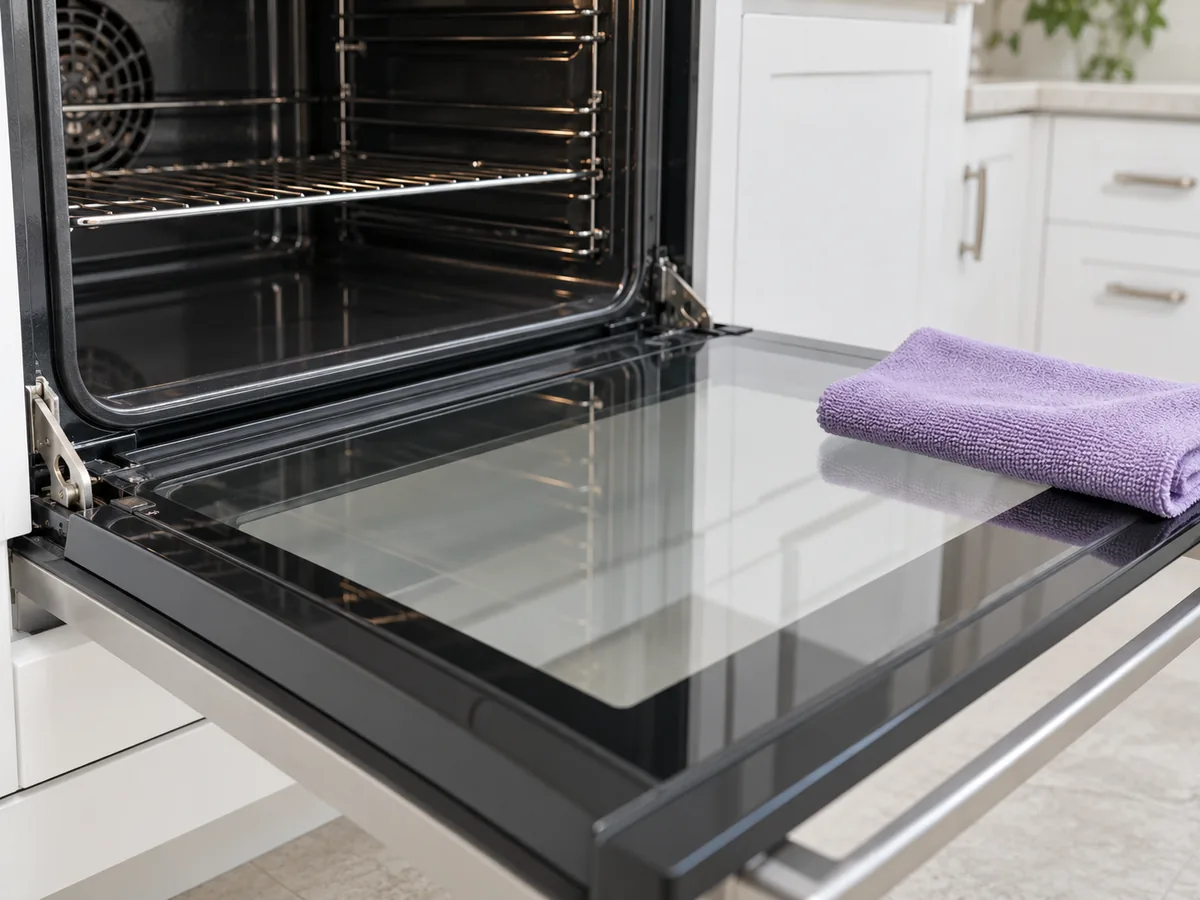
Clean accessible oven glass with the method approved in your manual. Start gently, and avoid abrasive tools that can scratch the surface.
For light grease, a soft cloth with warm water and permitted detergent may be enough. Remove the loosened soil, then wipe away remaining detergent.
For heavier deposits, check whether your selected oven cleaner is approved for that glass. Apply it carefully and keep it off seals and surrounding fittings.
Turn the cloth as it collects grease. A fresh, dry cloth helps finish the accessible surface without leaving wet streaks.
Marks between glass panels need a different approach. Check whether the manufacturer allows panel removal; do not loosen hinges or screws by guesswork.
During oven cleaning, treat internal glass and exterior finishes as separate surfaces. A cleaner approved for one may not suit the other.
How do you clean oven racks and trays?
Wash removable racks and trays using the method specified for each accessory. Ordinary metal racks, coated trays and telescopic runners need different handling.
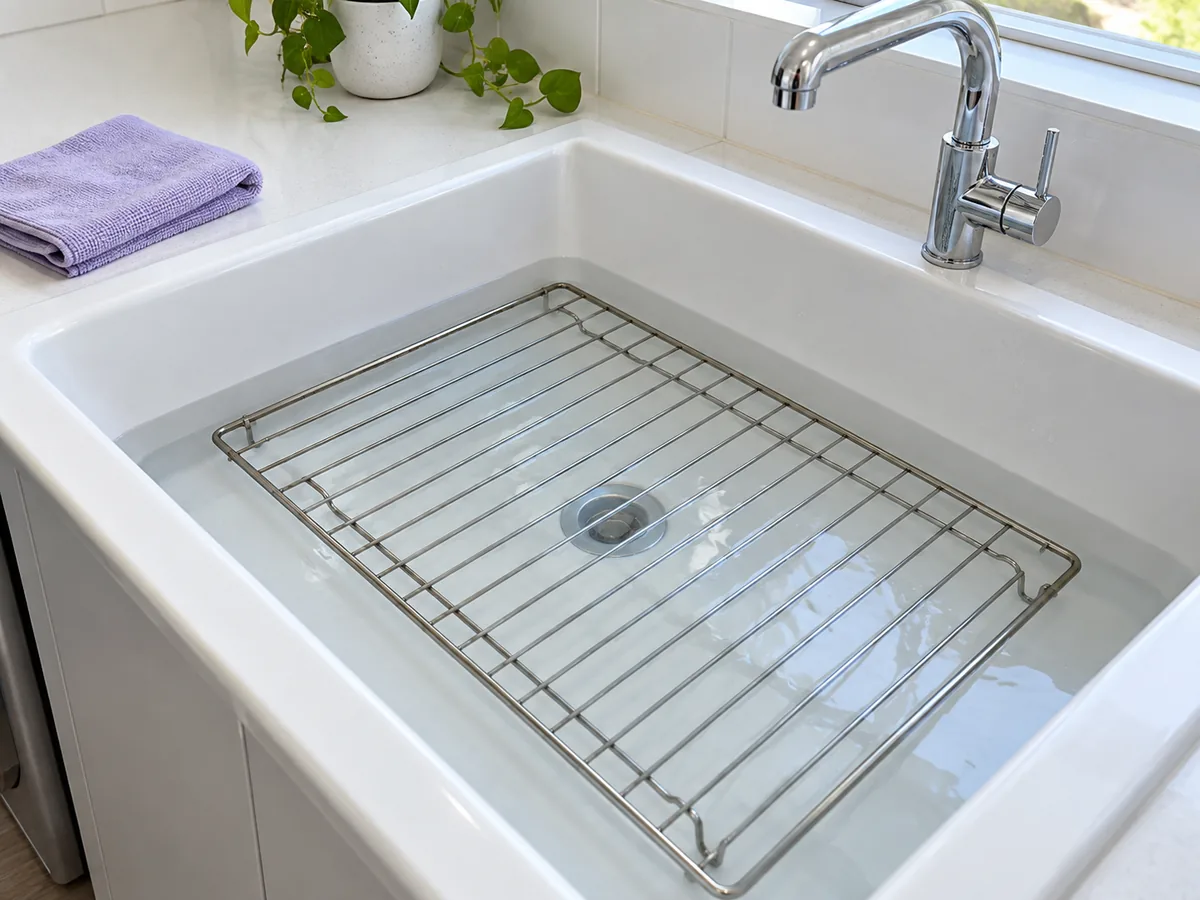
For accessories that permit soaking, use a sink or container that fits them comfortably. Add warm water and label-directed dishwashing detergent.
Protect the sink from scratches, and keep heavy racks from resting against delicate fittings. Once food has softened, wipe it away with a cloth.
Use a non-scratch pad where permitted, rinse off detergent and dry thoroughly. Inspect joints and corners before returning accessories to the oven.
Avoid assuming that every oven part can be soaked. Telescopic runners may contain lubricated mechanisms, and some trays have coatings that need gentle care.
This part of oven cleaning is easiest to start early. Compatible accessories can soak while you work on the cavity.
What removes burnt-on oven grease?
A compatible grease cleaner and enough contact time can loosen stubborn deposits. Heavy carbonised patches may remain even after careful treatment.
Enzyme Wizard’s oven product is designed to tackle fats, oils and grease. Despite the brand name, this product uses a surfactant-based formula.
The manufacturer’s instructions describe five minutes for light grease, 20–30 minutes for medium deposits and 30–60 minutes for heavy deposits. Check the current label before use.
These times apply to that product, rather than every oven cleaner. Its manufacturer also notes that some carbonised fats may resist removal.
For oven cleaning, repeat a permitted treatment instead of immediately increasing abrasion. Avoid metal scrapers unless your appliance manufacturer specifically approves them.
Check the manufacturer’s oven cleaner instructions for compatibility and limitations. Rubber, porous materials and coated surfaces can be sensitive.
Which oven cleaning mistakes should you avoid?
The common mistakes are using an incompatible product, scrubbing too hard and leaving cleaner behind. A careful surface check prevents unnecessary damage.
- Cleaning a hot oven: this manual method starts with a cool appliance.
- Treating every surface alike: check liners, seals and coatings individually.
- Using steel wool on glass: choose tools permitted by the manufacturer.
- Skipping product removal: finish the label’s wiping or rinsing procedure.
- Running self-clean to remove chemicals: use only the appliance’s approved cleaning sequence.
Keep oven cleaning products for their approved uses. Do not apply an oven product to an air fryer simply because both collect grease. Non-stick baskets need their own approved care method.
Good oven cleaning also means recognising when a mark is permanent. Damaged enamel or etched glass will not improve with more detergent.
If a surface starts deteriorating, stop and ask the appliance manufacturer for advice.
How often should you clean your oven?
Base oven cleaning on use and visible build-up. Wipe accessible spills once the appliance has cooled, before they bake onto the surface again.
Check the oven after roasting, baking oily dishes or cooking food that splatters. A quick inspection helps you spot fresh grease early.
Households that cook daily should inspect more often than households that rarely use the oven. Follow any maintenance schedule in your manual.
Plan deeper oven cleaning when grease accumulates, food debris remains or the glass becomes difficult to see through. Do not wait for thick deposits.
Keep a clean microfibre cloth handy for permitted light wiping. Replace it after collecting grease so it is ready for the next job.
Add the oven to your kitchen deep-clean checklist. A simple reminder makes the task easier to keep up with.
When should you ask for help?
Ask for help when deposits remain after approved cleaning or when parts need specialist handling. An appliance fault needs a qualified technician.
Pause if you find cracked glass, damaged seals or chipped internal surfaces. Photograph the issue and contact the manufacturer before continuing.
Before booking oven cleaning, explain the oven model and the products already used to a professional cleaner. This helps them assess the job.
If cooking produces unusual smoke or electrical smells, stop using the appliance and seek technical advice. Further cleaning may not address the cause.
For your next household oven cleaning session, keep the correct supplies together. Separate clean cloths from used ones and leave labels attached to products.
Shop professional cleaning supplies for compatible cleaners and cloths. Sydney households can also explore Star Cleaner’s residential cleaning options.
FAQs
Can I use oven cleaner in a self-cleaning oven?
Only use a product if both its label and your oven manual permit it. Self-cleaning appliances can have specialised coatings or cleaning programmes. Check the model-specific instructions before manual oven cleaning, and remove accessories exactly as directed before any self-clean cycle.
Can I clean oven glass with a metal scraper?
Do not use a metal scraper unless the appliance manufacturer specifically permits it and explains the method. Start with a soft cloth and an approved cleaner. Scratches or damage to glass can be permanent, so stronger tools should never be the automatic next step.
How long should I leave oven cleaner on?
Use the time stated on the current product label. Enzyme Wizard’s manufacturer gives different contact times for light, medium and heavy grease. Other products can differ. During oven cleaning, use a timer and complete the required product removal before returning the appliance to use.
Can I cook immediately after oven cleaning?
Complete the cleaner’s removal instructions and the appliance’s return-to-use procedure first. Check accessible corners for residue and let cleaned parts dry. Do not assume heating will remove leftover chemicals. If you are unsure, contact the cleaner supplier or appliance manufacturer before preparing food.
Why does burnt-on grease remain after cleaning?
Old deposits can be heavily carbonised and harder to loosen than fresh grease. The selected cleaner may also be incompatible or need more label-directed contact time. Repeat only an approved treatment. If the surface is damaged or the deposit persists, ask for professional advice.