




Typing cleaners near me usually happens at the worst possible time. A rental inspection is coming up. Guests are checking out and new guests are arriving the same day. An elderly parent needs regular help at home. The office looked manageable last week, and now it doesn't. For that kind of office turnaround, many businesses skip the one-off search and set up ongoing commercial cleaning for Australian businesses instead.
The hard part isn't finding a cleaner online. The hard part is working out who will reliably show up, bring the right gear, follow the scope, respect the property, and clean to a professional standard without creating extra risk. That's where most quick searches fall apart.
This guide is built around that search: where to look for local cleaners, how to tell a genuinely reliable provider from a risky one, and what to check before you book.
Table of Contents
- Why Finding Good Cleaners Is Harder Than It Looks
- Where to Start Your Search for Local Cleaners
- How to Vet a Cleaner Beyond Price and Reviews
- Key Questions to Ask Before You Commit
- Tailoring Services for Airbnb, NDIS, and Post-Construction
- Frequently Asked Questions About Hiring Cleaners
Why Finding Good Cleaners Is Harder Than It Looks
It usually starts the same way. A tenant is moving out on Friday, the next Airbnb guest checks in at 3 pm, or a support coordinator needs a cleaner who understands NDIS expectations without turning the visit into a compliance problem. The search term is simple. The hiring decision is not.
Typing "cleaners near me" into Google gives plenty of names, but proximity and a few star ratings do not tell you who will turn up on time, follow scope, protect keys and access codes, or handle the kind of property you have. A standard domestic clean, an NDIS service, and a short-stay turnover can all sit under the word "cleaning," but they are very different jobs with different risks.

More options create more screening work
More listings should make hiring easier. In practice, they make comparison harder.
One provider may be a sole trader with excellent hands-on standards but no backup if they get sick. Another may be a franchise with polished branding but a rotating roster. A marketplace profile may show strong reviews, yet those reviews often say little about the exact job you need done. Fast Airbnb turnovers, post-build dust, and NDIS-related cleaning all require tighter systems than a basic weekly tidy.
That is where many people get caught. They compare hourly rates when they should be comparing fit, process, and accountability.
Practical rule: A cleaner is a good option when they can handle your property type, your timing, and your access requirements without guesswork.
Poor outcomes usually start with unclear scope
Most bad cleaning experiences come from simple misses in communication. The quote did not spell out what was included. The cleaner expected supplies on site. The client assumed internal glass, oven work, or linen changeovers were part of the visit. Nobody discussed pets, alarms, parking, key handover, or delicate finishes.
Those gaps matter more in Australian service settings where the job has extra pressure. An Airbnb host may need photos after completion and a firm turnaround window. An NDIS participant or coordinator may need consistency, privacy awareness, and clear service records. A post-construction clean may need the right equipment for fine dust, adhesive residue, and safe waste handling. A cleaner can be reliable for one of those jobs and still be the wrong fit for another.
Good hiring usually comes down to one habit. Compare the actual scope, not just the headline price. If you want to spot the kind of assumptions that cause rework, complaints, or missed items, review these common cleaning mistakes Australians make before you shortlist anyone.
Where to Start Your Search for Local Cleaners
Not every search channel produces the same kind of result. Some are built for convenience. Some are built for trust. Some give plenty of names but very little proof.
The three main ways people look
A simple comparison helps.
| Search channel | What works | What usually goes wrong |
|---|---|---|
| Word of mouth | High trust if the referrer has similar standards | Limited availability, narrow choice, may not suit specialised jobs |
| Local social groups | Fast responses, often local and flexible | Hard to verify insurance, training, or consistency |
| Large marketplaces | Big range of options and quick browsing | Mixed quality, uneven vetting, reviews can hide scope problems |
Word of mouth is still useful. If a neighbour, property manager, or coordinator recommends someone they've used for the same type of work, that's a strong starting point. The weakness is fit. A cleaner who handles a small family home well may not be equipped for builder's dust, regular office cleaning, or a same-day short-stay turnover.
Local social media groups move quickly, but that speed often strips away due diligence. A comment saying “used them once, lovely” doesn't answer whether the cleaner has insurance, written service terms, or a reliable backup process.
Curated beats random
A better approach is to start with providers that already operate with a structure. That means formal quoting, defined service inclusions, and evidence that the cleaner is set up to work professionally.
One option in that category is Star Cleaner Australia, which connects customers with vetted, insured operators and handles quoting around the scope of the job rather than a guess from a message thread. That matters when a property needs recurring service, add-ons like ovens or internal windows, or a schedule that has to be organised properly from the start. For a plain-language overview of what a structured booking process should include, this guide on how cleaning services work in Australia is useful.
A smart search narrows the field before booking. It doesn't push the customer to do all the checking after something goes wrong.
What to shortlist first
Before contacting anyone, filter by these factors:
- Job type fit. Residential, commercial, Airbnb, NDIS, and post-construction all require different methods.
- Scope clarity. The listing should make it clear what's included, what's extra, and how the quote is confirmed.
- Operational signs. Look for evidence the cleaner brings equipment, manages scheduling, and communicates in writing.
- Problem handling. If the service page says nothing about missed items, complaints, or re-cleans, that's a warning sign.
A short, carefully chosen shortlist usually produces better results than messaging ten random listings.
How to Vet a Cleaner Beyond Price and Reviews
A low quote looks fine until keys have been handed over, the cleaner misses half the brief, and nobody can show insurance or a clear process for fixing damage. That is the point where a cheap booking stops being cheap.
Price and reviews help with the first filter. They do not tell you enough about trust, safety, or whether the cleaner can handle the actual job. That gap matters in private homes, managed properties, NDIS-related work, and fast-turnover Airbnb cleaning where timing, access, and consistency all carry real risk.
The scam risk is also real. The ACCC's Scamwatch reports on targeting scams and losses in Australia are a useful reminder that Australians are regularly asked to trust people they found online. A cleaner does not need to be a scammer to create a costly problem. Poor vetting is enough.
Reviews are only the first screen
Reviews usually tell you that someone arrived on time, was friendly, or left a good impression. They rarely tell you whether the cleaner was properly insured, whether a subcontractor attended instead of the person who was booked, or whether the quoted scope matched the finished work.
For that reason, experienced clients ask for proof tied to the type of property they manage. A weekly house clean, an NDIS support environment, and an Airbnb turnover between guests do not carry the same expectations.
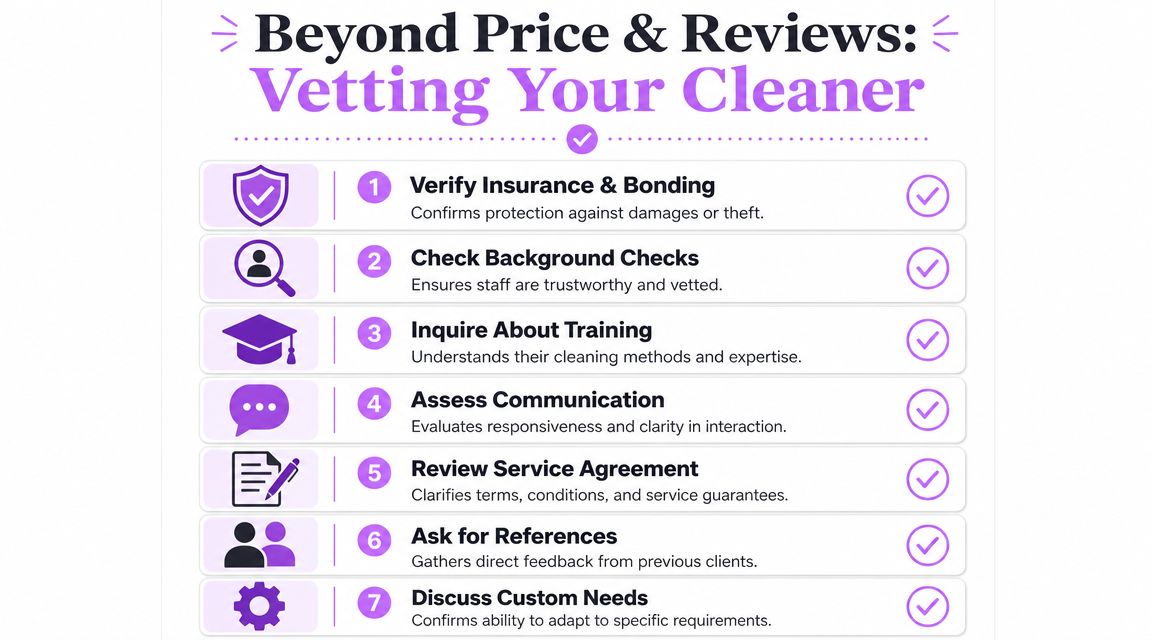
Seven checks that matter in practice
Insurance
Ask for current public liability insurance. If a cleaner scratches timber, etches stone, breaks glass, or damages an appliance, there needs to be cover and a claims process.
Business identity
Confirm the legal trading name, ABN, and whether invoices are issued correctly. If there is a dispute later, vague contact details become a problem fast.
Background screening
For homes, keyed access, vulnerable occupants, and repeat bookings, ask whether the person attending has been police checked or otherwise screened.
Written scope
The job should be set out in writing. Rooms, tasks, extras, exclusions, access instructions, and time expectations all need to be clear before the visit.
Surface knowledge
Ask how they clean stone, timber, stainless steel, glass, and painted surfaces. A cleaner who uses the same product everywhere can do expensive damage.
Operational reliability
Check how bookings, arrival windows, keys, alarms, and missed items are handled. This matters as much as cleaning skill in Airbnb and agency-managed work.
Relevant experience
Ask for examples of similar jobs. A cleaner who is solid on standard domestic work may still struggle with NDIS documentation requirements, builder's dust, or same-day turnovers.
What a properly vetted cleaner sounds like
A professional operator answers direct questions without getting defensive. They can explain who attends, what is included, what changes the price, what they bring, and what happens if something is missed.
Pay attention to how specific the answers are. “We'll sort it out on the day” usually means the scope is still loose. “For an Airbnb turnover we change linen, restock agreed consumables, check damage, photograph any issue, and report before the next guest arrives” is the kind of detail that shows the cleaner understands the job.
Cheap cleaning often becomes expensive through re-cleans, damaged surfaces, lockout delays, guest complaints, or support workers having to chase basic admin. Reviews do not catch that early. Good vetting does.
If you do not want to run every check yourself, use a provider that already verifies the operator. The standard stays the same. Someone should confirm the cleaner is legitimate, insured, and suited to the property before access is approved.
Key Questions to Ask Before You Commit
A cleaner can sound organised on the phone and still be the wrong fit once they are inside your home, rental, or support setting. The questions that matter are the ones that expose how they handle scope, access, changes, and risk before the first visit is booked.
Price still matters. It just should not be the only filter.
Ask what the service looks like on the day
Start with the practical details that affect whether the job runs properly.
- What do you bring to the job? Confirm whether equipment, cloths, vacuum, mop, and cleaning products are included.
- What products do you use on stone, timber, glass, and stainless steel? A cleaner should know what is safe for each surface without guessing.
- What falls outside a standard clean? Ask directly about mould, heavy soap scum, grease build-up, pet hair, and carpet spotting.
- How long have you allowed for this job? A realistic time allowance often tells you more than the quote itself.
If you plan to supply products yourself, clear that upfront. Poor product matching is a common reason for streaks, residue, damaged finishes, and wasted time. For tougher jobs, some clients choose purpose-specific products from the Star Cleaner Shop rather than handing over a mix of household sprays that were bought for convenience, not for the actual surfaces in the property.
Ask how the quote is defined
A vague quote causes trouble fast. The cleaner may be expecting a light maintenance visit while the client is expecting a detailed spring clean.
Use direct questions:
- Was this quote based on photos, a checklist, or an inspection?
- What is included every visit, and what is extra?
- How are ovens, fridges, internal windows, skirting boards, and walls treated in the quote?
- If the property is in worse condition than expected, do you stop and call for approval or keep going and bill later?
Written scope matters here. It protects the customer, and it protects the cleaner from being pushed into unpaid extras on the day.
Ask who will attend and how changes are handled
Trust gets tested here. A lot of hiring problems have nothing to do with cleaning technique. They come from poor handover, unclear access instructions, or the client not knowing who is turning up.
Ask:
- Will the same cleaner attend each visit, or do staff rotate?
- Who has access details, alarm instructions, or key codes?
- What happens if the assigned cleaner is sick or running late?
- Who checks the work if something is missed?
For Airbnb turnovers, this matters more than many hosts realise. For NDIS-related cleaning, it matters even more because consistency, communication, and respectful conduct are part of the service, not an optional extra.
Ask about communication and proof
A professional cleaner should be able to explain how they confirm arrival, report issues, and close out the job. That can mean text confirmation, photos, a checklist, or a simple message that tells you the property is ready.
Keep it plain. Ask how they report breakages, maintenance issues, or access problems. Ask who you contact if the finish is not up to standard.
The right answers are usually specific. Clear systems beat polished sales talk every time.
Tailoring Services for Airbnb, NDIS, and Post-Construction
A cleaner can look fine on paper and still be the wrong fit for the job.
If you are handing over an Airbnb at 2 pm, arranging regular support in an occupied home, or trying to clear builder's dust before furniture arrives, the question is not who is cheapest nearby. It is who can work safely, follow the right process, and finish to the standard that job requires.
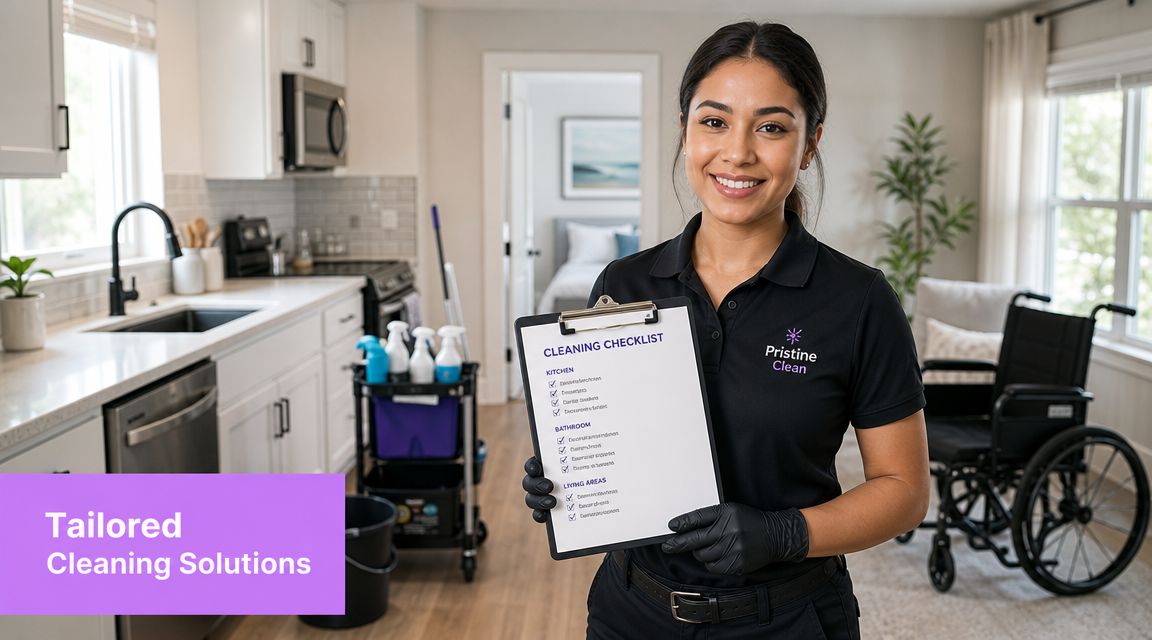
Airbnb and short-stay work needs turnover discipline
Short-stay cleaning sits closer to operations than ordinary house cleaning. The cleaner is resetting the property for the next guest, often under a tight deadline, with no room for missed linen, low stock, or a bathroom that looks acceptable in person but fails in listing photos.
That is why vague scopes cause problems. Hosts should spell out whether the job includes bed making, linen laundering, consumable restocking, bin presentation, fridge checks, dishwashing, damage spotting, and photo confirmation. Fast turnovers depend on a repeatable checklist, not a cleaner making assumptions on the day.
NDIS cleaning needs the right service model
NDIS-related cleaning is often judged on more than the finish. Punctuality, consistency, respectful conduct, and the ability to work around the participant's routine matter just as much. In many homes, the cleaner is entering a support environment, not just a property.
Australia's population is ageing, and the Australian Bureau of Statistics projects a larger share of older Australians over time in its Population Projections, Australia. That does not mean every cleaner can handle supported home environments well. It means demand for reliable in-home services will keep growing, and customers need to check whether a provider can match care-related expectations with a clear, stable cleaning routine.
A provider that handles NDIS work properly should be able to explain how they manage regular scheduling, home access, special instructions, and service boundaries. If you want a clearer picture of how a professional operator answers those practical questions, the cleaning service FAQ for Star Cleaner Australia is a useful benchmark.
Post-construction cleaning is specialised work
Post-construction cleaning catches out plenty of property owners because the site can look almost finished while fine dust is still sitting in tracks, skirting lines, vents, switch plates, and inside cupboards. Standard domestic gear usually is not enough. The order of work matters too, or dust will settle again after the clean.
Trades also leave behind different residue. Silicone smears, grout haze, paint specks, stickers, and protective film all need the right method. Rush that stage, and you end up with scratched glass, damaged fixtures, or a site that still feels gritty underfoot.
Here is the practical difference between these job types:
| Job type | What matters most | Common mistake |
|---|---|---|
| Airbnb turnover | Finish time, presentation, reset checklist, stock checks | Hiring a general house cleaner with no turnover process |
| NDIS home cleaning | Respectful routines, consistency, clear task limits, trust | Treating support-based cleaning like a casual once-over |
| Post-construction | Dust removal method, residue treatment, staged final clean | Booking a standard domestic clean for a building site |
For work in any of these categories, site-specific quoting usually gives a better result than a quick price over the phone. The cleaner needs to see the access, condition, timing pressure, and risks before they can price the job properly.
If you are also weighing vacancy pressure in rental areas, the Australian Bureau of Statistics tracks those conditions through its Residential Property Price Indexes and housing indicators releases. That pressure is one reason rushed handovers cause so many problems. The fix is simple. Match the cleaner to the job type, then check that their process fits the property.
Frequently Asked Questions About Hiring Cleaners
What if the clean isn't done properly
That should be answered before booking, not after the complaint. Ask what the provider does when part of the scope is missed, how quickly issues need to be reported, and whether a return visit is offered. A professional service should have a clear remedy process. Star Cleaner Australia also states a 100% satisfaction guarantee, which gives customers a defined path if the result doesn't match the agreed scope.
Do clients need to be home during the clean
Not always. Many customers provide access instructions, keys, lockbox details, concierge directions, or alarm notes instead. What matters is that access is documented clearly and only given to cleaners who have been properly safety-checked.
Should the cleaner be tipped
Tipping isn't a standard expectation in Australia. Clear payment terms matter more. The better question is whether the invoice, service scope, and any add-ons are confirmed in writing before the job starts.
Can the same cleaner attend every time
That depends on the provider's scheduling model. Ask directly if continuity is available and what happens if the regular cleaner is sick or on leave. A stable process matters as much as a familiar face. For guidance on choosing a cleaning frequency and setting up an ongoing arrangement, see our guide to choosing the right regular cleaning schedule. More practical hiring details are covered in the Star Cleaner FAQ.
When the search starts with cleaners near me, the better result usually comes from slowing down and checking the right things. Star Cleaner Australia Pty Ltd is one option for households, property managers, and businesses that want vetted operators, safety-checked service, clear scope, and cleaning support backed by a 100% satisfaction guarantee.