





A project can be finished on paper and still be nowhere near ready for handover. The joinery may be installed, the paint may be dry, and the keys may be ready, but if fine dust is sitting in tracks, adhesive is still on glass, and debris is hiding in cupboards and wet areas, the site isn’t fit for occupancy.
That’s where post construction cleaning changes from a last-minute tidy-up into a controlled handover step. For builders, it protects presentation, supports compliance, and reduces the risk of disputes after practical completion. For homeowners, it turns a building site into a liveable space without damaging brand-new finishes in the process. Many builders and property managers move straight from this handover clean into Star Cleaner’s commercial cleaning services to keep the space maintained once it’s occupied.
The scale of the sector shows why this stage matters. The global post-construction cleaning service market was estimated at $250 billion in 2023 and is projected to grow at approximately 6% CAGR, reaching an estimated $350 billion by 2028, according to post-construction cleaning market projections. That growth reflects a simple reality. Construction cleaning is now a specialised service tied to safety, standards, and project completion, not just appearance.
Table of Contents
- From Dust and Debris to a Move-In Ready Space
- The Three Critical Stages of Post Construction Cleaning
- Your Detailed Post Construction Cleaning Checklist
- Health Safety and Compliance on a Building Site
- Understanding Post Construction Cleaning Costs in Australia
- The Star Cleaner Australia Difference Handover Ready Guaranteed
- Post Construction Cleaning FAQs
- When should post construction cleaning be booked
- Can homeowners do post construction cleaning themselves
- What should be finished before cleaners arrive
- Does post construction cleaning include sanitising
- Why do some sites still feel dusty after they’ve been cleaned
- What if the property has sensitive finishes
- Is post construction cleaning only for builders
From Dust and Debris to a Move-In Ready Space
A newly built or renovated property usually looks clean from the doorway. Walk closer and the actual work appears. Plaster dust sits on skirting boards, silicone smears show up in natural light, labels remain on glazing, and cabinet interiors often hold sawdust and trade debris.

Post construction cleaning has to deal with what ordinary cleaning doesn’t. New surfaces are vulnerable. Glass scratches easily if grit isn’t removed first. Timber can be marked by excess moisture. Stone, brushed metal, and coated tapware all need the right chemical and the right cloth, not a general spray and a fast wipe.
The handover problem most people meet too late
The biggest mistake is treating the clean as a single visit at the very end. That approach usually leads to rework. Dust from one trade settles back over finished surfaces, wet areas still have residue in corners, and final presentation gets rushed because access changed or deadlines tightened.
A proper handover clean has three jobs at once:
- Remove hazards like loose debris, sharp offcuts, and dust build-up on walking surfaces
- Protect finishes by using the right order, tools, and products on new materials
- Present the property properly so the owner, tenant, or facilities team can inspect it without distraction
Practical rule: If a surface still has building residue on it, it hasn’t been cleaned yet. It has only been made to look better from a distance.
Why professional process matters
Builders often focus on defects lists, programme pressure, and trade coordination. Homeowners focus on finally moving in. Both can underestimate how much post construction dust travels. It gets into tracks, vents, hinges, robe tops, cornices, switch plates, and under the lip of newly installed fixtures.
That’s why professional operators work methodically instead of chasing visible dirt only. Reliable services such as Star Cleaner Australia are built around safety-checked operators, proper scheduling, and clear scopes so the clean supports handover instead of becoming another snag. The value isn’t just in shine. It’s in reducing missed items, avoiding damage, and leaving a site that’s ready for occupancy with fewer arguments afterwards.
The Three Critical Stages of Post Construction Cleaning
Most handover issues come from poor timing, not poor effort. If cleaners start detailed work too early, dust returns. If they arrive too late, everybody is under pressure and shortcuts creep in.
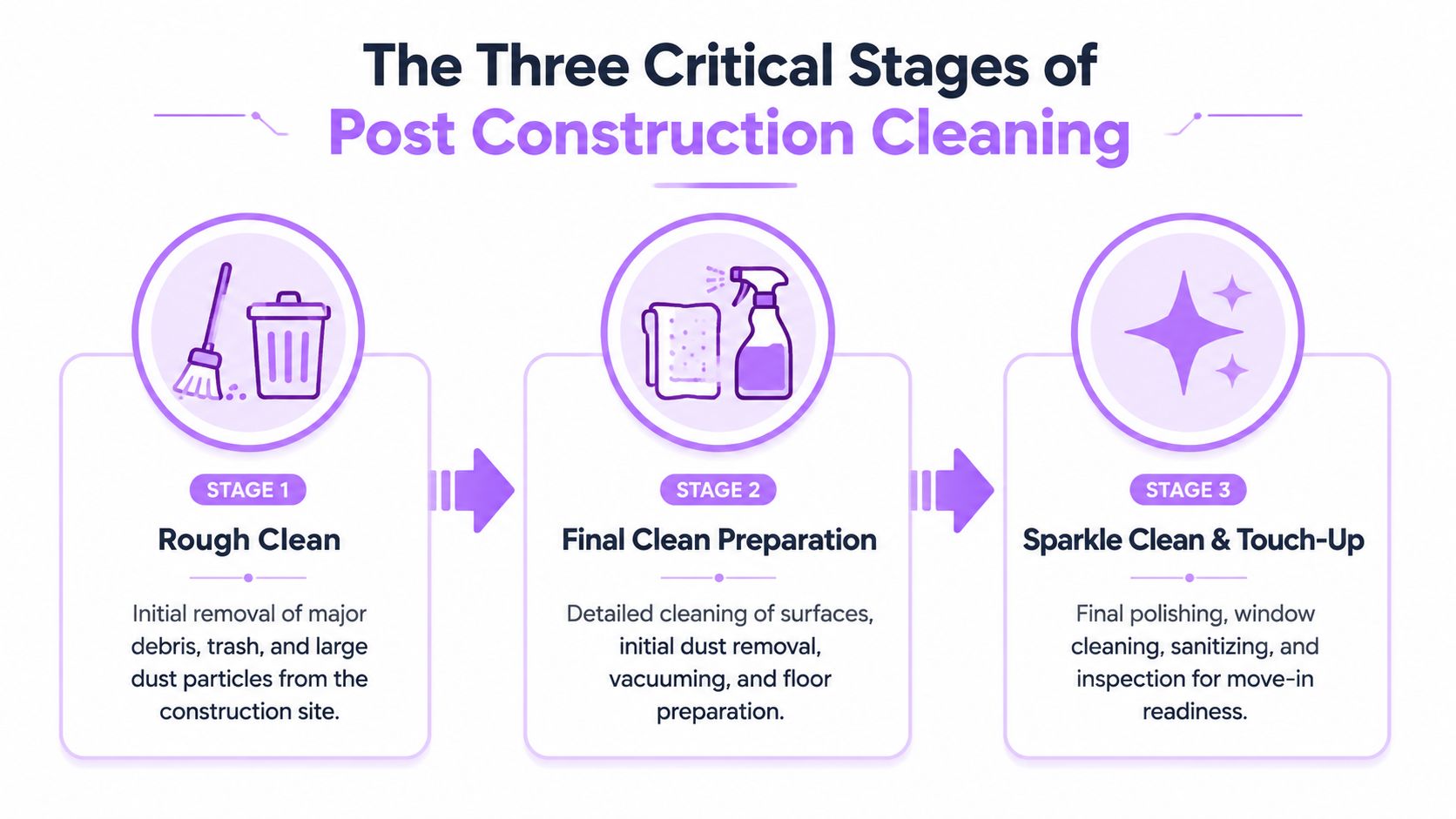
The standard protocol is a three-phase process of Rough, Light (Detailing), and Final Cleaning, with the deep cleaning stage spaced at least one day after the rough clean so fine dust can settle for proper removal, as outlined in this guide to the three-phase handover cleaning protocol.
Why sequence matters
Think of post construction cleaning like finishing paintwork. Prep matters more than the final pass. If debris, grit, and airborne dust aren’t dealt with first, every later stage is slower and riskier.
A rough clean clears the site to a workable condition. The detailing clean removes settled residue and construction marks. The final clean handles presentation and hygiene so the site is ready for inspection, occupancy, or settlement.
Builders who want a clear picture of service flow can compare this staged approach with how cleaning services work in Australia, especially where scope, scheduling, and access need to line up with other trades.
If you’re coordinating cleaning across an active commercial build rather than a single home, our construction site cleaning guide for builders and contractors covers the trade-focused version of this process in more depth.
What each stage is trying to achieve
Rough cleaning is about access and safety. It involves teams removing bulk debris, packaging, labels, offcuts, dust piles, and obvious hazards. It also clears egress routes and gives later trades a cleaner workspace. What doesn’t work here is trying to polish or finish surfaces before the site has stabilised.
Light detailing is the labour-heavy stage. Crews wipe high and low surfaces, vacuum fine dust, clean inside cupboards and drawers, remove adhesive residue, and address paint flecks and smears where safe to do so. This is the stage that reveals whether the project has been cleaned properly or just made presentable.
Final cleaning is the handover stage. Fixtures are polished, kitchens and bathrooms are sanitised, floors are detailed, and final touch points are checked under better light. A supervisor walkthrough belongs here because the goal is no longer basic cleanliness. The goal is a property that reads as complete.
For homeowners and renovation clients, this final stage is the real signal for moving day. If skirtings, glass, and hard-to-reach corners are still carrying fine dust, or adhesive and paint flecks remain on new surfaces, the property isn’t genuinely ready to live in yet — even if it looks tidy at a glance. A proper final clean means cupboards, tracks, and vents have been gone over by hand, not just the visible surfaces, so freshly finished floors and joinery aren’t left carrying residual dust into the first weeks of occupancy.
A few trade-offs are worth stating clearly:
- Starting too early creates repeat work and dust resettlement.
- Using the wrong cloth or pad can dull brand-new finishes.
- Treating all rooms the same wastes time. Wet areas, glazing, and joinery always need different attention.
- Relying on domestic tools usually leaves embedded dust behind.
A handover clean should follow the build sequence, not fight it.
Your Detailed Post Construction Cleaning Checklist
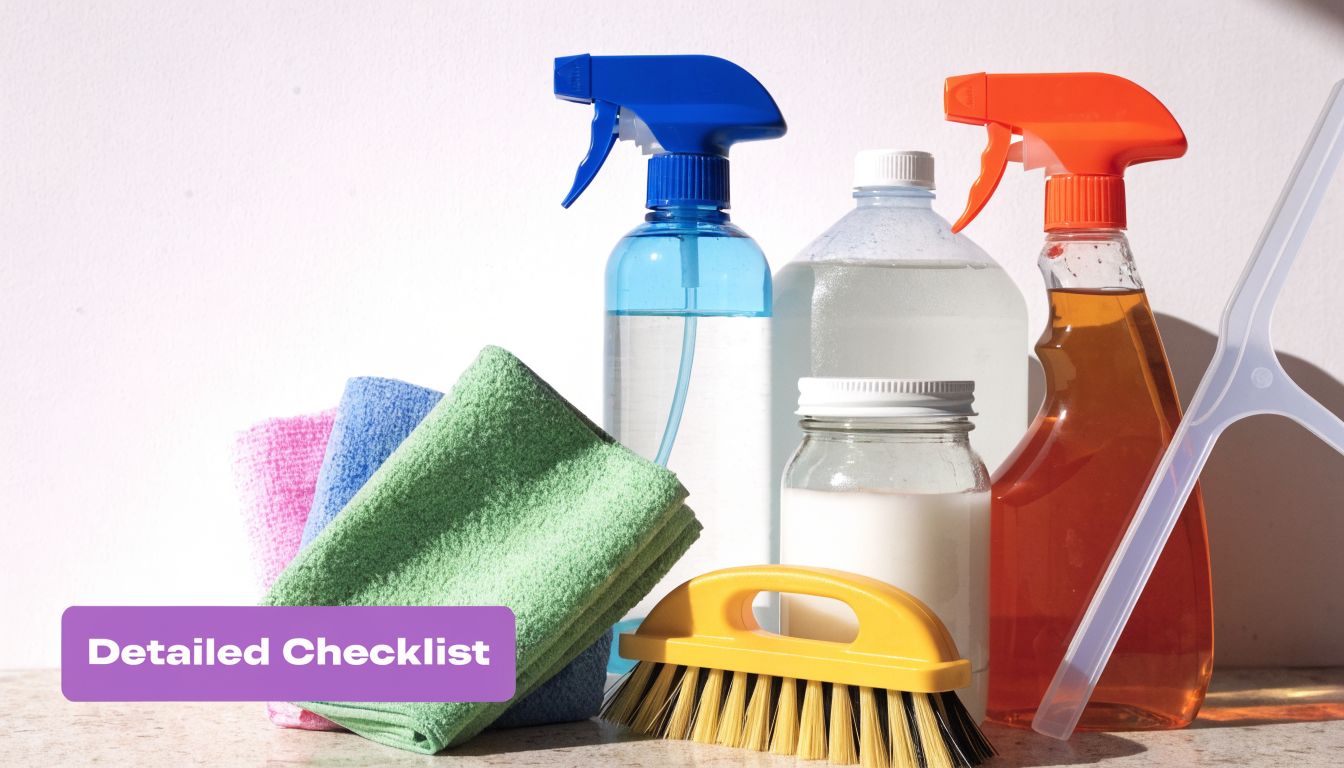
A proper checklist protects the handover. It picks up defects that get missed in a quick visual pass, and it gives builders a record that the site was cleaned with safety, finish protection, and client expectations in mind. On Australian projects, that matters because leftover dust, adhesive, and debris are not just presentation issues. They can trigger complaints, delay occupancy, and create liability if they interfere with how the space is used after practical completion.
For readers who like to compare moving and handover standards side by side, this external guide can help master your cleaning checklist and spot overlaps in detail work. It’s useful for property managers and homeowners who are balancing multiple cleaning obligations at once.
The best method is simple. Check each room in sequence, then finish with a site-wide inspection under good light. That reduces missed items and helps separate cleaning issues from actual defects or incomplete trade work.
Kitchen and utility areas
Kitchens hold fine dust in places the client will open and touch on day one. Cabinet tops, drawer runners, appliance recesses, and overhead ledges all collect residue during the final stages of a build.
Check these items carefully:
- Cupboards and drawers: Wipe internals, externals, edges, handles, runners, and top ledges.
- Benchtops and splashbacks: Remove dust, grout residue, silicone haze, and pencil or trade marks without scratching stone, laminate, or glass.
- Appliances: Remove protective film where approved, clean visible interiors if required, and wipe seals, hinges, and control panels.
- Sink and tapware: Clear residue around bases and polish with non-abrasive materials. New tapware marks easily.
- Kickboards and toe spaces: Vacuum first, then wipe. These areas often hold compacted dust and plaster crumbs.
Grease, sticker residue, and adhesive film need controlled removal. A targeted product is safer than scraping at a new surface and leaving blade marks or dull patches.
Bathrooms and wet areas
Wet areas expose poor cleaning standards fast. Grout haze on tiles, sealant smears on screens, dust in exhaust covers, and residue around waste points all stand out once the room is dry and the lights are on.
A good wet-area checklist includes:
- Tiles and grout lines: Remove haze and residue without saturating joints.
- Screens and mirrors: Clear labels, fingerprints, silicone smears, and dust from channels and edges.
- Vanities: Wipe internals, underside edges, drawer runners, and handles.
- Toilets and basins: Remove construction residue first, then sanitise.
- Floor wastes and corners: Check for grout fragments, plaster, packaging fibres, and trapped debris.
Where moisture has sat during renovation works, residue can combine with soap film, dust, and early mould growth. In those cases, product choice matters. Low-residue chemicals are safer for ongoing wet-area maintenance after the initial handover clean.
Living zones bedrooms and joinery
These rooms look easier than they are. Fine dust settles across every shelf, door head, skirting top, and wardrobe rail, and dark joinery will show every miss.
The must-check list:
- Walls and ledges: Remove loose dust dry first. Spot clean only where the finish allows it.
- Skirting boards and architraves: Wipe top edges, faces, internal corners, and returns.
- Wardrobes and shelving: Clean shelves, rails, hinges, tracks, and top surfaces.
- Switches and power points: Remove dust and hand marks carefully to avoid pushing grime into edges.
- Doors: Clean faces, frames, handles, hinge sides, and top edges.
Joinery is where rushed work usually shows. Door grooves, robe tracks, and upper shelving can still carry sawdust long after the room looks presentable from the doorway. A lot of avoidable damage also comes from poor technique on new finishes, which is why guides on common cleaning mistakes Australians make are worth reviewing before attempting a DIY final clean.
Site note: Fresh paint needs restraint. Aggressive wiping can burnish, mark, or lift a surface that only needed careful dust removal.
Windows floors and final detailing
Glass and flooring carry the highest damage risk in the last stage of a post-construction clean. One wrong pad, too much water, or grit left in a track can turn cleaning into a defect claim.
| Area | What to check | What usually goes wrong |
|---|---|---|
| Windows and glass | Labels removed, frames wiped, tracks vacuumed, glass polished | Grit gets dragged across glass, residue remains in corners and tracks |
| Hard floors | Vacuumed first, then mopped or detailed by surface type | Excess water turns fine dust into slurry and leaves streaking |
| Carpet | Fine dust removed from edges, joins, and thresholds | Standard vacuuming misses build-up along skirtings |
| Entry points | Door tracks, thresholds, handles, glazing | External debris gets walked back inside during the final pass |
Paint flecks on glass should never be attacked blindly. First confirm the surface is suitable, then use the right lubrication and angle if mechanical removal is approved. The same principle applies to adhesive spots, grout haze, and dark scuffs on hard floors. Match the method to the material, or the cleaning team becomes the last trade to damage the job.
Finish with a slow walkthrough in natural light and again under internal lighting. That is usually where fingerprints on stainless steel, dust on black joinery, smears on mirrors, and residue on window tracks become obvious. A site is handover-ready only when those details are dealt with, because they are the items clients, supervisors, and property managers notice first.
Health Safety and Compliance on a Building Site
The visible mess is only part of the risk. The bigger issue is what remains airborne, what sits hidden in vents and corners, and what could trigger a complaint or liability issue after handover.

Professional post-construction cleaning requires HEPA-filter vacuums capable of capturing 99.97% of particles as small as 0.3 microns, which is critical for dust control and work safety standards, according to this overview of HEPA filtration for post-construction cleaning.
The hazards that stay after the trades leave
Dust isn’t just a presentation problem. In post construction environments, cleaners and occupants may be dealing with fine plaster dust, sawdust, and silica-containing particles. If the dust is swept carelessly or vacuumed with the wrong machine, it gets redistributed instead of removed.
That’s why the method matters:
- HEPA vacuuming first: It captures fine particles instead of blasting them back into the air.
- Controlled wiping: Microfibre and low-residue chemicals reduce spread across finished surfaces.
- Staged entry: Detailed cleaning works better after dust has had time to settle.
- Correct PPE and site awareness: Sharp waste, exposed edges, and wet surfaces still exist late in the build.
Some projects also have added indoor air quality concerns. Fresh paints, sealants, flooring products, and adhesives can leave odours and residue behind. Eco-aware product selection helps reduce what gets added during the clean itself. For builders or owners who want low-residue chemistry after works, eco-friendly cleaning services in Australia are often a better fit than heavy-scented general products.
Why documentation matters for builders
Cleaning affects liability more than many teams realise. If an owner later raises concerns about dust, damage, or cleanliness at handover, the builder needs more than a verbal assurance that the site was “done”.
A professional post construction clean should leave a trail:
- Scope confirmation showing what areas were included
- Site notes identifying access limits or unfinished trade items
- Checklist sign-off tied to rooms or zones
- Supervisor review before final presentation
Builders don’t just need a clean site. They need a clean site they can account for.
This is where trained, safety-checked operators matter. Reliable teams don’t only remove residue. They work in a way that supports handover records, reduces missed hazards, and lowers the chance of post-handover disputes over what was or wasn’t completed.
Understanding Post Construction Cleaning Costs in Australia
Pricing is easier to understand when the job is broken into labour, debris level, and finish sensitivity. A small renovation with light dust and clear access won’t be quoted the same way as a newly built home with sticker residue on every pane, dust in every join, and multiple wet areas needing detail work.
The clearest benchmark available for residential work in Australia is that post-construction cleaning typically costs $0.15 to $0.40 per square foot, and an average 2,000 sq ft home costs around $500, depending on debris volume and cleaning intensity, according to this guide to Australian post-construction cleaning costs.
What changes the quote
The square footage matters, but it’s never the full story. Two properties of similar size can have very different cleaning scopes.
The main drivers are usually:
- Debris load: Light renovation dust is different from full-build residue.
- Surface mix: Glass, stone, stainless steel, timber, and tile all need different treatment.
- Access and timing: If other trades are still moving through the site, the clean takes longer or needs staging.
- Detail level: Handover cleaning is broader than a basic builders clean.
- Special requests: Internal windows, appliance internals, or urgent turnaround can shift the final price.
For broad budgeting before a site visit, some builders use a post-construction cleaning calculator to frame the conversation. It’s useful as a planning tool, but an on-site quote is still the better way to avoid scope gaps and pricing surprises.
Sample Post Construction Cleaning Estimates Australia 2026
| Project Type | Average Size | Estimated Cost Range |
|---|---|---|
| Small residential renovation | Small project | Site-based quote required |
| Standard residential property | 2,000 sq ft | Around $500 on average |
| Residential cleaning by square foot | Variable | $0.15 to $0.40 per sq ft |
| Residential deep cleaning by square foot | Variable | $0.50 to $0.90 per sq ft |
That table is only a guide, not a universal rate card. Commercial work, premium finishes, and staged cleans need individual assessment. The most reliable operators quote on site because they can see residue levels, access limits, and handover expectations before pricing the work.
The Star Cleaner Australia Difference Handover Ready Guaranteed
A post construction clean only works when the operating system behind it is sound. That means clear quoting, trained people, proper equipment, and a process for checking work before keys change hands.
A managed system not a loose contractor list
Star Cleaner Australia is built as a managed platform, not a random directory. Jobs are quoted on site, operators are vetted and insured, and the work is supported from booking through to completion. That matters on construction projects because handover cleaning often changes quickly with trade delays, defect lists, and revised access windows.
The platform also draws on a network of over 1,000 cleaners across Australia, as described by the publisher, which helps with coverage and scheduling for builders, homeowners, and property managers needing reliable service at different stages of completion.
A practical advantage is that the system doesn’t stop at labour allocation. It also includes access to a supply shop and training academy, so cleaners are better equipped to handle hard floor care, infection control, and other specialised work that standard domestic cleaning experience doesn’t always cover.
Why that matters at handover
The difference clients usually notice is consistency. Expectations are set up front, teams arrive equipped, and the scope is managed properly rather than left vague. That reduces the usual handover problems such as partially cleaned internals, missed residue on glazing, or uncertainty about what the quote included.
Three features matter most:
- Safety-checked operators: Important on active or recently completed building sites.
- On-site quoting: Better for price accuracy and scope control.
- 100% satisfaction guarantee: Useful when a final presentation standard has to be met.
The guarantee isn’t a substitute for process. It works because the process is there first. When a cleaning service is organised well, the builder gets fewer loose ends, the homeowner gets a property that feels finished, and the final clean supports the handover instead of delaying it.
Post Construction Cleaning FAQs
When should post construction cleaning be booked
Book it before the project reaches practical completion, not after. The clean needs to line up with trade exit, defect rectification, and access to water and power. If the booking waits until the last minute, the site often ends up half-ready and the cleaning team spends time working around avoidable obstacles.
Can homeowners do post construction cleaning themselves
They can, but the risk is surface damage and incomplete dust removal. New glass, tapware, stone, and painted walls are easy to mark with the wrong cloth, blade, or chemical. DIY cleaning also tends to miss hidden dust in tracks, cupboard tops, vents, and joinery internals.
What should be finished before cleaners arrive
All major construction work should be complete, rubbish should be removed unless the clean includes debris handling, and access should be stable. Wet trades, sanding, cutting, and repeated foot traffic after the final clean usually undo the result.
Does post construction cleaning include sanitising
It often includes sanitising in bathrooms, kitchens, and high-touch areas during the final stage, but the exact scope should be confirmed in writing. Residue removal comes first. Sanitising over dust or grout haze doesn’t produce a proper handover standard.
Why do some sites still feel dusty after they’ve been cleaned
Because dust settles in layers. If the rough clean and detail clean are compressed into one rushed visit, fine particles often resettle after the team leaves. That’s why staged cleaning and correct vacuum filtration matter.
What if the property has sensitive finishes
The cleaner should identify those surfaces before starting. Engineered timber, natural stone, matte black fittings, brushed metals, and specialty glass all need controlled methods. If there’s any doubt, test a small area first and avoid aggressive pads or strong solvents.
Is post construction cleaning only for builders
No. Homeowners, renovation clients, property managers, Airbnb operators, and facilities teams all use it. The common need is the same. A space may be structurally complete, but it still isn’t ready for occupation until residue, dust, and presentation issues are resolved properly.
Star Cleaner Australia Pty Ltd helps builders, homeowners, property managers, and commercial clients across the country organise reliable post construction cleaning with vetted, insured, safety-checked operators. Every job is quoted on site for accuracy, backed by a 100% satisfaction guarantee, and supported by a system built around proper equipment, practical training, and clear communication. For handover-ready cleaning that’s managed properly from start to finish, visit Star Cleaner Australia Pty Ltd.
Crafted with the Outrank app